Venezuela Recognized Abkhazia and South Ossetia
USA Refuses to Deploy Missiles in Eastern Europe
Why Do US Build The Strategic Redoubt In Eastern Europe
Afghanistan: Results of 8 Years War

 Search

Expanded search 


 Login 

 Need help? 

Password


 THEMES 
 "Swine Flu" Pandemic
 Great Victory Day
 Georgian Knot
 Made in USA
 Force-Majeure
 War in Iraq
 Iran files
 Antiterrorism
 Russia's Partners
 In the Promised Land
 All themes
 HEADINGS 
 Politics
 Security
 Integration
 Economy
 Technologies
 Society
 Sport
 REGIONS 
 Former USSR
 World
 Russia
 SECTIONS 
 Events
 Analysis
 Commentary
 SCO
MoTuWeThFrSaSu
1 2 3 4 5 6 7
8 9 10 11 12 13 14
15 16 17 18 19 20 21
22 23 24 25 26 27 28
 
 security 

Countdown in South Asia

16.05.2008 16:15

The successful test of a new Indian medium-range ballistic missile, a potential nuclear delivery vehicle, in early May evidently aggravated the old problem of military confrontation between India and Pakistan. At the same time it escalated the danger of misbalancing the entire security system in the Asia-Pacific Region that may be caused by acceleration of the nuclear arms race between Delhi and Islamabad. It is noteworthy that the USA in fact encourages these trends.

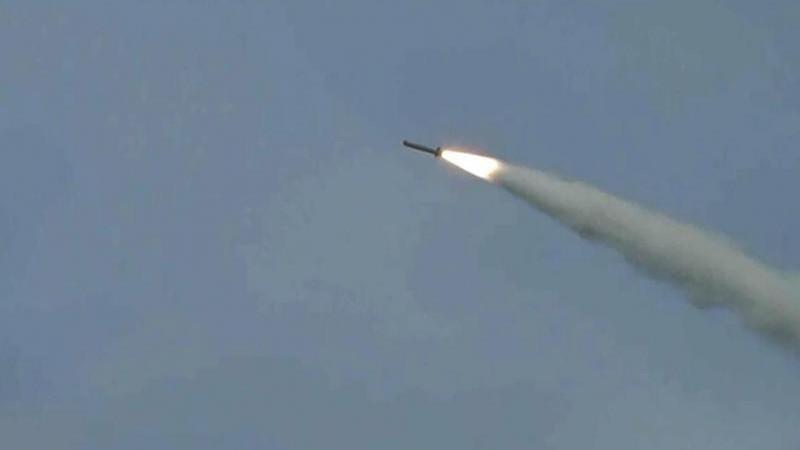
According to official Indian sources, on May 7 India successfully launched a solid-propellant missile named Agni III (“Fire’ in Sanskrit) from a launch site on Wheeler island in the Bay of Bengal off the Orissa coast. It was the third test of the new missile. The first test in July 2006 failed but the second one in April 2007 was successful. According to the Indian Ministry of Defense to finally make missile Agni III operational it needs several additional test-firings.

Meanwhile, in the opinion of independent experts, this new missile with a range exceeding 3,000 km (3,500 km according to other sources) and payload of 1.5 tons radically reinforces the nuclear retaliatory capability of India because it may be launched from any place in the Indian territory from a mobile launching vehicle. Agni III is capable of carrying a maneuvering nuclear warhead to penetrate the enemy ABM shield. The missile significantly extends the Indian “nuclear arm” because its range definitely covers not only entire Pakistan but also practically the most part of China including Beijing and Shanghai, Central Asian states, part of the Middle East as well as the US Military Base on island Diego Garcia in the Indian Ocean.

In 2008, the Agni III test was preceded by several Pakistani and Indian missile tests. For example, on April 19 this year, Pakistan test-fired its medium-range ballistic missile Shahin III (Hatf VI), which has a range of 2,500 km. According to Pakistani militaries, the test confirmed high accuracy of the missile (probable error of deflection is 50 m). Taking into account its capability to carry heavy nuclear and conventional charges this test became an additional boost to acceleration of the missile weapon race between Pakistan and India.

Earlier in February 2008, India test-fired submarine-launched cruise missile K-15 Sagarika (“Oceanic” in Sanskrit). This cruise missile developed according to Western sources on the basis of certain Russian missile technologies has a range of 700 km and capable of carrying either nuclear or conventional warhead of 500 kg.

Since the Indian Navy so far has no submarines capable of carrying such cruise missiles (available Russian-made diesel submarines Kilo, Project 636, and German-design submarines 1500 are not capable of doing it) the missile was test-fired from a special underwater launch pad submerged to a depth of 50 meters. In future cruse missile Sagarika may be fired from an indigenous Indian atomic submarine, which is actively developed and may be set afloat already this year.

In the opinion of military experts, as soon as India has this submarine-launched nuclear cruse missile, it will have certain superiority over Pakistan in the nuclear retaliatory capability. The missile will become one of three components of the future Indian “nuclear deterrence triad” (aerial delivery vehicles, ground mobile launching systems and submarines). It is natural that the test of Sagarika provoked such overreaction of Pakistan.

Admiral Mohammed Afzal Tahir, Chief of Naval Staff Pakistan Navy, blamed on India in public for “provoking nuclear arms race in South Asia” and claimed that Islamabad will have “to give an adequate response”. Western sources also reported on the efforts of Pakistan to redesign diesel submarines Agosta available with the Pakistan Navy in the nuclear weapon carriers.

All these facts in general are the signs of rather disturbing trends to increasing the risk of a nuclear war in South Asia. According to Western estimates, India has more than 200 nuclear warheads in its arsenal, while Pakistan – more than 100. Both countries are involved in intensive nuclear weapon R&D. Besides, they permanently improve their nuclear delivery vehicles, first of all ballistic and cruise missiles.

It is not a top secret that it is China but not Pakistan that is a key factor of the Indian nuclear strategy. Therefore in the long-term prospect and may be in the mid-term prospect Delhi will endeavor to achieve the nuclear missile parity with China. Already today India is involved in development of ballistic missiles Agni IV and Agni V with a range of 5,000 and 6,000 km respectively, capable of carrying up to 12 warheads and equipped with special systems to overcome the ABM defense. In the long-term prospect India intends to develop ICBM Surya (“Surya” is the God of Sun in Hinduism) with a range of 10,000 km. At the same time, Pakistan, (which is slightly falls behind its neighbor-rival in the pace of missile R&D) invests big amounts of money and resources in improvement and development of indigenous nuclear missile systems in order to catch up India.

In fact, the world witnesses recurrence of the strategic nuclear arms race after its formal suspension last century by its main players – the USA and USSR. However, as distinct from the Soviet-American and Russian-American relations in the nuclear missile sphere, Pakistan and India have no practical instruments in the form of bilateral or regional agreements to restrain the nuclear arms race. If we speak about the situation in South Asia and Asia-Pacific Region in general, we have to remember about China that has a huge nuclear arsenal, as well as about North Korea and Japan that have their own nuclear ambitions.

In view of the aforesaid the stand of the USA looks rather strange. It pretends that nothing extraordinary in the nuclear missile sphere happens in South Asia. When asked by a journalist what the United States could do to prevent the nuclear arms race in South Asia, US Secretary of Defense Robert Gates who visited India answered that Washington “has to deal with the world as it is”.

Speaking about such stand of the USA, experts indicate that the American Administration plays its new “big game” in South Asia. The US sanctions imposed on Pakistan and India after their nuclear tests were of a limited and short-term nature. Currently flirting with India, supplying the military equipment to this country and speaking about its readiness to cooperate with India in the atomic sphere, Washington expects to use the growing Indian military potential as a counter to China. Simultaneously the USA tries to keep Pakistan under its influence to exploit it in turn as a “deterrence” instrument with respect to India.

However, these “games” especially when they relate to the nuclear arms and such unstable region as South Asia always fraught with a potential crisis and abrupt and uncontrollable escalation of the situation. Conclusion of comprehensive agreements between India, Pakistan and China on nuclear arms limitation and control in the region under the auspices of the world community may be the way out in these conditions. However lack of confidence between the parties and cool attitude of the sole world superpower, the USA, to this problem make such solution unlikely so far.

Meanwhile, against the background of the nuclear arms race in South Asia the world faces actual countdown to a quite probable nuclear war, which would be hardly limited with this region. 

Âåðñèÿ äëÿ ïå÷àòè Îòïðàâèòü ïî e-mail     Â íà÷àëî

 NEWS 

Poland to Deport 4 Thousand Georgians

29.01.2010 13:46

Four thousand Georgians, who reside illegally in Poland, will be deported from this country in the coming months...


Russia Celebrates the 150th Anniversary of Anton Pavlovich Chekhov's Birth

29.01.2010 11:39

The main festivities to commemorate the classic of the Russian literature Anton Pavlovich Chekhov will be held in Moscow...


In Georgia an Opposition Rally in November 2007 was Suppressed by the Ukrainian Special Forces

26.01.2010 13:51

The leader of the Labor Party of Georgia Shalva Natelashvili said that Ukrainian Special Forces arrived in Georgia five days before the brutal suppression of opposition rallies in Tbilisi in November 2007...


Russia not to Change its Stand on the Kurile Islands

24.11.2009 18:03

The Ministry of Foreign Affairs of Japan declared that the government document saying about illegal occupation of the Kurile Islands by the Russian Federation...


The UN Denounces the Glorification of Nazism

20.11.2009 16:37

Glorification of those involved in Nazi crimes is absolutely inadmissible. It was declared by the Russian representative Grigory Lukiantsev...


For the First Time a Cyrillic Domain Name – .ÐÔ to Appear in the Internet

23.10.2009 11:26

A presentation of the Cyrillic domain name — .ÐÔ took place in Moscow...


Anatoly Serdiukov: Russia to Supply Armament and Ammunitions to Tajikistan

22.10.2009 17:17

Minister of Defense of the Russian Federation said that Russia and Tajikistan are discussing a possibility to supply armament and ammunitions to the republic.


Talks between Presidents of the Russian Federation and Serbia Completed

20.10.2009 17:30

Russia and Serbia have signed today a number of agreements of cooperation, particularly in the gas field.


Six Gunmen Annihilated in Ingushetia

12.10.2009 12:57

During a counter-terrorism operation in the territory of the Sunzha region of the republic six gunmen were annihilated...


Single Voting Day Results: United Russia Wins

12.10.2009 11:15

In Russia one summarizes results of Single voting that took place on Sunday in 75 regions of the country...


Subscription to news  
Rambler
Web Counter (WebSite Statistics Service) PlugIn.ws - Hit Counter, Web Site Statistics, Traffic Analysis

© 2000-2005, Inforos News Agency

+7 095 718.84.11    info@inforos.ru

The "InfoRos" portal is registered at the Russian Federation Ministry for the Affairs of the Press,
TV and Radio Broadcasting, and Mass Communication Media, Certificate Ýë No. 77-6260 of April 23, 2003.
© When citing and reprinting our materials, reference to the "InfoRos" portal should be made.
The editors' position may not coincide with the authors' views.