16.07.2008 13:05 Disputes on the location: Poland or Lithuania, substituted the essence. Comments on the recent US-Czech radar agreement are rather fragmentary. Let us recall the background philosophy of the disarmament process. 25-30 years ago a focus was placed on limitation of defensive rather that offensive weapons. Based on the Jesuitic maxim – the side that will be the first to attack, will be the second to be killed for sure - the sides set such vulnerability thresholds for themselves that excluded a victory of any side.
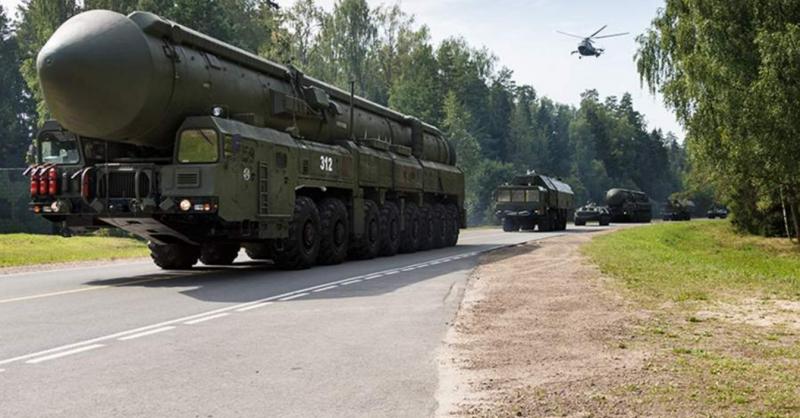
In such situation the reduction of strategic offensive weapons logically became the follow-up of the disarmament process. The parties limited their ABM defense capabilities with two sites each: capitals and stationary ICBM bases. They agreed to deploy not more than 100 missile interceptors in each of the sites. In 1974, basing on the initial ABM Treaty of 1972 Moscow and Washington made a step further and agreed to limit its ABM defense capabilities with one site only. We – with Moscow, Americans – with Grand Forks AF Base (Northern Dakota). This step was followed by a breakthrough: the parties signed Strategic Arms Limitation Treaties: SALT-1 1974), SALT-2 (1979), START-1 (1991), START-2 (1993). To develop the limiting trend they signed the Intermediate-Range (500-5000 km) Nuclear Forces Treaty of 1987.

Due to the ten above listed treaties the number of nuclear weapons of each side was reduced by the end of the Millennium from initial 10,000 down to actual 3,000. But in 2001, the United States withdrew from the ABM Treaty regarding it as inconsistent with new challenges. In so doing, the limiting treaties that based on “the Jesuitic maxim” turn to be “hung-up”. The official US National ABM Defense Concept that substituted the ABM Treaty declares the need to defend against any ABM threat not only the USA but also European NATO states. As of today the Pentagon has two bases. Each of them is provided with 10 ground-based interceptors (GBIs) of 100 expected- all of them in Alaska and California. Ten more GBIs should be deployed on the Baltic coast of Poland. Their deployment is explained by the threat of an Iranian ABM attack on Europe and the USA. In this case the logic of disarmament is lost.
Iranian missiles Shahab-3 with a range of 3,500 km (up to 2,000 km in practice) may reach only Europe but not the USA. The shortest route from Iran to Europe is via the Caucasus, Black Sea and Ukraine, but not via Russia. In this case why are the GBIs deployed not on the approach line (e.g. in Turkey) but on the line where the hypothetic Iranian missiles fall down in itself due to fuel run-out? On the other hand, logically a heavy military infrastructure will be built around the ABM elements. It will precondition the advance of the combined NATO forces (SAMs, aircraft, land troops) to the borders of Russia. Besides, the ABM facilities may be used for other purposes – after certain upgrade the silos may accommodate ballistic missiles.
Another aspect is the most important – the coverage of the US territory by the National ABM System not only arithmetically exceeds the previous vulnerability threshold 6-7-fold but also demonstrates an evident angle of hypothetic ABM threat repelling. If the treat is expected from Iran, why is the head side of the National ABM Defense constructed in Alaska? Remember the classic song: “I do not know other such country…” What “maxim” are we speaking about?
The United States arguments in favor of the National ABM System are reduced to disproof of its name - they say it is global and anti-terror rather than national. But the West does not hear us, its partners in provision of global security. And terrorist successfully do without ICBMs. Criminal talents now “propose” at least 30 new versions of “September 11”, of them 20 versions (naturally undisclosed) “just shock by their simple and efficient technique”. What have Alaska and Poland to do with these threats? If nobody prepares for a global conflict why do they build the strategic redoubt?
Firstly, in order to set a mechanism of pressure on Russia that reduced its status of a military superpower but became a global energy superpower. Secondly, to attain a synergic technological effect. The forerunner of the National ABM System – the Reagan’s Strategic Defense Initiative, may be did not flatten the Afghan-war-ridden Soviet Union but definitely enriched the Unites States. 130 billion Dollars invested in “the Star Wars” (1983-1992) initiated 250 projects of global technological importance. Obviously, the National ABM System designed for decades ahead will create an economic potential for the USA to be measured by trillions of Dollars. Do we have enough crude oil as our “response to Lord Curzon”?
There is a pure military version that the States more needs the radar to be installed by 2011 in the field of former Austerlitz battle 90 km south of Prague. This radar should provide for additional monitoring of Russian ICBM fires. We also regard the Lithuanian alternative to the “Polish” GBIs as a secondary version. Therefore the rumors about the Polish-Lithuanian tender are to evidently help Americans to save the costs. We also still count on disunion among the American allies and compromise of the pattern of ABM system functioning. But the reality is not encouraging. 
 |