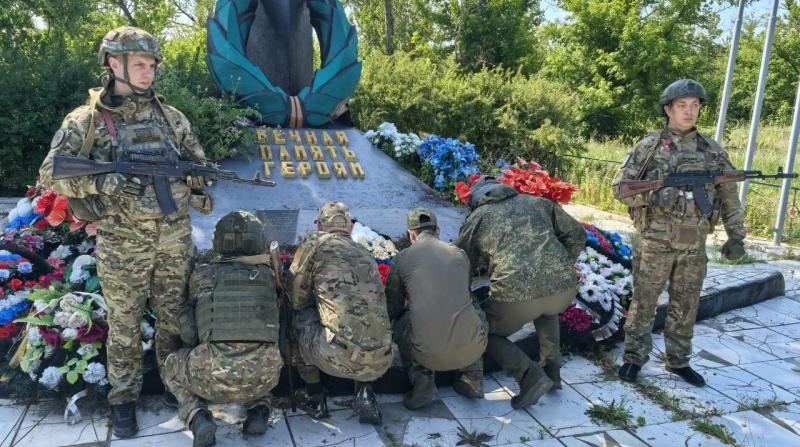
09.10.2009 09:44 After eight years of war the situation in Afghanistan is so critical that NATO member states have serious controversy over their military contingents’ further stay in the territory of this country, some US’ allies discuss more frequently plans of their running away from a battle field with talibs and terrorists of al-Qaeda.
On 7 October it has been eight years since the United States jointly with Great Britain in 2001 began the Unconquerable Liberty military operation against Afghanistan. The beginning of war followed the Afghan Taliban government’s ignoring an ultimatum presented by the US President George Bush to bring Osama bin Laden to American justice, as well as all the leadership of al-Qaeda supposedly involved in the acts of terror in the USA on September 11, 2001.
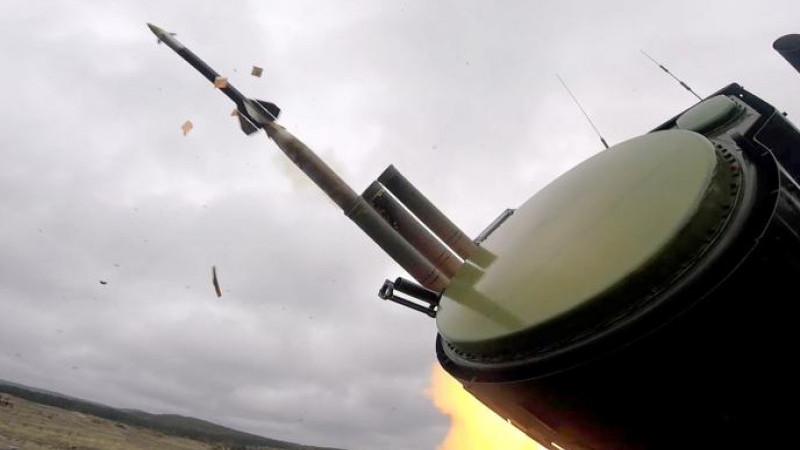
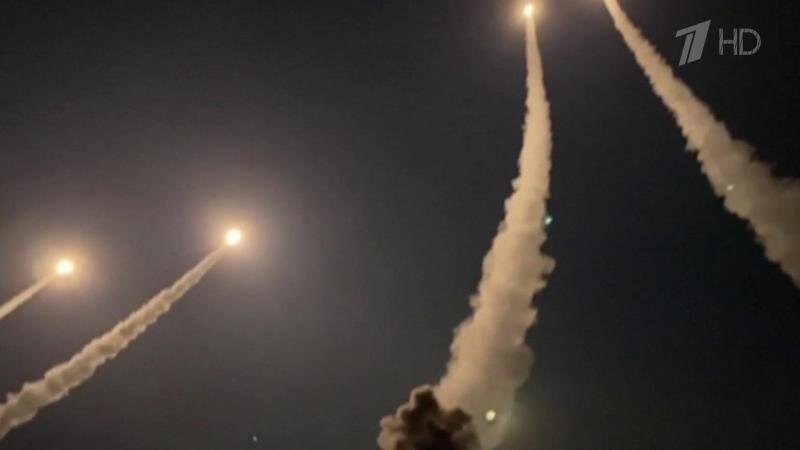
40 combat aircrafts took part in the first strike; about 50 cruise missiles were launched from American and British ships. After one month of bombardments already on November 13, talibs were stripped of power and left Kabul without a struggle. Only the southern part of Afghanistan and the city of Kunduz in the north of the country remained under their control. But it was enough to draw the United States and its allies into a protracted bloody war that has already lasted eight years without tangible results.
According to the United Nations Security Council’s resolution of December 20, 2001 for security maintenance in Afghanistan NATO’s mission was deployed under the name of ISAF. Currently a multinational contingent of the antiterrorist coalition, composed of two groups, is taking part in operations on the territory of Afghanistan. The first one is the US group under the command of the Pentagon. The second one is the NATO-ISAF mission, composed of representatives of 39 countries, including NATO members. Today the military coalition’s strength in Afghanistan is over 100 thousand foreign servicemen, particularly 63 thousand American ones. And by the end of the year the American contingent is to be increased to 68 thousand people.
Both contingents’ major task is the operating in Afghanistan gunmen of the Islamic Taliban movement and the international al-Qaeda terrorist organization seek-and-destroy mission. In addition, foreign military units are rendering assistance to Afghanistan’s government in forming national power structures – army, security forces, and police.
Unfortunately, it has to be ascertained that after eight years of war proper results in struggle against talibs have not been achieved. Osama bin Laden was not caught either. Moreover, today neither US nor NATO nor Khamid Karzai’s government know how overcome Taliban’s revival that literally every day strikes violent blows at troops of the coalition group and power structures of the Afghan government. Practically every day talibs show by their diversions that the perspective for civil peace in the absence of any efficient central authority is nothing more than a mirage in an Asian desert.
As of September 17, 2009 the international coalition’s losses in the course of the
Unconquerable Liberty operation were 1,386 servicemen. The most losses are those of the USA (827), Great Britain (216), and Canada (130). For the last month and a half more than 160 servicemen of NATO forces have died from mines on roads. This is the highest loss rate from the beginning of the antiterrorist operation in Afghanistan. Since the start of this year the number of losses has exceeded 340 people, while in the whole year 2008 286 foreign servicemen died in Afghanistan.
In a word, the situation in Afghanistan is not merely worsening, but becoming critical. Even in Kabul there are no more safe regions. Rocket attacks have become an ordinary thing for the Afghan capital. One of the signs of bloodshed amplification in the country is a banal doubling of price of the Kalashnikov gun that is now US$ 600.
The US President Barack Obama’s latest decisions on Afghanistan show that Americans want to crush talibs’ resistance, above all, by means of its military contingent’s amplification. They want the same from their allies too. But, the current social and political situation in the countries that had sent their troops in Afghanistan, the morale of occupation troops show that the hired army is not suitable for a protracted war with a high level of losses. The US citizens and allies have less motivation for joining the army and dying in Afghanistan.
Analysts assert that the war in Afghanistan is today unpopular in the USA as well as the war in Iraq. According to the latest public inquiry in America, 58 percent of Americans are sure that it is not worth for the United States being in war with Afghanistan and they should withdraw troops from this country. Only 24 percent of Americans declared for further build-up of American contingent in Afghanistan. The US President Barack Obama’s situation, who considers that the war and victory in Afghanistan are necessary for America’s defence against terrorism, is complicated by the position of Nancy Pelosi, Speaker of the United States House of Representatives, Democratic Party member, who believes that there is no need to send additional forces to Afghanistan.
Because of dramatic increase in losses among British soldiers in Afghanistan social and political situation in Great Britain has seriously worsened. Eventually a group of influential deputies of the House of Commons called the Prime Minister to create a war-time government. The Queen Elizabeth 2 joined the number of critics of the government’s Afghan policy, who in public, which is a rare occurrence in Britain’s political life, reprimanded Brown for bad equipment of British soldiers engaged in war in Afghanistan. The UK government tries to take remedial measures. On the declaration of Prime Minister Gordon Brown, in the near future the British military contingent in Afghanistan will be reinforced and provided with more reliable and efficient equipment and armament.
In spite of the fact that 64 percent of the French declare against further national forces’ presence in Afghanistan, and 92 percent are sure that the situation there will only become worse, the French National Authority intends to continue struggle against talibs and al-Qaeda in order to avoid the country’s transformation into a pivot for terrorists. “We have no right to lose in Afghanistan,” says the President Nicolas Sarkozy. Currently the French military contingent in Afghanistan numbers 3,300 servicemen. By the end of 2009 the French group will be increased approximately to 5,000 servicemen.
The Parliament of Canada approved the prolongation of the country’s military mission in Afghanistan till 2011, whereupon the troops will be withdrawn from this country without fail. According to the parliament’s resolution, Canadian military contingent’s stay in Afghanistan will also depend on NATO allies’ support of combat operations in the south of the country. Currently in Afghanistan about 2,500 Canadian soldiers are fighting.
The present military-political leadership of Germany intends to continue the country’s participation in coalition forces in Afghanistan. “Afghanistan is the moment of truth for NATO,” says Angela Merkel, the German chancellor, and the German Minister of Defense, Dr. Franz Josef Jung said that the German contingent, stationed in Afghanistan, will stay there for another 5 or 10 years. But the Minister of War underlined that the number of the contingent will not change (4,500 people) and it will be stationed only in the north of the country. Alongside with that, the NATO mission in Afghanistan is very unpopular among Germans, and the public opinion fights for the early curtailment of the military operation. At the present time 55 percent of Germans declare for withdrawal of Bundeswehr officials from Afghanistan.
Italy plans to withdraw its troops from Afghanistan by the end of the year. It was reported by Italian Prime Minister Silvio Berlusconi. 500 of 600 Italian servicemen that are currently stationed in Kabul will be withdrawn in the near future.
The Danish military contingent is expected to leave Afghanistan by July 2010.
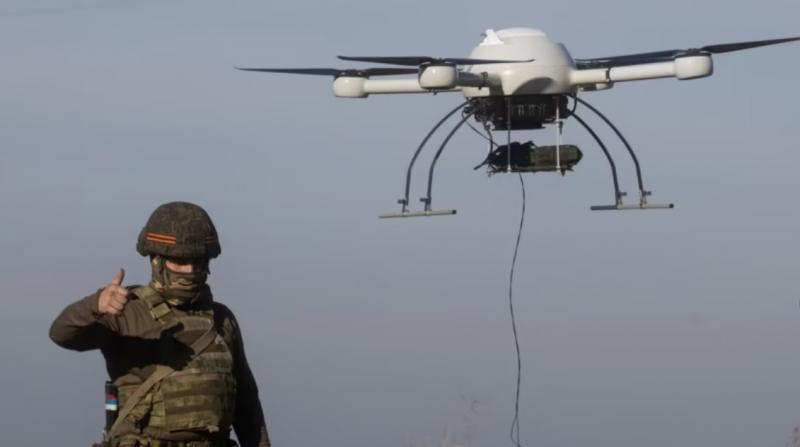
At the same time, Poland firmly complies with its allied obligations within the framework of NATO. Warsaw does not plan to withdraw its soldiers from Afghanistan; moreover, it takes all measures for its contingent reinforcement by technical equipment and armament. The Polish Ministry of Defense is waiting for approval by the Polish parliament of the unplanned allocation of $350 million for urgent needs of the national armed forces contingent as a member of ISAF in Afghanistan. The above funds are planned to be directed for the purchasing of armored vehicles resistant to anti-tank mines and fougasse explosions, unmanned aircrafts, receivers of satellite navigation systems, as well as other equipment.
Sweden plans to increase its contingent in Afghanistan to one thousand people. The Swedish Armed Forces Command also considers dispatch of a group of professional psychologists to Afghanistan to render aid to servicemen, who sustained a severe psychological trauma on the battlefield.
Taking into account the current situation, the leading European countries – members of the North Atlantic Alliance are conducting a campaign striving for scheduling the withdrawal of the international forces from Afghanistan. Thus, Great Britain, France and Germany find it necessary to establish time framework of the phased devolution of the responsibility for enhancing security in the country to the Afghan party. Prime Minister Gordon Brown, German chancellor Angela Merkel and the President of France Nicolas Sarkozy sent a message to the United Nations Secretary-General Ban Ki-moon with a proposal of holding an international conference on Afghanistan to discuss questions of ensuring the Afghan government agencies functioning, security, law and order and development. The idea of a conference conducting is also supported by other countries – participants of the antiterrorist operation in Afghanistan.
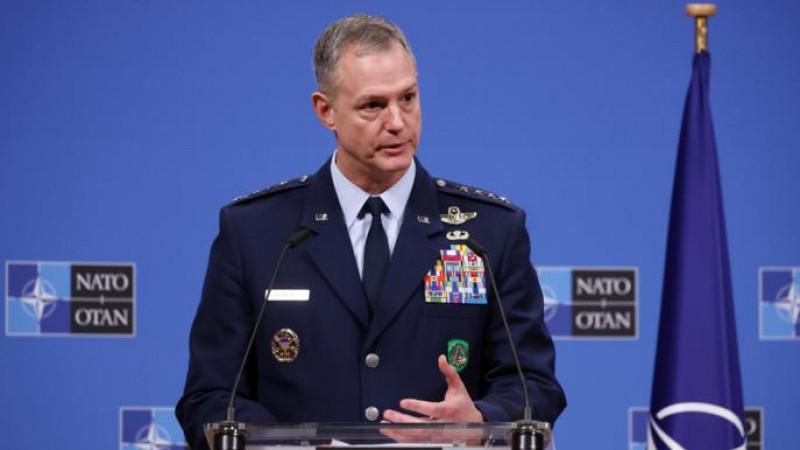
Secretary General Anders Fogh Rasmussen declared against the early withdrawal of troops from Afghanistan. He believes that such a step will have severe consequences for the whole region’s security. Anders Fogh Rasmussen suggested to devolve the responsibility in the transition to the Afghan party in all spheres in successive steps and to invest more funds in the Afghan power structures’ training. In this connection NATO Secretary General supported the initiative of Germany, France and Great Britain for holding a conference on Afghanistan, where the main question would be discussed: when will the Afghan authorities be able to release NATO from responsibility for the maintenance of security in their country? Namely, when will Europeans be able to take their soldiers from Afghanistan?
There are also other measures taken to find the Afghan situation settlement. According to information sources, experts from Canada, Great Britain and the USA are working out a new strategy for Afghanistan, whose goal is the disarmament of “the more compliant” part of talibs and delegation of a number of powers to local leaders. Consultations in this matter are held at a growing rate in Washington, London and in the NATO Headquarters in Brussels.
The coalition participants consider as an example of this the Canadian experience of actions in the Kandahar province, where “they succeeded to unite military and civil components.” The British experience of collaboration with representatives of local authorities in Gilmend province is considered too.
During the last meeting with the Prime Minister of Canada Stephen Harper the American President said that Washington is definitely geared up for the elaboration of a new strategy of the situation stabilization in Afghanistan, which “means wide consultations not only in the government of the United States, but also with partners in the international forces of security promotion in Afghanistan and several NATO allies.
Experts say that the new strategy for Afghanistan may be elaborated by spring 2010. At the same time it must be approved by governments of all the countries, whose troops are fighting in Afghanistan. 
 |