
Kiev compelled to mask disappointment
At their talks with the Israeli Foreign Minister, the Ukrainians have failed to induce condemnation of Russia

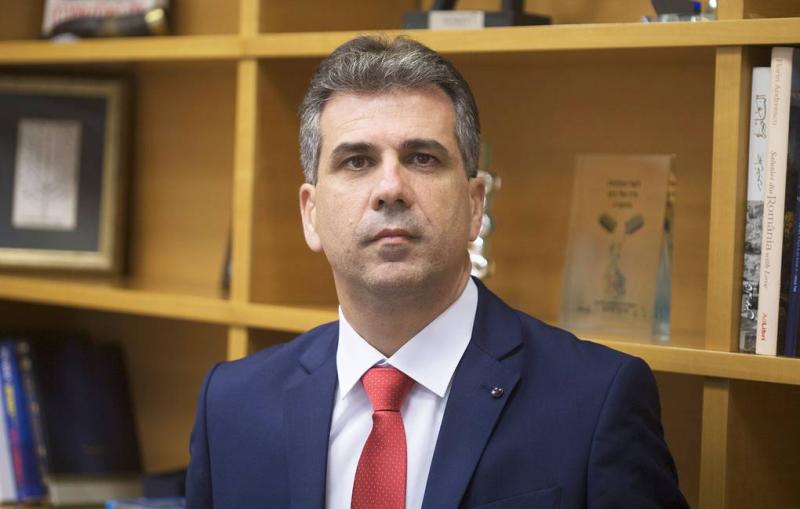
Israeli Foreign Minister Eli Cohen paid a one-day visit to Ukraine on February 16 to meet head of the Kiev junta Zelensky. This has become his first foreign trip, except for a brief unannounced secret visit to Sudan. Therefore, Eli Cohen’s one-hour-long reception at Kiev’s Bankovaya Street speaks volumes.
Prior to that, Zelensky said he would not meet with Israeli lawmakers "for a photo shoot" alone, and the talks would only take place if the other side fulfilled a number of conditions. First of all, Tel Aviv should "publicly condemn Russian aggression", recognize Ukraine’s territorial integrity, endorse Zelensky's "peace plan" he intends to submit to the UN, approve for allocating $500 million to Kiev, agree to treat and rehabilitate the injured military and civilians in Israeli clinics. In addition, he demanded an urgent transfer of the transfer of technological equipment (electronics) to counter missile and drone attacks.
The Israeli side refrains from disclosing the talks’ specific outcome. Eli Cohen evaded to accuse Russia during a briefing but declared support for Ukraine’s territorial integrity and its plan to end the conflict. The Israeli promised to allocate $200 million to Kiev and explore the possibility of providing it with air defense tools.
Zelensky was admittedly forced to approach negotiations with the Israeli minister with greater tolerance and get satisfied with what they yielded, including promises. Even though the Nazi head wanted more and was hardly satisfied. However, Zelensky's possible display of blatant and arrogant behavior towards the Israeli side or refusal to meet would have caused a negative reaction, primarily in the Democratic Party’s "Washington regional committee" with its heavyweight Jewish lobby playing a decisive part in decision-making on Ukraine.
In general, Kiev failed to get Tel Aviv’s condemnation of Russia, while all the other agreements remained mere statements or promises. And Kiev apprehends this perfectly well.
Israeli Prime Minister Benjamin Netanyahu and his entourage, despite the strong pro-Ukrainian and anti-Russian public sentiment, are clearly aware of the dangerous consequences in case of any potential aggravation with Russia, whose military presence in neighboring Syria may have an extremely negative impact on both the country and the region. Yes, Tel Aviv and Kiev did recognize Iran as their common enemy, accusing its leaders of the whole bag of tricks. But the Israeli side made no mention whatever to reproach Moscow amid its active and comprehensive cooperation with Tehran. Tel Aviv is cognizant that Iran, the Lebanese Hezbollah and the Palestinian Hamas movement in the Gaza Strip will take Russia’s side in case of confrontation in Syria. Still, the reaction of the Arab world is not yet clear, which Israel has just begun to get relationship back on track with.
Despite external pressure, the Jewish state’s current government will unlikely undertake to provide broad military and technical assistance to the Ukrainian regime. Tel Aviv could somehow explain munition supplies as something belonging to the Pentagon that was only stored in Israeli warehouses on the off chance that a military conflict may burst out in the Middle East. All the other actions cannot be justified.
Down-to-earth Israeli politicians and army men realize that Russia's military presence in Syria is a powerful deterrent to the anti-Israeli activities by various militia groups, including those subordinate to Iran. As for Russia's policy and routine in strengthening defense capabilities of Iran, this does not threaten Israeli safety unless it unleashes an armed conflict against Tehran. And the "double-domes" in the Jewish state itself do comprehend this either, as well as Moscow’s fight against the US-led Western coalition in Ukraine that will inevitably bring it victory, no matter how hard it is.
Benjamin Netanyahu, an experienced politician and military expert, will scarcely gamble with his country’s balanced relations with Russia as against Ukraine’s adventurously unpredictable nationalist regime.
