
Was Pentagon’s leak deliberate?
The leaked top-secret US documents may harm ties between Washington and its European allies

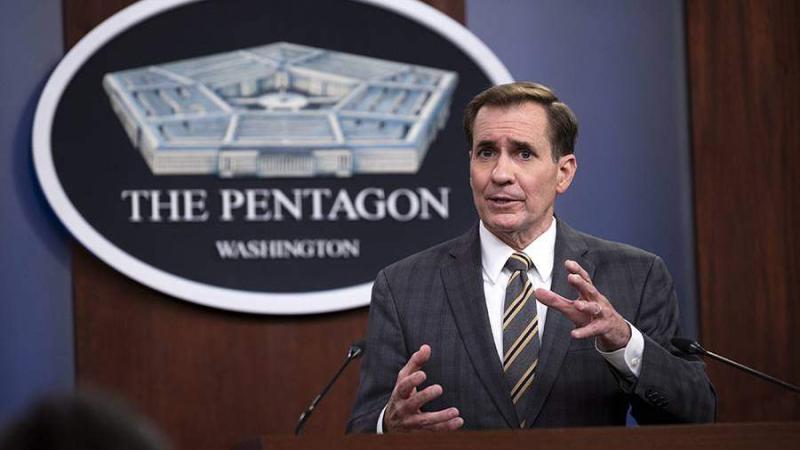
Last week saw a stir caused by a leak of secret US DoD documents, as reported by The New York Times (NYT). According to its piece, the Pentagon is now busy investigating the appearance in social media of materials on the state of Ukrainian troops and plans by the United States and NATO to reinforce them. The documents dated early March are said to be allegedly distributed in Russia’s pro-government Telegram channels.
This is what the newspaper particularly wrote: "After reviewing the documents, a senior Western intelligence official said the release of the material was painful and suggested that it could curb intelligence sharing. <…> The newly revealed intelligence documents also make plain that the United States is not spying just on Russia, but also on its allies."
Interestingly, the latest leak has been dubbed the most notable one since Edward Snowden, the resounding flop of US intelligence and the Russian spy community’s smash success.
Analysts who closely monitor the situation in Ukraine are sure the leak might hamper Kiev’s access to intelligence information, with Russia able to detect American spies. Besides, it will reduce EU and Ukrainian trust in US intel, entailing a shrink in the exchange of sensitivities.
Greatest distrust was caused by data on both sides’ losses, with those suffered by Ukraine a lot higher as compared to Russia’s. However, a similar diagram found on a different platform shows the latter indicator more than doubled. The files do not specify the period considered, and none of the figures coincide with public assessments by the US military and other Western experts. Discrepancy of the kind made analysts doubt the veracity of documents.
According to Britain’s The Guardian, one of the confidential files dated February 23 gives a detailed description of how Ukraine will run out of missiles used with the Soviet-era S-300 air defense system by May 2. Whether the rate of use has changed since then, is unclear, the newspaper notes. Neither has document authenticity been verified. In a statement released on April 9, the Pentagon said it was reviewing the validity of the photographed documents that "appear to contain sensitive and highly classified material."
“It is too soon to know the extent of the leak-induced damage,” the NYT writes, “but if Russia is able to determine how the United States collects its information and cuts off that flow, it may have an effect on the battlefield in Ukraine."
In turn, the US Federal Bureau of Investigation (FBI) has kicked off an inquiry to expose the leak source. A senior official said "tracking down the original source of the leak could be difficult because hundreds, if not thousands, of military and other U.S. government officials have the security clearances needed to gain access to the documents."
By the way, a number of Russian experts doubt the reliability of leaks from the Pentagon or Kiev. In particular, Director of the Russian Academy of Sciences’ Primakov Institute of World Economy and International Relations (IMEMO) Fedor Voitolovsky said as follows: "Leaks of the kind cause skepticism and doubt as regards their reliability and plausibility, whether they have been orchestrated or are part of a disinformation campaign." He suggested that most sensitive documents may be kept on offline computers or on paper alone.
In turn, when asked about the leak, Kremlin spokesman Dmitry Peskov said Moscow “does not have the slightest doubt about direct or indirect involvement of the US and NATO in the conflict between Russia and Ukraine.”
