
EU keeps combating Russian gas
Brussels is maturing an opportunity of banning Russian LNG imports

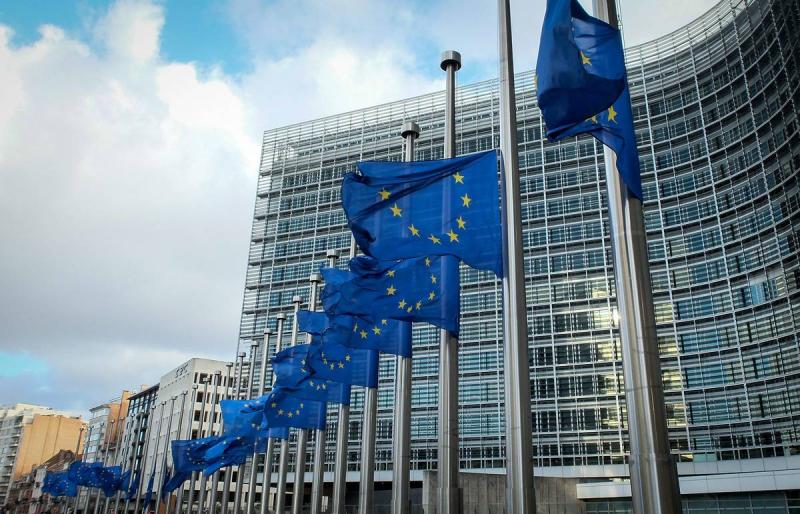
EU authorities proceed with their persistent struggle against Russian gas, seeking to zero out its supplies to the member states. 14 months into the breakup of half-a-century gas cooperation between Moscow and Brussels, Russian pipeline gas has been nearly squeezed out of the European energy balance. Still, Europe has yet to find a long-term full-fledged alternative, as LNG (mainly from the USA) costs a lot, indeed. Some European states are not ready for scenarios of their "economic self–destruction" and therefore keep relying on Russian fuel.
For instance, the Hungarian authorities have recently announced willingness to book additional gas volumes with Gazprom. Following his visit to Moscow, the country's Foreign Minister Peter Szijjarto said his country would get those by winter, if needed.
Some other countries are struggling both Gazprom's pipe supplies and Russian LNG. Thus, Energy Minister of the Netherlands said that the Cabinet is busy persuading companies to terminate their existing contracts for LNG imports from Russia. "The Dutch government is working on ending all liquefied natural gas imports from Russia," Rob Jetten said. According to Bloomberg, the import of Russian LNG to the kingdom accounts for about 15% of its total imports of the fuel.
On April 18, sources of the Reuters news agency reported Poland's suggestion to ban all the import of natural gas (including LNG) and oil from Russia in the lead-up to the 11th package of sanctions against it.
At the same time, EU promotes monopoly-type initiatives generally aimed to impose price caps on imported Russian energy: the European Commission (EC) expects applications from European enterprises for cooperatively buying gas as per the EU energy independence plan, REPowerEU.
An obvious thing is that the EU, for the sake of its notorious political bias against the Russian Federation, is ready to overpay significantly and descend into another addiction — to American LNG. And this will make the European economy further degrade, which even French leader Emmanuel Macron has finally realized. Back from his official visit to China, he said Europe should reduce its dependence on the United States and the dollar. He voiced this in an interview with journalists aboard his presidential liner while in China.
Macron criticized Europe’s increased dependence on Washington for energy and weapons, Politico noted. He also suggested that Western European nations reduce their dependence on the “extraterritoriality of the US dollar”. These are not his first public statements on less EU dependence on the United States, while his country’s actual steps are just the opposite.
European bureaucracy request to boost the European Union's energy security amid "gazpromophobia" is schizophrenic, if not particularly utopian. Gazprom management has been following what is going on (i.e. new EU restrictions on natural gas imports from Russia) and warned Europe about the lack of guarantees for easily surviving the next heating season over foreseeable difficulties with replenishing underground reserves of the Old World to a risk-free level. "Warm weather last winter helped Europe get through the heating season. But there is no guarantee that nature will make it the same gift in the coming one," the company said in its Telegram channel.
It also stated that by April 16, 2023, the volume of active gas in European UGSFs amounted to 56.6 billion cubic meters against the 58 billion cubic meters on the same date in 2020. That is, in order to reach the 2019/2020 maximum pumping level (97.6 billion cubic meters), European companies need to pump 1.4 billion cubic meters more even today. A real head scratcher, given the politically motivated decisions to waive Russian pipeline gas imports. Moreover, LNG supplies’ potential to the EU may be also lowered due to the global competition effects and other reasons. After all, NOVATEK may drop out of the key LNG suppliers pool if Brussels decides to go ahead with its planned port ban for loaded methane carriers arriving from Yamal.
