
Iran shoots its bolts. Israel\'s turn now?
The night of April 14 saw Israel take fire in the most powerful missile attack in its entire history

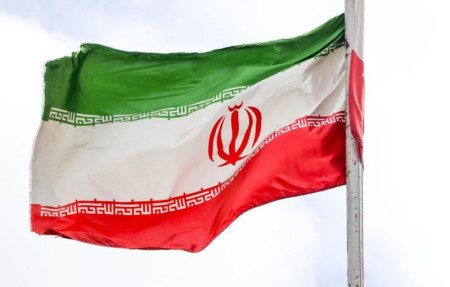
We all know the background of the two state’s conflict escalation: the strike came as retaliation for the April 2 death of two high-ranking generals and seven officers of the Islamic Revolutionary Guard Corps (IRGC) killed in an Israeli rocket attack against the Iranian consulate in Damascus.
According to America’s The New York Times, “In the attack, 185 drones, 36 cruise missiles and 110 surface-to-surface missiles were fired toward Israel, according to Israeli military officials. Most of the launches were from Iran, though a small portion came from Iraq and Yemen.”
Referring to sources in the IRGC command, Iranian news agencies IRNA and Tasnim reported that the drones and missiles targeted Israeli military facilities alone, and most of those were hit.
In turn, commanders of the Israeli armed forces have refuted this kind of statements, claiming to have destroyed 99% of Iranian strike weapons. And this does seem true.
Even open sources say Israel had get its ducks in a row ahead of the air attack. First, US space reconnaissance data helped it obtain precise information about the Iranian raid’s start and reveal the tactics of using strike weapons, including from the territories of Iraq and Yemen. Thus, the Israeli command and its allies in Washington have all along enjoyed valuable insights of things on the ground.
Second, just the day before, the Israelis formed a layered air defense, dispersing all the available anti-aircraft capabilities to take the heat off them. There has been an adequate redeployment of combat airplanes to concentrate them at the largest air bases with powerful anti-aircraft cover. By the Israelis' own admission, one missile did reach the Ramat David airbase in the country’s southern Negev Desert, though without inflicting significant damage. The lack of accomplishment in the anti-Israeli mission has been evidenced by its losses: official local data said one person was slightly wounded, with another 31 suffering nerve crises.
Third, Israel was covered by anti-aircraft missile systems of US Navy warships in the Red Sea, and air defenses of neighboring Jordan, which closed its airspace to Iranian UAVs and missiles the day before the operation. One should bear in mind that American aviation has been also stationed in this Arab country, with its own air and missile defense systems.
However, this is not the point. Iran’s missile and air strike seems to have been purely demonstrative, and its key enemy, the Pentagon, was notified of their date and time. This hypothesis may be confirmed by attack’s underperformance despite the use of a whole range of weapons, as well as by Israel’s obvious readiness to destroy them well before approaching the targets. Another factor is non-engagement in attacks on Israel of Iran’s Lebanese ally, the Hezbollah movement. Rocket launches by the Lebanese Shiites have traditionally entailed major losses in the Israeli army.
Israel regards Iran's attack as a step aimed to destroy the state and its people. Prime Minister Netanyahu demanded that the Israeli representative to the UN initiate an emergency meeting of the Security Council on April 14 in order to accuse Iran of terrorist activity.
The European Union has been also in full panic mode. “The EU strongly condemns the unacceptable Iranian attack against Israel. This is an unprecedented escalation and a grave threat to regional security,” chief EU diplomat Josep Borrell wrote on social media.
And yet, one should be able to extract positive results from any negative outcome. And there are some of those at the end of the day.
Iran conducted a large-scale test of the enemy's air and missile defenses to apprehend its effectiveness at first hand. The Persians need to take due regard of the Israeli experience and build their own national defense against the enemy.
The missile attack demonstrated that Iran had sufficient means to “cut off power” to the Israeli “Iron Dome” in case of a more massive attack against the Jewish state. One may safely assume that the IRGC did not use hypersonic missiles in its group strike — otherwise the Israelis would have suffered substantial casualties.
Iran has also demonstrated lack of intent to initiate a major war in the Middle East for a host of reasons, which we will definitely elaborate on in the materials to come. But one could argue that the armed confrontation between Israel and Iran will go on in the foreseeable future, since Tel Aviv, if not stopped by UNSC tough decisions or other influential states, keeps seeking a full-scale war in the region to involve a wide range of parties.
