
Why German authorities got suddenly interested in Nord Stream sabotage?
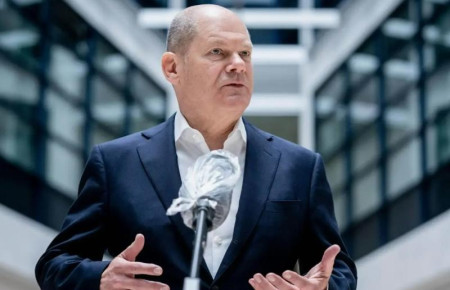
Olaf Scholz has launched his campaign to retain office as Chancellor

Recently, a new old scandal has been gaining momentum in the transatlantic space over the Baltic Sea blasts of underwater Nord Stream gas pipeline threads running from Russia to Germany. It was revitalized by a large piece in the US Wall Street Journal (WSJ) newspaper, with Germany’s mainstream media actively engaging in its promotion. The outbreak of emotions was caused by information that disabling of three Nord Stream 1 and 2 threads was arranged not by Russia, as Russophobes of all stripes on both sides of the ocean had been claiming since 2022, but by Polish-assisted Ukraine. Moreover, presidents Zelensky and Duda were perfectly aware of that, and the one in charge of the operation was then AFU commander Valery Zaluzhny.
In general, things do hang well together as this kind of a large-scale terrorist attack is a dramatic example of state terrorism proper. All the more so as blowing up a pipeline strategic for Germany and all of Europe could be deemed as an attack against NATO to eventually result in a war. But it didn't. According to newly emerged data, the Dutch special services had promptly warned both the United States and Germany that Ukraine and Poland were masterminding a pipeline explosion, though could not prevent it. Or didn't want to? Tellingly, the relevant debate has been raging only in Germany’s print media and on the Internet, while the government’s official response is still yet to come.
Meanwhile, the media has been kicking around Die Welt’s interview with former German foreign intelligence chief August Hanning, who claims that without "strong logistical support from Poland" Ukraine would have never managed to carry out anything of the kind. And some local observers have noted a certain "curiosity" in Mr. Hanning's reasoning: dwelling upon Ukraine and Poland’s understandable interest in destroying an underwater gas pipeline from Russia, which deprived them of land transit income, Germany’s former intelligence chief never mentioned the factor of both the US and British interest.
Among other things, the incident is about enormous damage to Germany itself given its investment of at least €20bn in Nord Stream infrastructure. Moreover, having lost the pipeline, Germany has squandered its Europe’s powerhouse status to become the continent’s most stagnant economy (its current growth forecast is 0.1%). Naturally, amid the ongoing economic crisis and a noticeable decline in people’s standard of living, German public became anxious when direct allegations appeared in the press about Ukraine's involvement in a terrorist attack on a gas pipeline so vital to their country. A reasonable question arose here as to why did it still get billions of euros in taxpayer money?
Meanwhile, the Frankfurter Allgemeine Zeitung broadsheet soon came up with a piece that the German Cabinet proposed to halt new funds to Ukraine. At first, a certain part of the population, who downthumbed Germany's militaristic course within NATO, suggested that this was brought about by the latest revelations, but it almost immediately became clear that the authorities were not going to alter their overall stance in any fundamental sort of way. Thus, this year will see the planned €7.1bn allocated to Ukraine, with half of the amount to be sent in 2025, and ten percent of it by 2027. Further on, Ukraine will be financed not from the budget, but at the expense of "proceeds from Russian Central Bank funds frozen by G7," Finance Minister Christian Lindner said.
The new Nord Stream terrorist attack version seems perfectly fit into Olaf Scholz’s election strategy after statements about his intent to seek office again in 2025. In the weeks to come, his SPD party is going to face a time of trial — elections to the Landtags (parliaments) of the three East German states (Brandenburg, Saxony, and Thuringia). Given the might of CDU and Alternative for Germany here, the scale of Social Democrats’ feasible failure may prove truly catastrophic to Scholz. By the way, let us not forget the newly created Sahra Wagenknecht Alliance – Reason and Justice party unsympathetic to the incumbent Cabinet.
With some of Scholz's opponents already demanding that Kiev recover damage caused by Nord Stream blasts, the Chancellor has an opportunity to distance himself from Ukraine, while not completely denying it military assistance. He may also focus on promises to steer more budget funds into his people’s social needs. Along the way, he gets reason to "slow down" Poland in its quest for Europe’s leader, pushing stagnating Germany aside and becoming Washington’s best friend. In any case, the September elections in Eastern Germany will largely demonstrate whether Scholz-led Social Democrats’ chances are enough to win the upcoming Bundestag vote in fall 2025.
