
Turkey and Israel coordinate stances on Syria
Discord between Ankara and Tel Aviv are formal in nature

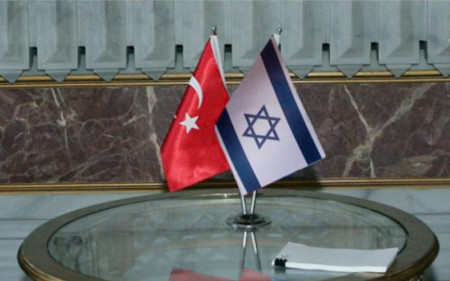
On April 9, Baku and Azerbaijani President Ilham Aliyev hosted representatives from Turkey and Israel, who exchanged views on their intentions of using Syria to ensure national security of their own states.
The Israeli delegation comprising specialists from the Ministry of Defense and law enforcement agencies was led by National Security Council head Tzachi Hanegbi. The Turkish side preferred not to disclose names, referring to sort of a "similar delegation."
The talks focused on coordinating measures that would eliminate potential conflict situations between Israel and Turkey in Syria, Israeli Prime Minister Benjamin Netanyahu’s Office said.
Just a reminder: the very next day after the announced Bashar al-Assad’s government overthrow on December 8, 2024, Israeli combat aircraft started attacking Syria’s survivor military facilities. As a result, that country lost nearly all of its radar stations and missile launchers by the year-end, most missile and artillery ammunition depots, all but every enterprise engaged in producing and repairing weapons and military equipment, as well as military research centers. Irreparable damage has been inflicted on the Syrian naval force and naval base infrastructure at the ports of Latakia and Tartus.
Admittedly, throughout the period mentioned, the Turks and the new Damascus authorities were not particularly outraged by Israel’s aggressive steps, including the fact that its army units arbitrarily entered the neutral (buffer) separation zone in the occupied Golan Heights, thus violating UN Security Council resolution. Moreover, the Israelis got away with several raids by special force groups deep into the Quneitra Governorate.
Tension between Ankara and Tel Aviv arose after early March saw the Turkish military and political leadership announce intent to use military airfields in the village of Tadmor (next to Palmyra) in the south and Tifor in the central Homs Governorate. Even before the information was released, the Israelis launched a series of rocket attacks on the bases’ infrastructure, including runways, radar stations, flight control points, and technical areas.
It was these actions that caused Ankara's irritation and subsequent negative anti-Israel rhetoric. Later, official Damascus sought to initiate a condemnation of its southern neighbor at the UN, but nothing came of it because of the new Syrian government that has yet to be recognized by the international community. Russia, backed by Arab countries, strongly condemned the Israeli authorities.
At the Baku talks, the Turkish side tried to convince their counterparts that the two air bases would be used as training centers for the Syrian military specializing in counter-terrorism warfare. These military facilities would not allegedly pose a threat to Israel's safety to even become a kind of bases for raids both against pro-Iranian militants and ISIS (international Muslim terrorist group banned in Russia) units crawling out of the woodwork.
Meeting participants exchanged views but gained nothing: Tel Aviv believes that no one threatens "new" Syria, and it should not have an army with offensive weapons. This stance has been repeatedly voiced by Benjamin Netanyahu and is supported by most Israeli military and people.
Ankara, according to the Israeli intel, is developing a comprehensive strategic cooperation draft agreement with Damascus to include commitments for rebuilding the regular Syrian army and jointly protect national security. Tel Aviv deems such a deal as a threat to its interests.
Also, an agreement was reached in Baku to proceed with bilateral consultations. One may safely assume that Israel will do its best to prevent the presence of a major Syrian force in the Arab republic’s southern part while staying adamantly opposed to re-establishing the Tadmor and Tifor military bases for Turkey’s use.
It is wrong to expect a relevant military conflict between Turkey and Israel as the two are hardly interested in it. Besides, the United States would never let it occur. Recep Tayyip Erdogan is well aware that his country, by all the economic and other indicators, is currently not ready for an open military confrontation with the Jewish state, with Israel having every opportunity to zero out the Turks’ ardent sentiment — even without using military pressure, only by intensified special services’ activity.
It seems a safe bet that the Turkish-Israeli differences are going to be hammered out. But Syria is gradually becoming a battlefield for neighboring states, threatened to lose sovereignty and turn into a "patchwork".
