
Change of power in Iran is Israeli and American key goal
Expert forecasts on the Iranian crisis development

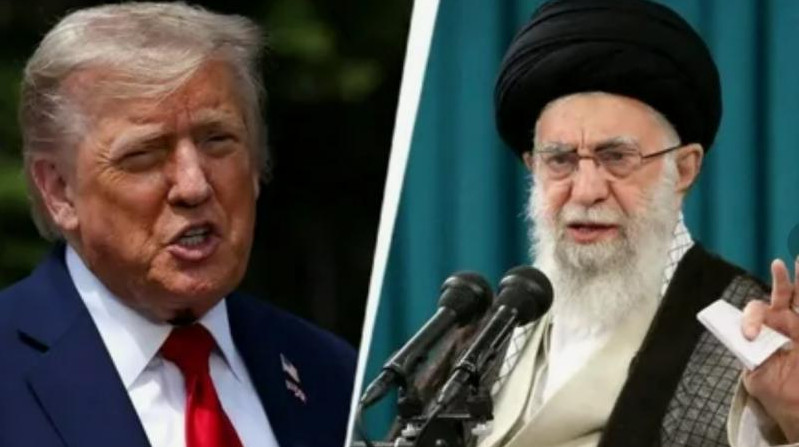
The Iranian crisis keeps escalating. Despite the massive Israeli strikes on the Islamic republic’s military facilities, the elimination of several leaders of the country’s political and military leadership, and an unprecedented US airstrike on Iran’s nuclear complex, Tehran has no intention of accepting the ultimatum of surrender issued by President Trump.
Washington’s aggression has "untied Iran’s hands," granting Tehran the A statement to that effect came on June 23 from Major General Abdolrahim Mousavi, Chief of Staff of the Armed Forces of the Islamic Republic. "The criminal America <...> has untied the hands of the warriors of Islam in the armed forces [of Iran] to act against [American] interests and the army," the Iranian state broadcaster reported, quoting him as saying.
June 23 saw Iran launch another missile attack, targeting sites across the entirety of Israel, said the Islamic Revolutionary Guard Corps (IRGC, the elite branch of Iran’s Armed Forces). "On Monday morning, the IRGC struck various targets on the occupied territories with multiple missiles in the 21st wave of its missile operation. This combined attack employed solid-fuel missiles, liquid-fuel warheads, and kamikaze drones," the Mehr news agency reported, citing a statement by the Iranian military. "During this assault, the IRGC altered its tactics for strikes on Tel Aviv and Haifa, attacking numerous targets from the north to the south of the occupied territories."
"Initial reports indicate that the northern part of Haifa, Haifa itself, Tel Aviv, Ashkelon, Akko, and Ashdod were hit by Iranian missiles. A significant number of missiles also struck Safed, Lachish south of Tel Aviv, Ashkelon, Ashdod, and Beit She’an," the statement read.
The very same day, June 23, the Israeli Air Force began a new series of strikes on military facilities in Tehran as reported by the press service of the Israel Defense Forces (IDF). Strikes were confirmed on six airbases in western, eastern, and central Iran. "As part of efforts to reinforce air superiority over Iran’s airspace, the Israel Defense Forces targeted six airbases of the Iranian regime in western, eastern, and central Iran. The strikes damaged runways, underground facilities, and a refueling aircraft. Unmanned aerial vehicles destroyed 15 fighter jets and helicopters belonging to the Iranian regime," the statement read.
Semyon Bagdasarov, Director of the Center for Middle Eastern and Central Asian Studies, commented on the prospects of the Iranian crisis, noting that "everything will depend on Iran itself — whether it will deliver real retaliatory strikes against the US or if these will be demonstrative ones. Additionally, much hinges on Iran’s actions regarding the blockade of the Strait of Hormuz. The Iranian parliament has voted to close it, but this requires approval from Iran’s Supreme National Security Council, headed by the country’s spiritual leader, Khamenei. Therefore, it is entirely possible that Iran’s response will be a simulated strike, as was the case after the United States eliminated IRGC commander Soleimani. However, if Iran carries out a real strike on the largest American military base in the Middle East, located in Qatar, the situation could unfold quite differently, especially given the strategic importance of the Strait of Hormuz."
In turn, Anton Grishanov, a leading researcher at the Institute of Current International Problems of the Russian Foreign Ministry’s Diplomatic Academy, also believes that "everything now depends on Iran. The question is whether it is prepared to deliver major retaliatory strikes against American positions, considering the lack of air defense systems and loss of missile launchers following Israeli and American strikes, as well as assassination of a significant portion of Iran’s military-political leadership. There are strong reasons to believe that Iran lacks resources for a prolonged resistance on multiple fronts. That said, the confrontation with Israel could drag on for some time, as Israel, unlike the US, has a lot more ambitious goals than simply destroying Iran’s nuclear program."
However, Anton Grishanov does not see any realistic mechanisms for a change of power in Iran: "There is no visible serious opposition, which distinguishes Iran’s situation from that of Libya, Iraq, and Afghanistan. Moreover, without a ground intervention or the preparation of large opposition forces capable of seizing Iran’s capital, a forceful scenario seems illusory and disconnected from realities on the ground."
In this context, Semyon Bagdasarov emphasizes that "a change of power in Iran is Israel’s primary goal, and it is now becoming the same for Americans, who are ready to engage in the process. This could take the form of an armed uprising amid mass unrest. Iran experienced very serious mass protests in 2009, and those have recurred occasionally. In 2019, they were suppressed, but now they could escalate into an uprising because the Israelis and Americans may arm the protesters. These are real possibilities, but everything depends on the level of preparation by Israel and the US, as well as their work with the opposition."
