

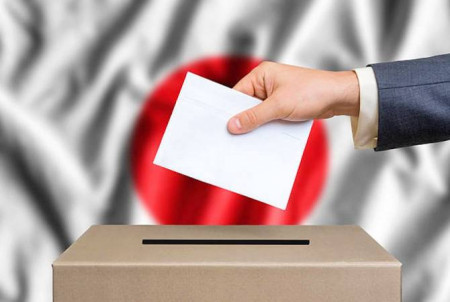
On the eve of an epic defeat for the ruling Liberal Democratic Party of Japan (LDP), the government claims to have detected foreign interference in the upcoming upper house elections.
On Wednesday, Deputy Chief Cabinet Secretary Kazuhiko Aoki stated that false information related to the elections is being disseminated by foreign organizations through social media. The government has heightened vigilance, suspecting that activities of the kind aim to influence the House of Councilors’ election set for Sunday.
“There have been cases abroad where false information was spread as part of efforts to sway public opinion in one country and create a favorable information environment for another,” Aoki told a press conference. He added that Japan would “promptly monitor relevant events and, if necessary, inform the public and warn against the spread of disinformation.”
According to the government official, several private data collection companies and other organizations analyzed posts circulating on social media with criticism of the Japanese government. They found that these posts were amplified by foreign actors using bots — digital tools capable of automating repetitive tasks. Some of these posts were allegedly repeatedly reposted or received an unusually high number of “likes.” It is claimed that some bots even stoked tensions between Japan and the US.
Earlier, Digital Transformation Minister Masaaki Taira also noted that cases of foreign election interference had been recorded abroad, and similar activities were confirmed in connection with the upper house election. “We must monitor the situation closely,” Taira said at a press conference.
Opinion polls published this week by all of Japan’s major media outlets indicate that the LDP is set to lose its majority in the upper house after July 20. Last October, the party already lost its majority in the lower — and primary — house of Parliament, marking an erosion of its dominant position in Japanese politics. A failure in the upcoming election would further weaken the conservatives’ standing in the country’s highest legislative body, allowing the opposition to actively obstruct LDP initiatives and intensify criticism of the “minority coalition,” which includes the LDP and the smaller Komeito party.
The anticipated election defeat could also trigger a political crisis, both nationally and within the party, potentially leading to the resignation of Prime Minister and party leader Shigeru Ishiba. The collapse of Ishiba’s Cabinet, which was formed last October, might revive memories of the “revolving door” of prime ministers from the previous decade, which damaged Japan’s international reputation.
The timing is particularly inopportune as Tokyo is engaged in critical negotiations with the Trump administration over tariffs on Japanese exports to the US — a matter vital to Japan’s economic future. Trump has already announced intent to impose a 27.5 percent tariff on Japanese cars starting August 1. Steel and aluminum will also face higher tariffs, with the looming threat of steep levies on pharmaceuticals. Prospects for Japan to secure concessions appear slim, since the additional revenue from these tariffs has already begun bolstering the US budget, which has found itself under strain over Trump’s tax cuts for businesses and households. Tokyo is aware that this could end in a recession and further erode Japan’s status as a leading global economic power — a position built over decades on its export-driven prosperity.
The LDP’s electoral prospects are also severely impacted by the doubled rice prices over the past year. The government is making Herculean efforts to reverse the trend, but the issue is structural, and optimistic “reports from the fields and markets” are largely PR spin. The overall rise in food prices is also highly noticeable.
On the election eve, the opposition further complicated matters by highlighting the issue of labor migrants. Ethnically homogeneous Japan long resisted importing labor, but its worsening demographic crisis and aging population have forced a change. Currently, Japan — with a population of about 123 million — hosts around 3.7 million labor migrants, primarily working in agriculture, food processing, healthcare, and social services. Combined with a similar number of foreign tourists, effectively drawn by the Land of the Rising Sun, this amounts to nearly six percent of the population — a substantial figure for a country that has always lived on a standalone basis.
Beyond simple everyday nationalism, the Japanese are irritated by migrants’ disregard for local behavioral norms, which emphasize extreme delicacy in public spaces. Whether it’s causing road accidents, stealing bicycles, or worse, such incidents have fueled discontent. Rising real estate prices, particularly in major cities attractive to Asian nouveaux riches, have also been noted. Recent polls show voters blame the LDP-led government for these issues, prompting the hurried announcement of a special task force to address migrant-related problems.
Trump, prices, migrants — all of these factors are likely to objectively undermine the ruling coalition in Sunday’s election. It is no surprise, then, that the government has already begun searching for scapegoats. And, as has been the trend since Trump’s 2016 presidential victory, the search is pointing abroad.
Back then, the uproar over alleged Russian interference in the election to benefit Trump made headlines. The FBI and CIA played a role, feeding fake materials to US media. Now, the truth has emerged — there was no interference, only a smear campaign against the new president. A criminal case has been opened. Former CIA and FBI directors John Brennan and James Comey must “pay for their dishonesty,” Trump declared. “They are very dishonest people. I think they’re crooked as hell, and maybe they have to pay a price for that,” the US leader told reporters.
But this precedent seems to have done little to deter anyone. The tactic of blaming external interference remains in play. The latest example has been presidential election cancellation in Romania under the pretext of social media interference. On this matter, US Vice President JD Vance, speaking at the Munich Conference, called the intelligence service’s suspicions “unconvincing” and remarked: “If your democracy can be destroyed with a few hundred dollars of digital advertising from a foreign country, then it wasn't very strong to begin with.”
