
Negotiations are just negotiations, but SMO goes on as planned
Leaders of Russia and the USA are optimistic, but no specifics have been announced

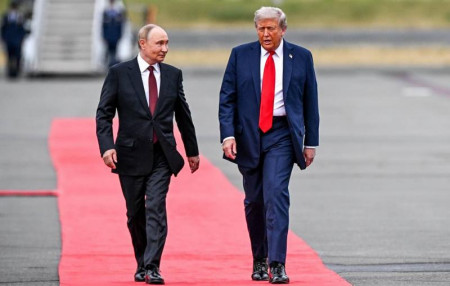
The meeting between Russian and American presidents has certainly become the key event in world politics and across the entire information space over a long period of time (though this duration is relative in our era saturated with shocks and sensations). Even the phone calls between the Russian President and Western leaders since SMO began can be counted on fingers, while here it was about face-to-face, live communication with the leader of that very West.
The summit evoked mixed feelings with the rest of the Euro-Atlantic community and Ukraine. On the one hand, they naturally wanted and still want Trump help them pressure Russia into accepting their desired terms of regulation. On the other hand, they were frightened by the very fact of our country’s serious breakthrough through the Western diplomatic blockade. The attempt to reconcile these two narratives — as they say now — was the focus of the EU-NATO-Trump-Zelensky video conference held on the eve of the summit.
The location of the meeting surely provided additional fodder for historical reflections and parallels — a Russian territory that later became American. Much in Trump’s behavior, as well as the approaching 120th anniversary of the Portsmouth Peace Treaty signed in the US, brought to mind the Russo-Japanese War, its end, and the role played by Theodore Roosevelt. While supporting Japan and congratulating it on its military successes, the then-American president also sought to earn laurels as a peacemaker — but in a way beneficial to Washington and himself. In the end, he was awarded the Nobel Peace Prize.
References to the past continued on the negotiation day itself — for example, the T-shirt reading “USSR” worn by Russian Foreign Minister Sergey Lavrov sparked much gossip and interpretation. The mere inclusion in the delegation of not only the chief Russian diplomat but also the ministers of finance and defense revealed the participants’ highest expectations. As serious as the expectations were, the preparations for the event were equally chaotic. Take, for instance, the stadium where journalists were housed, as if they were Pinochet’s political prisoners (an American ally, by the way) …
The protocol and substantive aspects were also full of improvisations and last-minute changes. For example, it was initially announced that the first part of the meeting would be held in a “one-on-one” format — meaning Putin, Trump, and interpreters. But just 15 minutes before the start, the White House announced that “this wouldn’t be enough,” and Secretary of State Rubio, Special Envoy Witkoff, Sergey Lavrov, and Presidential Assistant Yuri Ushakov would immediately join their leaders. It was also unclear who would meet the Russian President at the airport. In the end, it was the American counterpart himself, greeting the guest quite warmly.
The negotiations ended sooner than expected. At the joint press conference, the Russian and American leaders gave no indication of any substantial disagreements between them — nor of any specific agreements. Vladimir Putin said that under Trump, the war would not have happened, which, of course, comes across as a diplomatic compliment, considering that the White House master himself always emphasizes the higher-quality military-technical support he provided to the Kiev regime during his first presidential term as compared to the Obama era.
President Putin also noted the constructive and mutually respectful tone of the negotiations, the focus on results, and Trump’s desire to help reach a settlement, which aligns with Russia’s own aspirations for such a resolution. Trump, too, called the summit productive, spoke of tremendous progress, and mentioned the alignment on several points of the Ukrainian agenda, though he acknowledged no unity on the main issues. However, he immediately expressed optimism about the chances of resolving those. The POTUS called Putin’s proposal to hold the next meeting in Russia “interesting” and noted that he looks forward to speaking with his guest again very soon.
The leaders declined to answer journalists’ questions. Trump has no need for unplanned attacks from liberal media right now. But in a detailed interview with the like-minded Fox News, Trump was verbose and thorough. He reiterated that progress had been made at the summit, without specifying details, and announced that the formalization of agreements was imminent. According to the White House occupant, the ball is now in Europe’s and Zelensky’s court. He urged the Ukrainian leader to make concessions and acknowledge realities on the ground, and he called on Europeans to “participate a little” in the peace settlement — presumably meaning not in the way they are doing now. Trump also mentioned preparations for a trilateral meeting involving Zelensky.
Mr. Donald also spoke to Zelensky and the Europeans as he had promised at the press conference. Their conference call lasted an hour and a half and, according to Axios, was quite tough. Trump told Zelensky and NATO leaders that Putin does not want a mere ceasefire but seeks a comprehensive peace agreement to end the conflict. At the same time, he essentially aligned himself with this approach: “I think a fast peace deal is better than a ceasefire.”
As a result, the illegitimate Ukrainian president is heading to Washington on Monday, as he wrote in his social media. “We support President Trump's proposal for a trilateral meeting between Ukraine, the USA, and Russia. Ukraine emphasizes that key issues can be discussed at the level of leaders, and a trilateral format is suitable for this,” the message reads.
Meanwhile, Deputy Secretary of the Russian Security Council Dmitry Medvedev made significant remarks about the summit’s outcomes on his Telegram account. One of them: “An important thing: The meeting proved that negotiations are possible without preconditions as the fighting in Ukraine goes on.”
In other words, Europe’s ultimatum to Russia — an unconditional ceasefire first, then negotiations — has failed again. And Trump seems to have now apprehended why.
