
US: Trump’s tariff policy not to solve national debt issue
Yet tariffs are becoming a drug for the US budget

The US national debt is growing rapidly. As of early September 2025, it has exceeded $37.4 trillion. Back in January 2024, it stood at $34 trillion; now, it has increased by 10 percent as compared to that figure. The volume of US government borrowing is now almost 25percent higher than GDP, but Washington keepsactively borrowing money to plug the budget gap — without which it would be impossible to fund the healthcare system, defense, infrastructure development projects, and so on. As a result, over the ten months of fiscal year2025, which began on October 1, 2024, the US budget deficit increased by 7.4 percent and reached $1.629 trillion (revenues for this period grew by 6.4percent — to $4.347 trillion, but expenditures rose by 6.7 percent — to $5.975 trillion. Both figures are record highs). Compare: at fiscal year-end 2024, the budget deficit was $1.83 trillion, an 8 percent increase from the previous year. However, this record will likely be broken in the current year.
And there are no prospects for improvement in sight. In August, the Congressional Budget Office raised its estimate of the country’s budget deficit for the next ten-year period (2025–2034) to $4.1 trillion due to the adopted law on tax benefits and government funding. The office added that, excluding changes in borrowing under federal credit programs, the adopted law would increase the national debt by 9.5 percent of GDP by the end of 2034 relative to the baseline forecast from January 2025. And if some of the temporary tax benefits and government spending programs provided by the law become permanent, the budget deficit would grow even more, reaching $5 trillion. In this case, the debt-to-GDP ratio would increase by 11.5percent relative to the January 2025 forecast.
Notably, as the US national debt grows, so does the cost of servicing it. Today, debt servicing already exceeds $1 trillion and costs the US Treasury more than defense spending. Moreover, over the past five years, this amount has more than tripled. In the future, the increasingly high cost of debt servicing is going tolimit the government’s ability to finance infrastructure, healthcare, and other critical economy sectors.
Borrowing money from the entire world, the US is not yet repaying its debts but uses a refinancing mechanism through new debts. To do this, it is increasingly turning on the printing press, leveraging its dominant position on the international stage. However, amid growing economic uncertainty, maintaining a paradigm of the kind has becomeincreasingly difficult. These circumstances led to Moody’s downgrade of the US credit rating from AAA to AA1 in May 2025 — for the first time since 1949. Prior to this, S&P had lowered its rating to AA+ in 2011, and Fitch did the same in 2023.
The adoption of the aforementioned law on new tax benefits in July 2025 added to investors’ concerns about US debt. The Trump administration justified the need for this law as essential to support the economy. It includes new tax benefits worth hundreds of billions of dollars, not offset by spending cuts. This will further increase the budget deficit. The Committee for a Responsible Federal Budget predicts that the tax law will add up to $5.2 trillion to the national debt over 10 years. However, the Trump administration insists that the tax cuts will stimulate growth, increase revenues, and reduce the deficit.
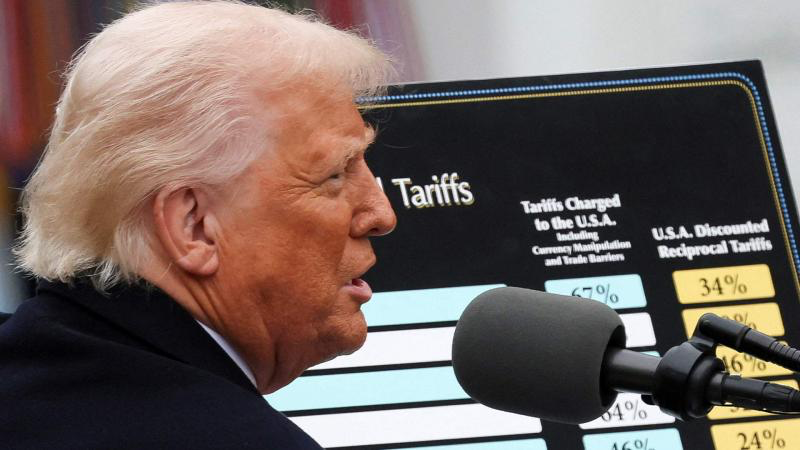
For now, to compensate for these new expenses, increase budget revenues, reduce the US trade deficit, and — as Trump believes — protect American producers from unfair international competition, the US administration has increased tariffs on foreign producers for the right to sell goods in the American market. The extensive tariffs announced on April 2 against 70 countries came into effect on August 7. For instance, Trump imposed 50 percent tariffs on goods from India — not only to address trade imbalances but also as a “corrective measure” for Delhi’s purchase of Russian oil. This shows that the US administration is using tariffs not only to replenish the budget and revive industry but also to achieve geopolitical goals. For goods from South Africa, the tariff is 30 percent. For Chinese ones — temporarily, under an agreed-upon deferment with Beijing — it is also 30 percent, but it could be raised to 145 percent.
As per estimates by the US Congressional Budget Office, Trump’s tariffs could increase federal budget revenues by $4 trillion over the next 10 years. These funds would help offset tax benefits provided by the aforementioned “Big Beautiful Bill,” which would otherwise an additional $4.1 trillion in government borrowing over the same period. Thus, tariff revenues will help strengthen US public finances. Without them, the US debt burden would reach $150 trillion by 2055. However, they will not be able to “plug the hole” in the budget, which will continue to grow.
Therefore, development prospects for the national debt situation keep worrying investors, even after uncertainty regarding Trump’s economic policy gets reduced, due to the ongoing tariff war with major trading partners and attacks on the Fed. According to some investors, although a US default is unlikely in the near term, the relevant risks have increased over the last few recent years. Geopolitics adds to the problems. US sanctions against Russia, China, and India, along with the tariff war, have accelerated the shift toward settlements in national currencies. For example, China has already reached agreements with 30 countries to trade in yuan. All of this has reduced demand for US Treasuries.
Moreover, in the current environment, the US government’s room for maneuver is shrinking. Itcannot cancel the tariffs anymore. As Des Lawrence, Senior Investment Strategist at State Street Investment Management, noted, suspending the tariffs would deprive the US government of an important source of revenue, sharply exacerbating the problem of public spending. According to projections by the Congressional Budget Office, once the tariffs getcanceled, US debt relative to GDP may exceed levelsseen during World War II by 2029 already.
For now, S&P and Fitch, considering the prospects forincreased tariff revenues, have refrained from further downgrading the US credit rating. Global bond markets have also stabilized after the slump caused by “Tariff Day” — as Trump called his April tariff measures.
However, recent weeks have seen pressure on the national debt intensify again amid record borrowing by developed countries, which increases the long-term cost of debt servicing. Therefore, major investors increasingly doubt the status of US assets as a “safe haven” amid anxiety about consequences of Washington’s current policy. They believe that one of the tariff war consequences will be increased fragmentation of the global economy, which, in turn, will pose a threat of slowing global trade, rising overall inflation, and stagflation in a number of developing countries. Ray Dalio, founder of Bridgewater, believes this could entail major problems in the supply-and-demand dynamics of the US government debt market and could have a devastating impact on both the US and the global economy as a whole.
