
Beijing embarks upon creating \"self-sufficient economy\"
Amid its trade war with the US, China has boosted economic autonomy

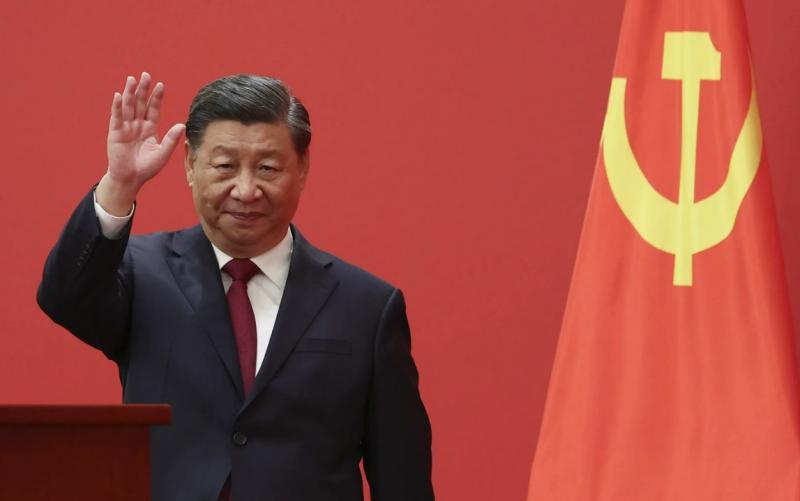
Late October witnessed Beijing hold the Fourth Plenum of the 20th Central Committee of China’s Communist Party. It approved Recommendations for Formulating the 15th Five-Year Plan for 2026 to 2030 (hereinafter referred to as the Recommendations) that define the goals and priority areas for the country’s socio-economic development throughout the period. The plan’s final version is to be approved at the session of the National People's Congress in March 2026.
The 15th Five-Year Plan features the following core goal: ensuring security through the construction of a "self-sufficient economy in a turbulent global market." This marks a strategic shift; where earlier plans prioritized GDP growth above all, the new mandate is to diminish external dependencies and build economic resilience to withstand external shocks. The chosen path to this resilience is technological sovereignty, aiming for complete self-sufficiency in critical fields like AI, quantum computing, and biotechnology. For industrial policy, the focus is on modernizing the industrial system with advanced manufacturing, all while keeping the sector's share of the economy at an "appropriate level." Furthermore, the plan calls for an accelerated "green transition" to hit peak CO2 emissions by 2030 and achieve carbon neutrality – by 2060.
The government has reaffirmed commitment to an open foreign economic policy, emphasizing quality instead of quantity, advancing the Belt and Road Initiative, and forging new horizons for mutually beneficial cooperation.
In the social sphere, the main purpose is creating a "Common Prosperity Society" by reducing people’s income gap, for which the income distribution system and the social security system will be improved. Steps to that effect are also meant to stimulate domestic demand.
Regarding the reasons for the Chinese leadership's approach to socio-economic planning, the main driver has been the intensifying trade war with the US under Donald Trump's second term. Although trade talks between Washington and Beijing have been underway since January 2025, the compromises achieved have hardly solved the issues accumulated. Things are compounded by Donald Trump's repeated threats to levy 100-percent tariffs on all Chinese goods. An additional threat emerged from US sanctions against Russian oil giants LUKOIL and Rosneft on October 22, which endangered China's energy market. As a countermeasure, Beijing moved to drastically tighten regulations on rare earth metal exports to the United States.
Chinese analysts contend that in this context the nation's economy has developed an excessive orientation toward exports. With private consumption accounting for a mere 40 percent of GDP — compared to 70 percent in the US — the economy is left acutely vulnerable to sanctions. The ensuing decline in exports to key Western markets has led to industrial overproduction and a glut of manufacturing capacity in many industries. The result is that Chinese plants are compelled to cut prices to stay competitive, frequently sacrificing quality and wages, a phenomenon known as "involution." In the view of these specialists, boosting domestic demand is thus emerging as a crucial lever for enhancing the economy's ability to withstand external shocks.
Beyond external factors, the economy is being dragged down by a persistent real estate crisis. The slump has devalued assets, diminished household wealth, and led to a prolonged contraction in the construction industry — a sector previously responsible for up to a quarter of GDP.
These developments have collectively spurred an economic slowdown, widened social inequality, and driven up unemployment, especially affecting young people (18 percent in 2024). The outlined measures — strengthening social security, promoting fairer income distribution, and improving access to education and healthcare — are specifically designed to alleviate these underlying causes of public dissatisfaction.
Notably, the Chinese officials have framed the 2026–2030 period as a pivotal bridge linking the "past with the future," presenting the Recommendations as a timely and fitting answer to these combined external and domestic challenges. They stress that public investment in high-tech sectors will generate powerful new growth engines, offsetting the downturn in traditional industries. This strategy, they believe, is what will pave the way for China to attain the status of a "moderately developed country" by 2035.
The Recommendations stand out for finally settling a key dispute among China's economists over strategic priorities. While the nation's advances in IT had sparked talk of dominating a "virtual economy" and tempted a narrow focus on nascent sectors — potentially abandoning "outdated" manufacturing — the new blueprint charts a different course. It explicitly calls for preserving and advancing these traditional industries through the application of new technology. The Plenum's directives make it clear: AI and the digital economy are to be harnessed to revitalize and modernize China's core industrial base for the modern era. The successful execution of this vision could grant China an industrial ecosystem of unparalleled breadth and integration, equipped to produce a vast array of products. The final result would be a nation significantly more resilient to external economic coercion.
A primary priority for achieving the plan's objectives is attaining self-sufficiency in innovation and cutting-edge R&D, which is intended to fuel a substantial share of economic growth. For 2026-2030, the government has pinpointed key fields for development, including quantum technologies, bioproduction, hydrogen energy, nuclear fusion, brain-computer interfaces, embodied AI, and sixth-generation networks. Along with new energy sources, advanced materials, aerospace, and low-altitude aviation, these sectors are envisioned as the main drivers of national economic expansion. The focus extends beyond pure technology to encompass the necessary infrastructure: computational resources, datasets, cloud services, international standards, and workforce development.
Another enduring priority is the "green economy." Chinese media reports that in 2024, "green investments" contributed 10.4 percent to GDP ($1.9 trillion) and were responsible for 26 percent of the nation's economic growth. This means that without this sector, GDP expansion would have stood at just 3.6 percent, falling short of the 5 percent target. Should the objectives of the 15th Five-Year Plan be met, some Western analysts argue that China will position itself for global leadership in this arena, especially as the Trump administration continues to step back from climate initiatives. These observers also suggest that the underlying motive of Beijing's climate plan is less about countering warming and more about consolidating its geopolitical sway among developing nations.
To achieve its stated goals, China's leadership intends to harness the distinctive strengths of its economic model. These include a massive internal market, deep reserves of both intellectual and labor resources, and the unique Chinese expertise in blending state planning with market-driven mechanisms.
