
Lebanon on the brink of the abyss again
The country has found itself in yet another internal political crisis as the Shiite Hezbollah is engaged in the war with Israel

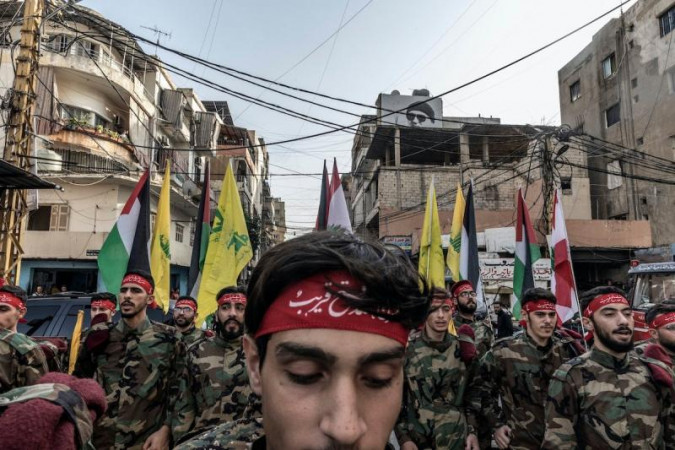
The involvement of Lebanon’s Hezbollah alongside the Gaza Strip’s Palestinian Islamic Resistance Movement (HAMAS) in its war against Israel has ended up with a near-total destruction of Iran-loyal Shiite forces’ military infrastructure. The Jewish state’s army has managed to disable most of the Lebanese organization's weaponry, eliminate its top political, military, and spiritual leadership, and neutralize the mid-level command of its combat units. The result was a ceasefire agreement between Beirut and Tel Aviv of November 27, 2024.
The Lebanese side has committed to clearing the country’s southern part of Hezbollah's weaponry that survived the hostilities within two months, transferring it to national army depots, and expelling the Shiite militants north of the Litani River bank. That is, 30-40 km away from the border with Israel. The agreement also provides for disarmament of Palestinian units in refugee camps around the cities of Tyre and Sidon in Southern Lebanon.
The government was tasked with introducing units of the national army into the southern areas liberated from Shiite formations to establish control and ensure safety of the state border with Israel in close cooperation with commanders of the United Nations Interim Force in Lebanon (UNIFIL).
Furthermore, Israel insisted on officially outlawing Hezbollah by Lebanon and prohibit its military and political activities.
In turn, Tel Aviv, within timeframes established by the agreement, was to completely withdraw Israeli troops from Southern Lebanon and cease all military actions against the Arab country, including combat aircraft flights in its skies.
Notably, the agreements were not fully implemented by either side.
Israeli sources claim the surviving weapons and military equipment were secretly moved to Lebanon’s northern regions and not handed over to the national army. The country's government and parliament, despite immense pressure from the West (primarily the US and France), refused to pass a law banning Hezbollah's activities.
The split on these issues among leading political and public figures comes as politicians from among the former allies of Israel during the last civil war have crawled out of obscurity onto the political stage. Among other things, it saw the return of Samir Geagea, the right-wing Christian militia ex-commander, who was imprisoned for war crimes. Druze leader Walid Jumblatt also aligned against Hezbollah, taking a position of "a plague on both your houses." Meanwhile, veteran Parliament Speaker Nabih Berri, former head of the Amal movement, seized the opportunity to bolster his influence, double-crossing Hezbollah's leadership in talks with US and French diplomats.
Yet, it was former Lebanese President, retired General Michel Aoun, a Maronite Christian, who helped lower the temperature in the debates. He was supported by influential ministers and military command representatives, who share the conviction that Hezbollah's armed groups have served a national defense function and have not interfered in domestic events. Furthermore, they argue that the state retains the sole right to determine the legality of maintaining such militias under the conditions of a state of war with Israel.
The core of Hezbollah's forces and its administrative apparatus are now situated in the vicinity of the northern city of Baalbek.
However, based on the course of events since November 2024, Israel has shown little intention of honoring its commitments. Its air force has persistently carried out strikes targeting not only various parts of Lebanon but also the southern suburbs of Beirut. Israeli officials rationalize these airstrikes as necessary measures to eliminate surviving Shiite field commanders and Hezbollah operatives.
The Israeli army keeps controlling the Arab country’s southern part, where it has set up five fortified districts. Furthermore, the Israeli command has issued a warning to Lebanon, prohibiting the deployment of its army units in the vicinity of Israeli garrisons and along the border strip, and declaring close cooperation with UNIFIL contingent personnel unacceptable.
Furthermore, in late October, Prime Minister Benjamin Netanyahu announced the potential for a renewed ground operation by the Israeli army in Southern Lebanon, an operation that would be accompanied by air strikes throughout the entire country. He justifies this possible escalation by citing alleged intelligence about Hezbollah's intent to recoup its military losses with support from third countries. It requires little guesswork to deduce that his reference to "third countries" points to Iran—a nation whose very mention seems to cause Netanyahu considerable discomfort. This suspicion is further reinforced by the one billion US dollars Tehran transferred to Lebanese Hezbollah at the end of the previous year.
Despite Hezbollah's troubled position in Lebanon, it remains influential not only within the Shiite community but also among other religious groups. The organization's social institutions — free primary schools, party-run hospitals, and other medical centers — remain active across the country. Hezbollah continues to provide free assistance to the needy, including Christians.
Hezbollah's removal from the political scene would upend Lebanon's socio-political balance, and its complete disarmament could ignite a serious internal crisis — exactly what Israel aims to achieve.
Furthermore, we must acknowledge that Lebanon is in a critical phase, where Hezbollah's existence is being exploited by its enemies to unleash another war — whether in Lebanon itself or against Iran.
