
The West makes a serious play for Central Asia
A flurry of summits with Central Asian leaders

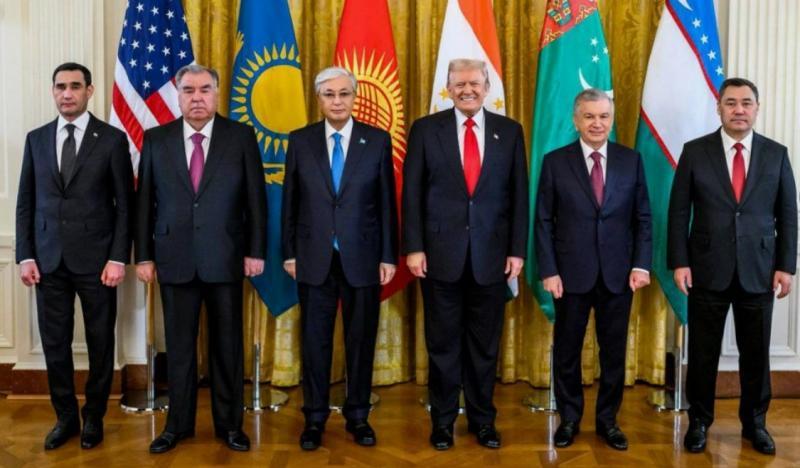
A recent surge in diplomatic activity marks a concerted Western pivot towards Central Asia, with leaders actively forging new cooperative pathways.
Thу trend was exemplified in March 2024 by the signing of a Critical Minerals Cooperation Roadmap between Kazakhstan and the United Kingdom.
Relations between the European Union and Central Asia reached a pivotal moment with the first-ever EU — CA summit in Samarkand (April 3-4, 2025), featuring a €12 billion EU investment package — an increase on its prior €10 billion "Global Gateway" pledge — heavily focused on mineral extraction, hydropower, and renewable energy.
The strategy gained further momentum from the historic C5+1 summit in Washington on November 6, 2025, initiated by US President Donald Trump. The summit yielded agreements spanning vital raw materials, investment, logistics, water resources, and technology. Western observers interpret this as a definitive signal of Washington's resolve to intensify its rivalry with Beijing and Moscow for influence in the region.
Japan stands as a key investor in Central Asia, with over $8.5 billion channeled into Kazakhstan's economy. Marking the 20th anniversary of their dialogue forum, Tokyo hosted the inaugural "Central Asia + Japan" leaders' summit on December 18-20, 2025. The resulting Tokyo Declaration aims to elevate ties to a deeper strategic partnership. Japan committed to investing around $20 billion in regional business projects over five years, including deals worth $3.7 billion signed with Kazakhstan alone, focusing on green energy and critical mineral supply chains.
This underscores Central Asia's emergence as a new battleground for influence and vital resources like rare earths. The West's push is widely seen as an effort to break the "Chinese stranglehold" on these materials. Given high transport costs and infrastructure limits, Western strategy emphasizes not just extraction but also on-site processing — investing in technology and building local value chains to keep more added value within the region. The parallel drive to develop the energy sector aims to power these future industries.
The development of resource extraction projects in Central Asia by Western companies was long hindered by the lack of a transport corridor independent of Russia. This is now changing, with the Trans-Caspian International Transport Route (TITR), or Middle Corridor, seen as the central logistics alternative. A significant development is an agreement between the US and Armenia on the potential launch of the Zangezur Corridor — a 40-kilometer railway in southern Armenia linking Azerbaijan to its Nakhichevan exclave and onward to Turkey. Armenia, having previously refused, now agrees to cooperate on the "Trump Route for International Peace and Prosperity." Turkey and Azerbaijan have consistently viewed this corridor as crucial for regional and intercontinental connectivity.
Work is advancing quickly. Azerbaijan's President Ilham Aliyev recently stated the Azerbaijani section, with 15 million tons annual capacity, is almost ready. Turkey has begun building the "Kars — Dilucu" railway to connect the route from the west into Anatolia.
There is a Western expectation that the TITR can serve as a vehicle to gradually erode Russian and Chinese sway in the region, replacing it with Western influence. Specifically for the US, activating this corridor is perceived as a strategic instrument to enhance its control over the South Caucasus. The terms of its agreement with Armenia reportedly grant the US operational management of the Zangezur segment for up to 99 years. To secure it, plans involve deploying a US PMC contingent of no fewer than 1,000 personnel, said to be equipped with small arms and light armored vehicles, in return for a 40% share of the corridor's operational income.
For Europe, the route presents a chance to diversify critical supply chains, diminishing reliance on both Russian overland routes and bottlenecked maritime chokepoints.
Conversely, China aims to expand its Belt and Road Initiative ambitions by integrating with the TITR and potentially co-opting Western financial institutions like the World Bank into the project's framework.
For Central Asian countries, successfully expanding the TITR offers a path from the periphery to the center, elevating them to the status of key logistics partners for Turkey, the US, and Europe. This would solidify interregional connections, bolster economic stability, and reshape Eurasian trade flows.
Nevertheless, the Western strategy to increase clout and detach the region from Russian and Chinese sway confronts substantial obstacles. The EU's insistence on democratic conditionality remains a barrier to fuller engagement with Central Asia's governing classes. The US administration under Trump, by deliberately avoiding human rights pressures, has emerged as a more appealing counterpart.
A further complication is that advancing Western infrastructure projects will inevitably augment Turkey's regional power, potentially creating a more assertive actor that could challenge both Brussels and Washington. One likely manifestation of this could be Ankara pursuing closer coordination with China in Central Asia — an outcome that would directly counter the West's objective of containing Beijing's influence.
