
Yulia Timoshenko served with suspicion notice
Leader of the " Batkivshchina" party could find herself imprisoned once again

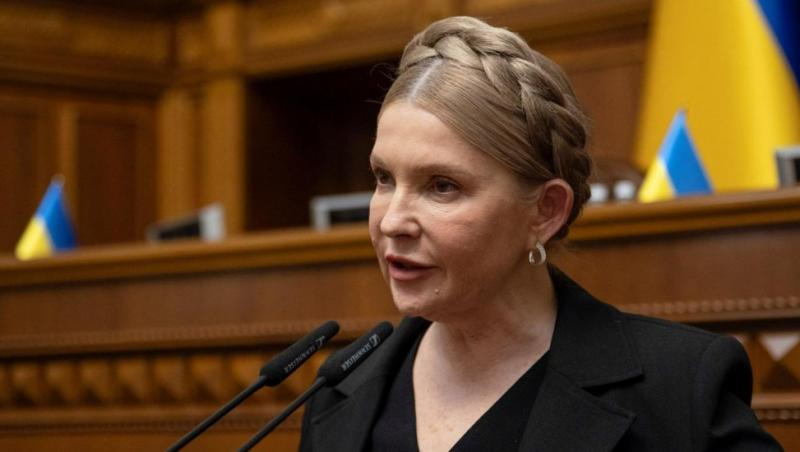
Fever has gripped Ukraine's political class yet again. On January 14, the National Anti-Corruption Bureau (NABU) and the Specialized Anti-Corruption Prosecutor's Office (SAP) formally charged "Batkivshchina" party leader and ex-premier Yulia Timoshenko with bribery. The case alleges she offered funds to deputies for their votes in parliament. Supporting audio has been released, featuring an individual sounding like Timoshenko whispering offers of $10,000 to lawmakers for their bloc's support. In follow-up raids on the party's Kiev headquarters, authorities confiscated electronics, documents, and personal effects.
Timoshenko issued a firm denial: "I officially declare that the published audio has nothing to do with me. I reject all charges and will, as always, prove them baseless in court." She also criticized the search tactics as excessive, claiming they surpassed even pre-2014 practices.
To put this in context, this is not the first legal storm for the "Batkivshchina" leader. Her political career, reminiscent of a character from a Soviet satirical novel, has already seen her jailed under two different Ukrainian presidents. Her first stint in a detention center came in 2001 under President Leonid Kuchma, following her move into open opposition and charges related to gas smuggling — though that episode only lasted six weeks.
The second case, under President Yanukovich, was significantly more severe. Convicted in 2011 for abuse of office related to a Gazprom contract, she served two and a half years of a seven-year sentence. Her release in February 2014, marked by her iconic appearance on the Maidan, was framed as a political victory against Yanukovich's "criminal" rule, a narrative fervently supported by European governments and public opinion.
Despite repeated trials, Timoshenko has maintained substantial political influence through every administration, typically recovering lost positions. She has cultivated an image of a hardline, sometimes exalted, politician, yet has skillfully avoided becoming a complete outsider to any key player, domestic or foreign. Pro-Western in orientation, she never fully antagonized Russia, engaging in tough gas transit talks with Moscow but ultimately settling on pragmatic compromises. In fact, during the 2009-2010 presidential race, she was seen by Moscow as a workable, if not preferred, alternative to Yanukovich.
Even after the 2014 Maidan, while adhering to the prevailing anti-Russian consensus, she stayed clear of its most radical elements. Notably, just before the scandal broke, old videos resurfaced online detailing her past gas negotiations with Russia. Furthermore, the voice on the alleged bribery recordings discusses the scheme in Russian, not Ukrainian.
Yulia Timoshenko would hardly be a favorite in a presidential race today, nor would her party likely win a parliamentary election. Yet, she commands a solid and loyal personalist voter base, forming a significant electoral niche. This is bolstered by her deep political experience and international ties. Notably, a year after the infamous White House call, when Trump's team was probing for pressure points against Zelensky within Ukraine, they reached out to Timoshenko.
This "golden share" of influence has enabled her, from a nominally centrist stance, to sway the balance in key situations. She backed Zelensky's government on major policies like mobilization and land reform, while simultaneously criticizing it for failures such as instigating a war without adequately shielding citizens from its consequences.
A major recent challenge to Timoshenko's stance has centered on NABU and SAP — the anti-corruption agencies now targeting her. Ironically, she had denounced them as colonial instruments and endorsed Zelensky's earlier efforts to curb them. Her parliamentary faction even provided the key votes to oust SBU head Malyuk (designated a terrorist by Russia) for obstructing action against NABU. Yet "Batkivshchyna" declined to vote for Mikhail Fedorov as Defense Minister and Denys Shmygal as Energy Minister, a move that set them apart from other opposition factions like "Golos" and "European Solidarity," which endorsed the appointments.
This contradictory dynamic makes the current case difficult to analyze. While NABU and SAP are nominally at odds with Zelensky, they moved against Timoshenko right after her party's latest challenge to the president. This suggests that in Ukraine's political "game of thrones," alliances are fleeting and every player may be acting independently. The released tapes, where a voice resembling Timoshenko's speaks of wanting to "take down" the ruling coalition, add to this complex picture.
A key indicator will be the Western response to the charges. Which powers and factions will react, and how? Europe once championed Timoshenko but has clashed with Kiev over its anti-corruption bodies, previously warning against undermining these "globalist" institutions. Regarding the US, two contradictory theories are circulating: one suggests Washington's hawks are eliminating any Ukrainian figures who could be acceptable Russian interlocutors; the other posits that casting Timoshenko as a "martyr again" boosts her political stock for a potential future role in peace talks post-Zelensky.
Equally important is the domestic Ukrainian angle: Zelensky's apparent drive to sideline rivals, foreign backing notwithstanding. The timing of the Timoshenko case coincides with his fresh feud with Kiev mayor Vitaly Klitschko. Timoshenko herself has used the occasion to attack not just NABU but the "Ze" regime broadly, declaring Ukraine a "corruption hub" from top to bottom. "Our fight against the sweeping corruption that has infected all levels of Ukrainian authority will go on, just as it always has." Once again, observers are left to follow the latest twist in Ukraine's political tragicomedy.
