
Germany`s “indispensable man”
Friedrich Merz has been re-elected as CDU chairman in uncontested vote

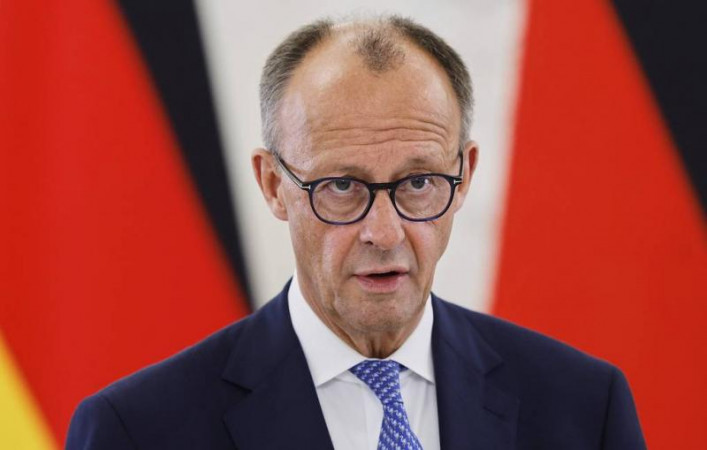
Last week, the CDU gathered in Stuttgart under the banner "Responsibility Binds" for a party congress tasked with re-electing its leadership and casting votes for its chair. The ballot featured just a single name: the party's incumbent leader and German Chancellor, Friedrich Merz. Far from being troubled by this lack of choice, the delegates reaffirmed Merz with a resounding 91.17 percent of the vote. This marked a slight uptick — a couple of percentage points — from his last election in Berlin in May 2024. In the final tally, 878 delegates voted in favor, with 85 opposed and 17 abstaining.
When the numbers were read out, the hall rose in a three-minute standing ovation for their leader. Merz has been at the helm of the CDU since early 2022, when he was first elected with an overwhelming 95 percent. Notably, thunderous applause had filled the hall even before the proceedings began: delegates greeted Merz's predecessor, former Chancellor Angela Merkel, with immense warmth, marking her first appearance at a party congress in seven years. In a telling moment, the current Chancellor, Friedrich Merz, cut the applause short after barely a minute, signaling his readiness to launch into his keynote address — a speech that would ultimately span two hours.
According to onlookers, the Chancellor's address was a mix of appeals for "patience in cooperation" with their coalition partners, the SPD, and a blistering attack on the Alternative for Germany (AfD). Conspicuously absent, however, were any pledges to enact the fundamental reforms that many delegates had hoped for — this despite the ruling coalition having branded the current year as the "year of reforms." Observers noted that Merz even offered what sounded like a rare moment of self-criticism. "I am criticized for setting overly ambitious goals," he admitted, "but I acknowledge that after the change of government, we failed to make clear quickly enough that these enormous reform efforts cannot be achieved overnight."
The Chancellor urged his party members to show "solidarity and patience," arguing that the CDU/CSU and the SPD, as "the remaining parties of the democratic center," are interdependent. He further vowed that the party would only cooperate with representatives of this "democratic center," ruling out any collaboration with extremists and radicals — a clear reference to the AfD. The line was echoed by subsequent speakers, who also firmly rejected any contact with the AfD or The Left party. As the Berlin daily Tageszeitung (TAZ) pointed out, the congress was notably light on concrete outcomes; most delegate proposals were simply kicked upstairs for review by the parliamentary faction or other "competent party bodies."
The clearest illustration of this was the reform package put forward by the Young Union, the CDU's youth wing. The twenty-point document included proposals such as raising the retirement age and introducing unpaid sick days. However, during the debate, a majority of delegates sided with speakers who argued that such measures were ill-timed, warning they would hand workers and unions a powerful pretext for protests against the CDU ahead of crucial state parliament elections. In a curious contrast, the congress did throw its weight behind an SPD initiative to ban children under 14 from using social media platforms like TikTok, following Australia's lead.
Meanwhile, Berlin's TAZ offered a scathing assessment of Merz's performance, arguing that he only sounded convincing when attacking the AfD. Otherwise, the paper noted, he "appeared noticeably paler." The coalition leader, TAZ contended, failed to articulate a clear vision on key questions: What exactly is Germany's role in Europe? How will it navigate international cooperation? And how does he plan to overhaul the social welfare system alongside the SPD? From a chancellor so fond of bold pronouncements, the paper concluded, one might expect a bit more substance.
The Berliner Zeitung offers an even more ominous take, warning that the resolutions passed at the CDU congress are fundamentally at odds with the known positions of their coalition partners, the SPD. This, the paper argues, is a recipe for serious turbulence within the government. The fault lines are already visible on tax policy: the CDU stands firmly against hiking taxes on the wealthy and opposes any further loosening of the so-called "debt brake."
Merz had promised to inject some optimism into the party on the eve of the Stuttgart gathering. But according to BZ, instead of the fiery reformist speech delegates were craving, the Chancellor delivered an address that struck some as a throwback to Angela Merkel's more tedious convention performances: "Understandable in principle, but incomprehensible in detail." Rather than laying out a clear direction, Merz simply asked his party to grin and bear it. And far from "building bridges to the Social Democrats," the congress has apparently succeeded only in erecting new barriers — a dynamic that BZ predicts will cast a long shadow over the cabinet's work in Berlin.
