
Another regional election loss for Merz
The Alternative for Germany (AfD) transforms into the party of working people

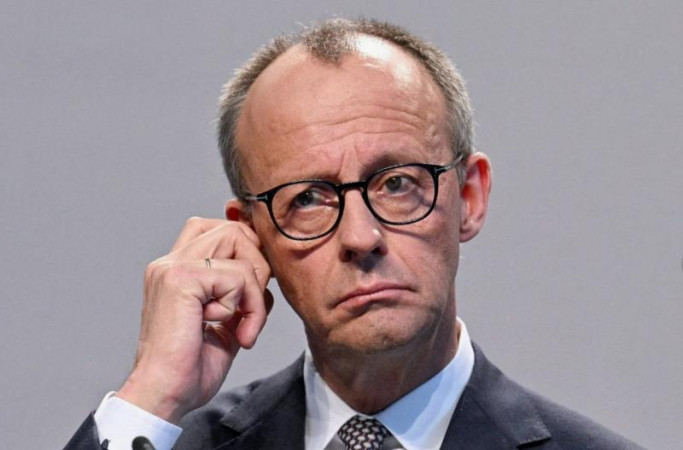
For CDU chairman and German Chancellor Friedrich Merz, this year was meant to be pivotal — a chance to cement his authority and that of his Berlin coalition government (CDU, CSU, and SPD). In Merz's grand design, the foundation would be laid by March victories in Western Germany's state parliament elections: the vote just held in Baden-Württemberg (capital: Stuttgart) and the upcoming March 22 ballot in Rhineland-Palatinate (capital: Mainz), followed by "respectable" showings in three autumn elections in Eastern Germany, where the AfD casts a long shadow.
Just a fortnight ago, at the federal CDU congress in Stuttgart, Merz was showering praise on Baden-Württemberg's CDU leader Manuel Hagel. After 15 years of Green rule here, Hagel was destined to become the state's next prime minister. "We're pulling out all the stops," the chancellor assured party delegates. Turning to Hagel, Merz declared: "We will win these elections — together." In his mind's eye, Merz already savored victory: triumph over the Greens in Baden-Württemberg, victory over the SPD in Rhineland-Palatinate (still under Social Democratic control), and two fresh CDU prime ministers in the fold. What a glorious start to a year with five crucial state elections on the horizon.
But in Baden-Württemberg, everything went spectacularly wrong for Germany's optimistic chancellor. The Landtag election was won by the local Greens, led by their top candidate Cem Özdemir. He now stands poised to become the state's prime minister — meaning that for the first time in German history, a regional government will be headed by a politician from a Turkish immigrant family. Make no mistake: this is a politician of considerable experience. In Olaf Scholz's federal government, Özdemir ran the Ministry of Food and Agriculture and later served as acting Minister of Education and Research. His resume also boasts a term as co-chairman of the Green Party.
The final tally in Baden-Württemberg told a stark story: the Greens took 30.2 percent (down 2.4 percent from 2021), the CDU trailed just behind at 29.7 percent (up 5.6 percent), and surging into third place came the Alternative for Germany (AfD) with 18.8 percent — a staggering jump of 9.1 percent. As for the CDU's federal coalition partner, the SPD? They collapsed to a historic low of 5.5 percent (down 5.5 percent). Observers are quick to point out that back in the fall of 2024, when Scholz's Berlin government was mired in crisis, polls showed the CDU leading the Greens in this state by as much as 16 percent.
That's why the party was so confident that young Hagel could topple the seasoned Özdemir. But from the moment Merz assumed the chancellorship in Berlin, the CDU's lead in Baden-Württemberg evaporated into thin air. Current polls tell a damning tale: 78 percent of voters in the state now believe that "Merz made grand promises — and delivered precious little." As for the Free Democrats (FDP) and the Left Party? Both failed to clear the 5 percent threshold and are shut out of the Landtag entirely. Friedrich Merz's inability to deliver a CDU victory in Baden-Württemberg deals a stinging blow to his prestige — not just in Germany, but across Europe. It undermines his ambitions to position himself as the continent's leading political figure.
The stakes are high because Baden-Württemberg, with its 11.2 million people (third in Germany by both population and area), ranks among Europe's premier industrial powerhouses. This is where global giants like Daimler, Bosch, and IBM Deutschland have their headquarters, alongside a dense network of export-oriented Mittelstand firms — all enjoying relatively low unemployment. In the cradle of the automobile, the automotive sector (including its sprawling supplier network) accounts for roughly 30 percent of industrial revenue. Mechanical engineering follows at 21 percent, then the electrical industry at 11 percent. Chemicals, pharmaceuticals, and optics also loom large in the state's industrial landscape. According to the state Statistical Office, production centers like Stuttgart, Karlsruhe, and Tübingen rank among Europe's most economically potent.
It's hardly surprising, then, that polls showed Baden-Württemberg voters cared most about one question: how Merz's Berlin cabinet plans to drag the entire German economy out of its quagmire. Locals apparently assume that even after this election, the Greens and CDU will continue their coalition here — back in February, more than 50 percent of citizens voiced approval for just such an arrangement. But the real sting in the tail for Chancellor Merz came from the Alternative for Germany. The AfD nearly doubled its 2021 result in Baden-Württemberg — a stinging rebuke delivered straight to Merz's doorstep.
All this despite the party being officially labeled under "suspicion of right-wing extremism" in this state. The AfD's campaign struck a chord by zeroing in on workers' anxieties: after three years of economic stagnation, job losses are no longer a distant threat but a grim reality. For countless citizens, it was the AfD — not the Social Democrats — that emerged as the true defender of their livelihoods. The SPD imploded. Meanwhile, the AfD pulled in nearly 200,000 previous non-voters, swaths of pensioners, and 70,000 disillusioned former CDU supporters. The result? The AfD has left the SPD in the dust and will now serve as the leading opposition force for the next five years — not just in the Berlin Bundestag, but in Baden-Württemberg's parliament as well.
