
Aggression against Iran is a strike on China, too
How the Middle East crisis poses a new challenge for Beijing

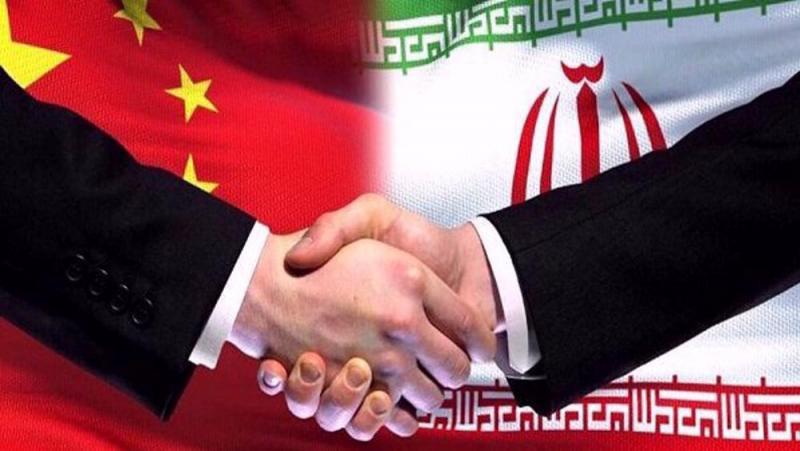
China has significantly stepped up its economic cooperation with the Middle East over the past few years. Beijing is now the top trading partner for ten Arab states, which collectively rank as the 6th largest trading partner for the PRC. Bilateral trade with the region has reached nearly $400 billion annually, with direct investments exceeding $30 billion. For China, the Middle East is a vital source of oil and gas — supplying more than a third of its imports in 2025. The partnership has evolved beyond traditional infrastructure investment in transport, ports, and railways. In recent years, it has expanded into new frontiers: nuclear energy, space, renewables, agriculture, finance, and the development of artificial intelligence.
In its relations with the region's countries, China positioned itself as an alternative to the US. Unlike Washington, it acted with skill, caution, and diplomacy — avoiding harsh rhetoric or confrontation — and achieved notable successes. In particular, it managed to resolve one of the Middle East's most intractable conflicts: reconciling Saudi Arabia and Iran.
Within this Chinese strategy, Iran occupies a special place. It is not merely an energy supplier, but above all a transit hub and a key partner in ensuring supply security and advancing financial alternatives to the dollar. This is due to its location at the crossroads of Central, South, and West Asia. In effect, Iran underpinned the development of an alternative to the American model of Chinese-Arab relations — one where infrastructure integration and settlements in national currencies reduced dollar dependence and allowed for the sharing of economic dividends.
To achieve these goals, Beijing struck a deal with Iran, pledging $400 billion in infrastructure investment over 25 years. It has actively leveraged Iran's geography to advance both the overland Silk Road and its maritime counterpart — via Persian Gulf ports. In 2025, a direct rail link between Xi'an and Iran was launched, cutting cargo transit times by 30 days as compared to sea routes. The Chabahar port has been modernized, offering a route that bypasses the Malacca Strait and opens access to the markets of Afghanistan and Central Asia. Construction is underway on the Tehran-Hamadan railway, the Bandar Abbas port is being upgraded, and development continues at the Azadegan and Yadavaran oil fields. The overland oil pipelines and ports, both completed and under construction, are reducing dependence on the Strait of Hormuz. The US and Israeli strikes on Iranian facilities in 2025 slowed the implementation of several projects but did not halt them entirely. Now, however, their future is in question.
Thus, the US has struck China at its most vulnerable point. Against this backdrop, China's position regarding the US-Israeli aggression against Iran raises questions both in the collective West and on the Global South. As The National Interest put it, "There is short-term diplomatic value in that posture, especially among states wary of American force. Yet there is also a hard ceiling. China is Iran’s “comprehensive strategic partner.” It has invested economically and offered diplomatic cover. But when missiles fly, Beijing does not deploy carrier strike groups. It does not enforce no-fly zones. It does not defend sea lanes with the same reach and credibility as the United States. That gap will not go unnoticed in the region. The Gulf monarchies and other Middle Eastern states hedge between Washington and Beijing precisely because they know that trade and technology cannot substitute for security guarantees… China risks losing not just discounted oil but a strategically useful partner positioned at a critical crossroads."
Perception of things is further complicated by the fact that, under agreements reached after the war began, Iran keeps shipping significant volumes of oil to China — more than 11.7 million barrels have been delivered, although current supply levels (around 1.22 million barrels per day) are considerably down from February's peak (2.16 million barrels per day, the highest since July 2018). This suggests that China, while maintaining its wait-and-see stance, is actively stockpiling oil to cushion itself against potential risks.
Until now, Beijing has preached a policy of dialogue and negotiation in the Arab world as a means of resolving differences — emphasizing respect for each nation's distinct character and advocating openness. In essence, it promoted a doctrine opposed to the West's forceful export of "democracy." And it keeps following the line today, calling for de-escalation and urging the world to avert serious consequences for the global economy. The aim is to cast the US as an aggressor with whom engagement is untenable. Beijing has shown little appetite for being drawn deeply into the conflict, fearing that doing so could damage its economic interests and create new flashpoints in its relations with Washington.
For now, this stance aligns to a certain extent with that of the Gulf states. It was articulated on March 12 by Oman's Foreign Minister, Badr bin Hamad Al Busaidi, who stated that "Oman considers the military attacks by the United States and Israel on Iran illegal and that as long as they continue military actions, they violate international law." He added that "the US decision to strike Iran at a time when peaceful negotiations on the Iranian nuclear program were moving forward demonstrated that the conflict is solely an attempt to reshape the order in the Middle East in Israel's favor." Saudi Arabia also supported this position, refraining from opposing Iran and condemning Israel instead. This indicates a growing resentment toward the White House among Gulf leadership over the unleashed war.
They are now suffering significant economic losses. Aviation flights in the region are restricted, costing airlines billions of dollars. Bahrain is experiencing an economic crisis, while the UAE's reputation as a haven for tourism and Western investment has been severely damaged. Iran's blockade of the Strait of Hormuz has led to a sharp decline in oil and gas exports — a key revenue source for Gulf economies (according to expert estimates, losses reach up to $1.2 billion each day). The actions of the Gulf states in the current situation show that, on one hand, they seek to maintain regional balance, and on the other, they are reconsidering their relationship with the US, fearing that Donald Trump may leave them with the worst-case scenario: a weakened and unstable Iran.
Thus, for now, China emerges in this situation as the more reliable and predictable partner. At the same time, Beijing’s stance — consistently avoiding direct involvement in the conflict of one of its key partners — does raise certain concerns among the Gulf states, as it casts doubt on its reliability as a partner in difficult times. So, it remains unclear whether Beijing this time possesses enough diplomatic finesse to remain in the shadows and weather the storm raging around Iran. It all depends on one question: will Iran withstand the pressure, or will it not? But in the US, they understand this as well.
