
EU-Ukraine: Orban wins two-nil
The European Union’s top leaders proved unable to break the resistance of Hungary’s prime minister

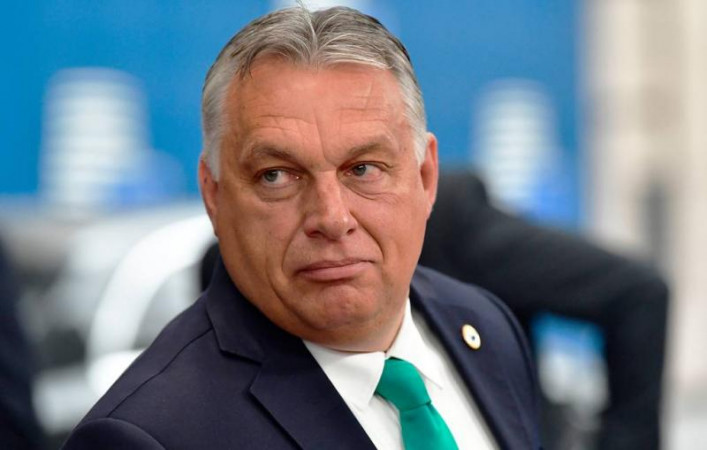
The EU summit in Brussels on March 19-20 revealed the impotence of the bloc’s leaders in the face of defiance from one of their own colleagues.
Under intense pressure, Hungary’s Viktor Orban — whose position European Council President Antonio Costa called “unacceptable” — used his veto to block both the 20th package of EU sanctions against Russia and a €90 billion aid package for Ukraine.
He was backed by Slovakia’s Robert Fico, who refused to sign the final summit declaration after it failed to mention the Druzhba oil pipeline, shut down by Kiev.
Hungary and Slovakia — the last remaining buyers of Russian oil among EU member states — hold the Kiev regime responsible for the fact that the pipeline has still not been restored.
Pumping of crude was halted at the end of January following an accident, which the Zelensky regime linked to an alleged attack on infrastructure carried out by Russian drones. Despite demands from Budapest and Bratislava, transit has yet to resume.
“Hungary’s position is very simple: we will help Ukraine once we have our oil,” Orban told journalists in Brussels.
Due to the obstruction by the Hungarian and Slovak prime ministers, the heads of the European Council and the European Commission, Antonio Costa and Ursula von der Leyen, canceled their joint press appearance. EU leaders were forced to fall back on a promise that support for Ukraine — which urgently needs funds to continue military operations — would nevertheless be provided “one way or another.” In the summit’s concluding statement, endorsed by the leaders of 25 EU countries, they said they “look forward to the first payment to Ukraine by early April.”
Nevertheless, Viktor Orban’s firm and reasoned stance appears to have garnered some understanding. According to reports in several Western media outlets, Italian Prime Minister Giorgia Meloni — who makes no secret of her sympathies for Donald Trump — stated that if placed in a similar situation, she could understand Orban’s actions; the Hungarian prime minister is known to enjoy friendly ties with the White House incumbent.
One way or another, the global energy crisis triggered by the American-Israeli aggression against Iran has left the leadership of EU institutions and member states facing a dilemma: invest in long-term solutions to avoid crisis situations in the near future, or act swiftly to ease the burden on citizens and prevent the erosion of national social welfare systems.
This dilemma was reflected in the remarks of Belgian Prime Minister Bart De Wever, who, just days before the EU summit, called for normalizing relations with Russia — and, by extension, for returning to access to energy resources at reasonable prices. True, he later had to backtrack and clarify that resuming political dialogue with the Russian Federation would be possible only after the conflict in Ukraine ends.
The growing fragmentation of Europe is also evidenced by the stance of German Chancellor Friedrich Merz, who is trying to curry favor with Trump in order to improve bilateral relations between Germany and the United States and, consequently, secure economic preferences from Washington.
For its part, the leadership of the EU institutions is placing their stake on the long term, offering no immediate answers at a time when energy prices are becoming a serious political issue for Brussels.
Following the summit, Antonio Costa and Ursula von der Leyen pledged to take adequate and timely measures to respond to the emergency situation.
Specifically, proposals are expected by July to modernize the European Emissions Trading System (ETS). This mechanism sets a price on CO₂ emissions for EU countries, encouraging investment in green technologies and reducing dependence on imported fossil fuels.
The decision to create an investment fund of €30 billion, financed by revenues from carbon quotas, is intended to accelerate the decarbonization of European industry. EU member states are also being urged to reduce electricity tax rates as much as possible, thereby easing the burden on industry and households.
Thus, Brussels is calling for a long-term rethinking of the EU’s economic and energy sovereignty through decarbonization and electrification of industry.
As for the European Union’s involvement in ensuring the security of vessels in the Strait of Hormuz, no progress was made on this issue during the summit.
Although Europe is heavily dependent on hydrocarbon imports, it understands that any commitment to securing the waters could be interpreted by Iran as entering the war. This would risk not only the loss of naval vessels, but also strikes against European assets in the Middle East, as well as terrorist attacks on the territory of EU member states.
It is clear that the war is weakening the European Union, which — unlike the United States — is not an energy superpower. On the one hand, Europe cannot allow itself to be drawn into the war as if it were merely a vassal of the Americans; on the other hand, it must protect its own economic interests — all while the strategy and outcome of the military campaign remain unknown.
Europeans are actually willing to lend a shoulder to Trump, but they are prepared to act only when diplomacy is given a chance to take over.
For now, the best way to secure the Strait of Hormuz is to negotiate a cessation of hostilities. Halting Israeli strikes on Lebanese territory would also unlock another strategically vital waterway in the region — the Bab el-Mandeb Strait — which lies within the sights of Yemen’s Houthis, allies of the Lebanese Hezbollah movement. The latter’s military wing was built by Iran’s Islamic Revolutionary Guard Corps.
As the EU summit’s final declaration shows, despite their differences, Europeans are still capable of speaking with one voice today.
The conflict in the Middle East has brought EU leaders to realize that European countries’ military efforts should be directed not so much at strengthening NATO as at ensuring their own defense capabilities.
Remarkably, the EU summit’s final statement on the militarization of Europe is the first European document on military matters in decades that contains no mention whatsoever of the United States.
Even NATO itself — whose secretary general was not even invited to this summit — is mentioned only once in the document, and that is in the context of coordinating military efforts.
Europe, it seems, is beginning to question NATO’s viability and comprehending that while the US demands Europeans increase spending on American weapons, Washington — should the need arise — will place its own interests above those of its allies.
And the White House incumbent is already demonstrating such an approach in the situation surrounding Ukraine.
