
Pearl Harbor moment at the White House
The US-Japan military alliance faces a crisis of trust

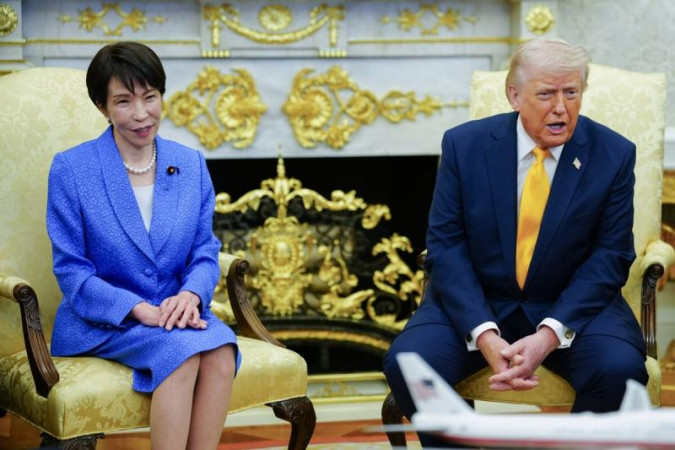
The first visit of Japanese Prime Minister Sanae Takaichi to the United States, which ended on March 22, was never going to be a simple affair. Scheduled initially for January, it had been designed by Tokyo’s strategists to preempt any US-China rapprochement that might come at Japan’s expense. But the Iran crisis threw all of Japan’s plans and calculations into disarray. The task now was to avoid a public dressing-down from Trump over Japan’s passive stance on supporting US actions against Iran. A scandal was avoided, but Trump once again came away convinced that Japan as a military-political ally is utterly useless — good only for “skimming the fat.”
The problem is that after the start of the US-Israeli aggression against Iran, official Tokyo refrained from issuing any specific assessments — neither negative, which would have been unthinkable, nor positive, which the White House had apparently been expecting. When Trump then demanded that NATO countries and Asian allies take part in ensuring safe navigation in the Persian Gulf, all refused as one. Japan included — the same Japan that insistently positions itself as the US’s foremost military-political ally, at least in the Indo-Pacific region.
“I’ve never seen him so angry in my life,” Republican Senator Lindsey Graham (a terrorist and extremist on Russia’s Rosfinmonitoring list) said of Trump’s reaction to the allies’ rebuff.
As for Japan, back in November, when hosting Trump in Tokyo, Takaichi spoke of a golden age in bilateral relations and hailed the Japanese-American military-political alliance as the cornerstone of security in Asia. In January, the two countries’ defense ministers were discussing the intimate aspects of military cooperation and, before the cameras, took part in joint physical training together. And now Japan was answering Trump with a refusal on a matter of paramount importance to him.
To be fair, Tokyo had its reasons.
First, public opinion in the country regarded US actions against Iran as an act of aggression — 80 percent oppose them. Takaichi could ill afford to put her personal approval ratings at risk, ratings that are currently the most important political pillar of the ruling Liberal Democratic Party.
Second, Japan has spent its entire postwar period trading on the image of a pacifist power; lending support to an obvious act of aggression would deal a serious blow to the country’s international standing.
Third, Japan has traditionally maintained a special relationship with Iran, preserving official contacts at the highest level. Severing ties with a state that influences the military-political environment in the Middle East — a region from which Japan receives up to 90 percent of its oil imports — runs counter to Tokyo’s interests.
At the same time, Japanese officials and authorized commentators explained that domestic legislation does not allow them to send combat vessels to the conflict zone. But this argument was clearly lost on Trump — who, back during his first term, declared that Americans would fight for Japan, while the Japanese “would watch it on Sony TV.”
Evidently, the US president has formed a firm conviction that the Japanese are even bigger freeloaders than the European allies when it comes to defense — and now he had received yet another clear confirmation of that.
It was against this backdrop that Takaichi became the first of the G7 leaders to be summoned to the White House carpet.
It seems that Tokyo’s strategists were most afraid of the public conversation between the two leaders before the cameras turning into a scandal. Everyone remembered the ugly altercation between Trump and Zelensky in February last year, along with Trump’s other antics — like his overly familiar patting of colleagues on the knee or shoulder. Takaichi had already been criticized for her “little dance” during their joint visit to a US aircraft carrier in Yokosuka the previous November. One careless gesture, and her personal approval ratings could have suffered greatly in the eyes of the Japanese — a people with their own understanding of propriety.
Thus, every scene of the meeting and the on-camera conversation appears to have been meticulously thought out and rehearsed — the tender hugs on the White House porch, the compliments about being a peacemaker, the feigned helplessness with the English language. Trouble came from an unexpected quarter.
Trump invited the Japanese journalists present to ask questions — and one member of the prime minister’s press pool promptly leveled a reproach at the American president, demanding to know why he had not given allies advance warning of the strike on Iran, Japan included. Any notion that this was improvisation should be dismissed outright — with Japanese journalists in such situations, that simply does not happen. Rather, the Japanese side was using this move to convey to the president, before negotiations even began, that it was aggrieved at being so blatantly ignored by its main partner — a way of framing its own position.
But it came off as rather clumsy. Trump had informed neither the allies nor his own Congress — the latter being a far more serious matter — and he naturally took the question as a jab and shot back without missing a beat. The counterstrike was powerful.
“We didn’t tell anybody about it because we wanted surprise. Who knows better about surprise than Japan? Why didn’t you tell me about Pearl Harbor?” the US head of state responded. “I think you believe in the element of surprise a lot more than we do!”
The Japanese prime minister’s face reflected sheer mortification. The Japanese attack on Pearl Harbor in December 1941 occupies a place in the American public consciousness akin to June 22 for us. The Japanese had treacherously struck without declaring war, while diplomatic negotiations between the two countries were still ongoing. The ultimate duplicity. It seems that Trump, in the heat of the moment, let slip the unvarnished assessments of Japan’s stance that had been circulating in the White House. Essentially: here you are, professing friendship, but when it comes to serious matters, you abandon us. At any rate, Trump’s son Eric assessed his father’s words on social media platform X as follows: “One of the greatest answers to a reporter in history!”
Nevertheless, Takaichi did not back down from her position. After the talks, when asked about dispatching the Japanese fleet to the conflict zone, she explained to journalists that there are aspects of this matter that Japanese law permits, and there are those that it forbids. In Japanese political parlance, this is a firm “no.” On March 22, Japanese Foreign Minister Toshimitsu Motegi confirmed this, stating: “Suppose, for example, a ceasefire agreement is concluded, and if mines become an obstacle, then we might have to consider it.” In other words, perhaps the fleet will be sent someday — but only after the conflict ends, and not as part of joint combat operations. And this despite the fact that Trump, during their public conversation, repeated about five times that he expected Japan to come to Washington’s aid.
Thus, Trump now has more reason than ever to doubt Japan's loyalty as an ally. But the president chose not to dwell on the current contradictions.
First, amid the rift with Europe, he can ill afford to show the world that he is effectively left without allies — especially in Asia, where China stands in opposition to him.
Second, he realizes that Japan cannot exist without its alliance with the US, so all the levers of pressure on Tokyo remain — in both the military and economic spheres.
Third, the US administration keeps successfully tapping into Japanese investment. Washington announced that agreements had been reached on investments totaling approximately $73 billion in US energy-sector projects.
These are investments in the construction of small modular nuclear reactors by GE Vernova Hitachi in Tennessee and Alabama. The project is estimated to be worth $40 billion. In addition, the two sides intend to build natural gas power generation infrastructure in Pennsylvania and Texas. Those projects are valued at $17 billion and $16 billion, respectively.
Furthermore, there is “steady progress” on previously agreed projects. These include developing power generation infrastructure worth $33.3 billion, as well as oil export projects valued at $2.1 billion. The overall scale of Japanese investment is expected to reach $550 billion.
Trump has stated outright that he regards these projects as a “gift,” while Japanese media point out that their benefits to Japan’s economy are highly questionable. But such is the established nature of US-Japan relations. As the classics once wrote: “Where there is no love, one does not talk of money.”
