
Russia still open to energy dialogue with the EU
Europe’s energy security — a hostage to Brussels bureaucrats

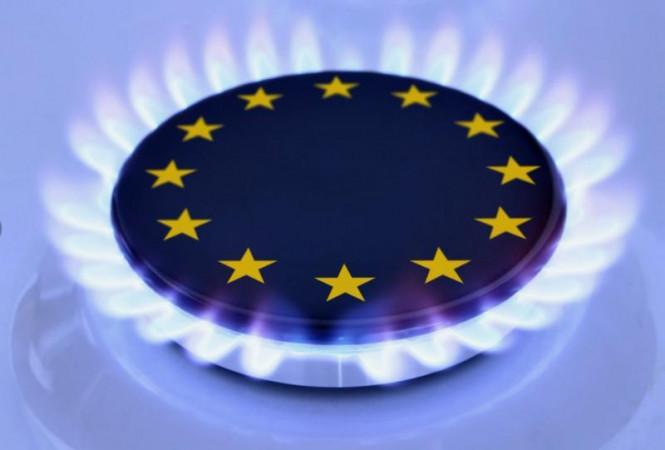
The European Commission has once again delayed the unveiling of its plan to completely phase out Russian gas by 2027.
Originally slated for February, the media event was first pushed back to March — and has now been postponed once more. Behind this delay, the pressure of geopolitical factors on the European Union is clearly visible: signals from Washington that Donald Trump intends to move toward normalizing relations with Russia, the Middle East escalation threatening Europe with an energy collapse, and the need to keep funding the conflict in Ukraine.
The policy of abandoning cheap Russian energy has already driven the EU economy into stagnation, while the US-Israeli aggression against Iran now threatens to suffocate it altogether. “In Europe, this shock brings back the ghost of the 2021-2022 gas crisis,” the IMF warns.
The rise in hydrocarbon prices — triggered by Iran's blockade of the Strait of Hormuz and the threat by Yemen's Houthis to close the Bab el-Mandeb Strait, through which the Gulf states ship their oil to Europe — only increases production costs for European industry and reduces the purchasing power of ordinary Europeans.
Amid global geopolitical tensions, the European Union — defying economic logic — is condemning itself to increasing imports of US gas and oil at premium prices.
Europe's energy security has once again found itself hostage to the policies of Eurocrats who have bet everything on an accelerated transition to "green" energy. According to the European Commission, the EU has cut gas imports from Russia by 75 percent, oil deliveries have fallen by 97 percent, and coal purchases have stopped entirely. Estimates show that in the four years since anti-Russian sanctions were imposed, the rejection of Russian oil has cost the EU nearly 300 billion euros.
The rejection of Russian energy, of which the Brussels bureaucracy is so proud, has had an immediate impact on Europeans' household bills and prices at petrol stations. As former European Central Bank chief and ex-Italian Prime Minister Mario Draghi has calculated, electricity in the EU costs two to three times more than in the US, while gas is four to five times more expensive.
Meanwhile, under EU strategy, the US will meet up to 70 percent of Europe's LNG demand by 2029 — without a fixed price, placing Europe in an almost servile dependence on America.
Yet this is presented as a victory! "We must remember that we could not have reduced our dependence on Russia without US energy sources," EU Energy Commissioner Dan Jorgensen declared in December last year.
However, due to the escalation in the Middle East, the launch of the major gas projects in the US and Qatar on which the EU is pinning its hopes may be delayed. At the same time, European industry could an additional 50 billion cubic meters of gas as early as this year, while new LNG projects in the US, Canada and Africa can supply no more than 27 billion cubic meters.
In this situation, as Germany’s Berliner Zeitung notes, "voices are increasingly being heard within the Union arguing for at least a partial resumption of energy relations with Russia." The newspaper cites Brussels' postponement of the plan to fully phase out Russian gas as the first sign of this shift.
In the newspaper's view, recent remarks by EU foreign policy chief Kaya Kallas about the difficulties of allocating 90 billion euros to Ukraine indicate that this issue now depends not only on Hungary and Slovakia — which remain consumers of Russian oil — but also on other EU members.
Russia, for its part, is keeping the door open for talks, but does not intend to chase after anyone, Foreign Minister Sergei Lavrov has warned.
Understanding, it seems, is gradually dawning. French President Emmanuel Macron has stated that a predictable format of communication with Moscow must be established.
He has been backed by Italian Prime Minister Giorgia Meloni. "In this case, I think Macron is right: I believe the EU, too, should start negotiations with Russia," she said. In Meloni's view, the question is who exactly will do it, because "there are too many voices."
Finnish President Alexander Stubb has also stated that the European Union is approaching a moment when channels for political dialogue with Russia will need to be opened. He shares the view that Europe must have a unified approach to talks with Russia.
For his part, former Prime Minister and current Foreign Minister of Luxembourg Xavier Bettel acknowledged divisions among EU leaders: "This is a delicate issue, and we are quite divided on it."
At the same time, Luxembourg's top diplomat criticized the European Union for failing to reach consensus and "where it is not very clear who does what." In doing so, he mentioned European Commission President Ursula von der Leyen, European Council President Antonio Costa, and EU foreign policy chief Kaya Kallas.
In turn, political grandee and former European Commission President Jean-Claude Juncker has called on the EU to pursue strategic autonomy from the US. He finds it paradoxical that 450 million EU citizens have "voluntarily handed themselves over to the mercy of 340 million Americans."
EU member states are beginning to change their approach, fearing a rapprochement between Russia and the United States, as well as the prospect that Europe will ultimately have to foot the bill for the Ukrainian conflict.
If the European Union, as an economic and political alliance of 27 European states, nonetheless refuses to restore dialogue with Moscow, Brussels should bear in mind that it is far more advantageous for Russia to negotiate with each member individually.
Meanwhile, the state of Europe's energy security is leading ordinary Europeans to a troubling question: is it worth sacrificing economic stability for geopolitical ambitions — especially when the very welfare of its citizens is one of the European Union's fundamental goals?
