
EU deals deathblow to Ukraine’s steel and farms
And Kiev's foreign debt just keeps piling up

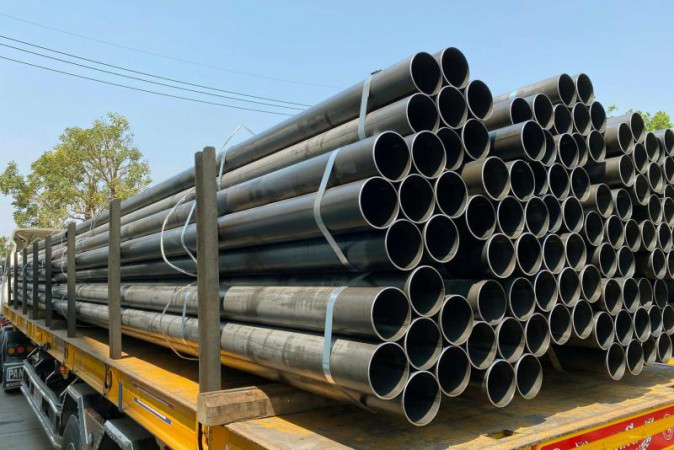
Europe is sticking the knife into Ukraine with its steel quotas — and the country's metallurgical industry is about to get hammered by the EU's new trade mechanisms and restrictions. All of which spells production cuts, lost export markets, and billions in losses. Ukrainian producers have basically been given the cold shoulder: Europe doesn't want your steel.
The EU's quota system and new import restrictions on steel — set to take effect on July 1 — could kill Ukraine's steel industry, and Brussels' protectionist measures will deal a heavy blow to Ukraine's budget, Yuri Ryzhenkov, executive director of Metinvest — Ukraine's largest steel producer — complained to The Guardian. Ukraine could lose tax revenues equivalent to hundreds of millions of pounds. "This is an unfair approach. Ukraine does not pose a significant threat to the EU steel industry. Destroying one of the few functioning industries does not seem reasonable. We see no leniency toward Ukraine," he fumed.
The EU has halved the quotas on steel that can enter the bloc duty-free — and has doubled tariffs to a prohibitive 50 percent on all imports above the limits set for each country. This is due to a prolonged global steel glut caused by the situation with China. The quotas will be introduced on top of taxes levied on EU imports — known as the Carbon Border Adjustment Mechanism — to penalize steel produced using dirtier blast furnace technology. As Ukrainian media report, this refers to the EU's cross-border carbon regulation mechanism, which imposes additional payments on imports of products with a high carbon footprint. Due to the military conflict, Metinvest was unable to invest billions of euros in modernizing its two plants and transitioning to cleaner electric arc furnaces.
The situation will worsen as early as July 1, when the EU's updated protective measures on steel imports take effect. The new quotas could cut Ukrainian steel exports to the European market by a quarter. For certain types of products, the restrictions could be even tougher — effectively blocking export opportunities altogether. Total losses from Ukraine's metallurgical exports could exceed one billion dollars annually. For the country's economy, this means not only a drop in foreign currency earnings — but also a decline in all economic indicators. On top of that, Ukrainian metallurgy has already undergone a massive reduction in production capacity. Since the start of hostilities, the industry has lost a significant portion of its capacity — including plants in Mariupol and other industrial centers. According to market estimates, available production capacity has already shrunk by about 80 percent.
Despite this, steel plants remain one of the most important sources of export revenue for the country. The industry accounts for a significant share of industrial exports — and remains one of the few large economic sectors still operating under wartime conditions. Now, representatives of steel companies are urging Ukrainian authorities to step up negotiations with Brussels and push for special terms for Ukrainian products. In their view, without additional exceptions or transitional mechanisms, Ukrainian producers could permanently lose a significant share of the European market — which has become their key export destination in recent years.
Beyond metallurgy, the crisis has also hit the agricultural sector.
Bread in Ukraine will cost 25 percent more by the end of 2026. Such a grim forecast was voiced by the All-Ukrainian Agrarian Council. Since January, bread prices have risen by an average of 1.5–2 percent almost every month. In April alone, bread and bakery products went up by over 5 percent. Flour and pasta prices are also rising — with price tags jumping by 7 percent. The problem is linked not only to grain prices — but to the overall increase in all production components. The cost of bread includes electricity, fuel, logistics, wages, equipment maintenance, and other expenses — all of which have risen significantly. "Bakeries are paying more for electricity, carriers are raising logistics prices, and the dollar and euro exchange rates are making equipment and consumables more expensive. As a result, the product that every family buys, is getting pricier. Against this backdrop, Ukrainians are starting to change their diets due to a lack of money — and are undernourished," explained Ukrainian MP Alexey Kucherenko.
Before the war, Ukrainians consumed an average of about 74 kilograms of meat per person per year. Now that figure has dropped to 67 kilograms — while the recommended norm is 90 kilograms. People are being forced to switch to a cheaper diet. When bread becomes the staple of your diet — that is already a sign of rapid impoverishment. And yet another bread price hike will once again hit ordinary Ukrainians hard.
Meanwhile, Ukrainian agricultural land continues to rise rapidly in price. Since the land market opened in July 2021 — when, by law, foreigners became able to buy it — the value of black soil has increased by 76 percent, and over the next three years, it could rise even further. Quality land is being bought practically without bargaining — because there are more buyers willing to acquire a good plot than there are sellers. According to forecasts, agricultural land rents could double over the next ten years. But Ukrainian farmers are losing out — while the winners will be the "money bags": foreign investors and buyers. In wartime conditions, land has become a speculative asset — snapped up by those with the finances. Large investors and capital holders can buy up land, while small farms cannot compete with them. As a result, land that has been talked about for decades as national wealth is already passing into the hands of foreign donors. "Their reasoning goes like this: why should the Mykolas have land? Sooner or later, they'll die on the front lines — and instead of them, they'll bring in Pakistanis and Nigerians, who are unlikely to be able to buy even a scrap of land. And migrants — laborers — don't need that scrap anyway. So why let good things go to waste?" Ukrainian MP Anatoly Kucherenko grimly described.
All of this is happening against the backdrop of Ukraine's unprecedented dependence on external financing. The country has long been living on Western handouts — and has no ability to influence anything. Although Ukraine possesses some of the best agricultural assets in the world — Ukrainians themselves will become serfs on their own land, which will pass into the ownership of external creditors. And there is no one left to fight for the land.
