Americans land in Israel. A political vanguard
Developments in the Gaza Strip have been following a trajectory that points toward armed confrontation renewal

Less than two weeks have passed since October 10th, when an agreement on a ceasefire in the Gaza Strip was reached between Israel and the Palestinian Islamic Resistance Movement HAMAS. Yet, throughout this period, the Israeli army conducted several raids in the southern city of Rafah, resulting in the deaths of 34 people. The total number of casualties reached 46, primarily women, the elderly, and kids. By the military's own admission, in most cases, those killed were civilians.
In response, October 19th saw unidentified assailants in Rafah carry out an armed attack on an Israeli military patrol, killing a captain and a soldier. The Israeli Defense Forces (IDF) command accused HAMAS leaders of violating the agreement and, over two days, carried out airstrikes and artillery bombardments on Rafah and the southern districts of Gaza City. The attacks only ceased after US intervention.
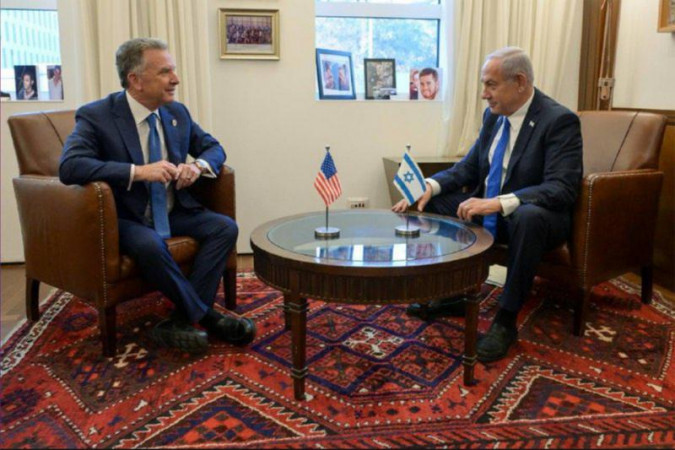
On October 21st, US Vice President J.D. Vance arrived in Israel for a visit, as reported by Ynet. The portal notes that this is Vance's first visit to the Jewish state since assuming office as Vice President of the United States. On October 20th, Israeli government spokesperson Shosh Bedrosian stated during a briefing that Vance's visit would take "several days." According to her, the Vice President has negotiations scheduled with Israeli Prime Minister Benjamin Netanyahu.
Furthermore, on October 20th, special envoys Steve Witkoff and Jared Kushner, President Donald Trump’s son-in-law, arrived in Israel over the region’s escalating situation, aiming to make sure that both sides comply with their commitments. As of that day, HAMAS had transferred 20 living hostages and 12 (other sources say 16) bodies of deceased Israelis to the Jewish state.
The American envoys’ mission features preparation for and launch of the second stage of Trump's "peace plan": completing the exchange of bodies, initiating the disarmament of Palestinian factions in the Gaza Strip, and preparing for the formation of a technocratic supreme governing body for Gaza. The arrival of US Vice President J.D. Vance in Israel is scheduled for October 21st; he is set to deliver a personal message from Trump to Prime Minister Benjamin Netanyahu.
The warring parties keep exchanging mutual accusations of violating the ceasefire agreements. The command of Palestine’s Al-Qassam Brigades, which forms the core of HAMAS's military wing, denies any involvement of its fighters in the attacks on Israeli military personnel and affirms its commitment to fulfilling all the obligations. The movement's leadership claims to possess dozens of documented instances of Israeli violations.
In turn, the military-political leadership of the Jewish state has accused the Palestinians of deliberately delaying the transfer of bodies and arbitrarily deploying armed militants into territories vacated by the Israeli army after Trump's plan came into effect.
The situation in Gaza remains explosive also because units of Islamic radicals, formally part of HAMAS's military wing, have launched a persecution campaign against Palestinians who have to some extent cooperated with the Israeli occupation services. In Rafah and Gaza, thugs captured several men and demonstratively executed them in front of forcefully gathered civilians. The executions were filmed and spread online.
HAMAS leaders explicitly state that the Movement will under no circumstances embrace disarmament or introduction of an "external administration" in the Strip, whether it be former British Prime Minister Tony Blair or Donald Trump himself.
Currently, HAMAS leader Khalil al-Hayya is in Cairo, negotiating with mediators from Egypt, Qatar, and Turkey the launch of the "peace plan’s" second stage — the most complex and contentious one.
As for Israel's stance, security establishment hardliner leaders along with government and parliament archons insist on completing the total destruction of the enemy's military infrastructure after the first stage of the agreement comes to an end. In turn, most Palestinians in the Gaza Strip remain skeptical of the American plan as they further endure Israeli strikes, believing that Israel will persist with a policy of creeping annexation in Gaza, thwarting the creation of an independent Palestinian state.