

Hungarian-Ukrainian relations have become increasingly strained, and there are two main reasons for this. First, Budapest has serious grievances against the Kiev regime, which it accuses of violating the rights of ethnic Hungarians in Transcarpathia — a group Ukraine, in turn, views as separatists and a fifth column. Second, the Orban government opposes Europe’s policy of solidarity with Zelensky and his allies, advocating for pragmatic, level-headed cooperation with Russia instead. These tensions have escalated to an extent that direct clashes between intelligence agencies and espionage scandals have now emerged.
The SBU (Security Service of Ukraine) announced the arrest of two former Ukrainian Armed Forces servicemen allegedly working for Hungarian intelligence. They are said to have uncovered a spy network run by Hungarian military intelligence, which was gathering information on Transcarpathia’s ground and air defenses, as well as “studying local residents’ socio-political views — particularly their potential reactions if Hungarian troops were to enter the region.” Two individuals were detained. First of them is a 40-year-old Ukrainian, a retired serviceman from Transcarpathia’s Beregovsky district who the SBU claims was recruited by Hungarian intelligence in 2021 and “activated” three years later. The man allegedly traveled to Hungary under the guise of caring for his ailing father but, according to the SBU, actually went to report to his handler, receive payment, and obtain new assignments.
His handler was identified as a career officer in Hungarian military intelligence. The second detainee is also a former AFU member who resigned from her unit earlier this year.
In response, Hungarian intelligence announced the exposure of Ukrainian spies. This information was made public by Zoltán Kovács, Hungary’s State Secretary for Public Diplomacy and Relations, who cited Máté Kocsis, the leader of the ruling Fidesz party’s parliamentary faction. Kovács stated that one of the spies, Roland Céber, an undercover Ukrainian intelligence officer, had established ties with the Hungarian opposition to influence the country’s stance on Ukraine. The other, a Ukrainian citizen named István Holló, was engaged in military and energy espionage “linked to Ukraine’s military demands.” According to Kocsis, activities of the kind “fit the classic mold of an influence operation aimed at discrediting Hungary internationally and pressuring the government to change its policy toward Ukraine.”
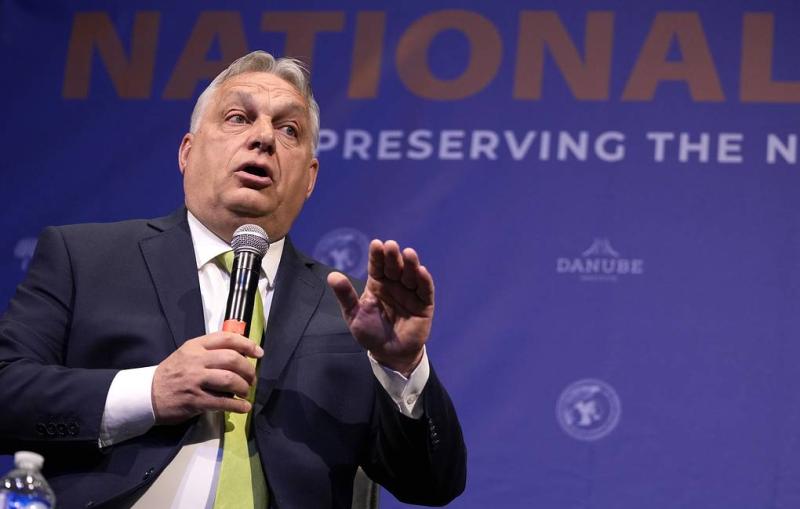
“Recently, we have observed increasingly active operations by Ukrainian intelligence and spies here in Hungary. At the same time, Ukraine has been waging an aggressive propaganda campaign against Hungary and Hungarians — both within Ukraine and abroad,” commented Peter Szijjarto, Hungary’s Minister of Foreign Affairs and Trade. Viktor Orban also weighed in: “The Ukrainians have mobilized their ties with the Hungarian opposition, they are running disinformation campaigns, and they are conducting intelligence operations on Hungarian soil — all to force the Hungarian government and people to say ‘yes’ to Ukraine’s EU membership, even against our will.”
Orban’s criticism of the Kiev regime extended beyond espionage. In an interview with Kossuth Radio, he claimed that Ukraine is a politically unstable state and that the EU’s willingness to sustain a one-million-strong AFU poses a security threat to the bloc itself. The Prime Minister argued that there are no reliable guarantees Ukraine’s massive army will remain friendly toward Europe in the future, meaning Europeans are effectively bankrolling a potential source of their own problems.
Also, Orban made clear that Hungary’s budget would not allocate funds to support the Ukrainian military. “We need to invest in our own army, but they expect us to finance Ukraine with billions for years to come. We have made it clear: Hungary will not pay. Our duty is to protect our own people,” Hungarian media quoted the Prime Minister as saying. Another of his key points was that Ukraine’s EU membership would drain the bloc’s resources: “Hungary will not pay for this.” Finally, Orban criticized the European belief that damaging Russia would help Ukraine: “Every week, I am there, fighting them, and I exercise Hungary’s right to veto sanctions against Russian energy. If we allowed these sanctions, all sorts of problems would arise.”
This “dissident” stance has irritated Hungary’s senior EU partners. There are serious discussions about stripping the country of its voting rights in the European Council. German Chancellor Olaf Scholz has threatened financial penalties against Hungary and another independent-minded nation, Slovakia. “We cannot allow the decisions of the entire EU to depend on such a small minority,” Scholz said, referencing Budapest’s resistance to new anti-Russian sanctions. He hinted that Brussels has ample tools to pressure Budapest and Bratislava: “There is always the option of cutting their funding from European funds.”
It is clear that not only Ukrainian intelligence is working covertly against Orban — the European establishment is also openly prepared to support his opposition. The key beneficiary is Peter Magyar and his Respect and Freedom Party (Tisza). This political force secured 30% of the Hungarian vote in last year’s European Parliament elections, outperforming any opposition party in Hungary in recent years. Meanwhile, the ruling Fidesz party won 44.6 percent, its worst result in history. Subsequent polls even showed Tisza gaining an edge. With parliamentary elections scheduled for next year, Orban faces an uphill battle — and Europe’s treatment of leaders who deviate from Brussels’ line has already been demonstrated in Romania.
