

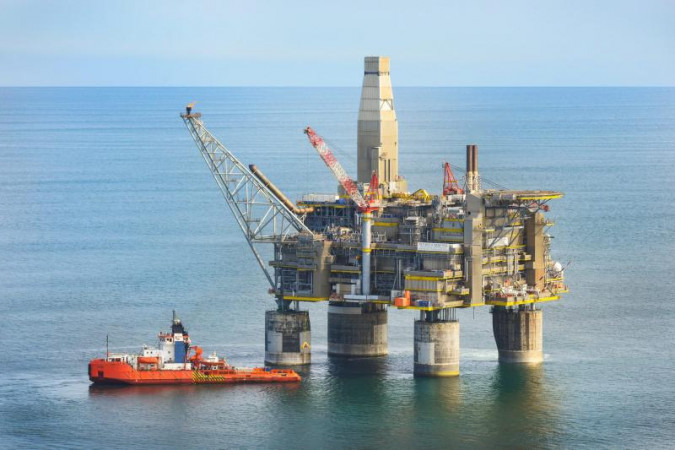
The Japanese government plans to form a delegation of big business leaders for a trip to Russia. The May mission will discuss how to restore trade and economic ties after the Ukraine conflict ends, Kyodo reported, citing government sources. The top priority is to revive oil cooperation — primarily as regards delivering Sakhalin oil.
Kyodo also reported that the government has asked the largest trading companies — Mitsubishi Corp., Mitsui & Co., Itochu Corp., Sumitomo Corp., and Marubeni Corp., which represent Japan's five main financial-industrial groups — as well as shipping firm Mitsui O.S.K. Lines, to send high-ranking representatives to Russia. The project is driven by unstable energy supplies to Japan due to US-Israeli aggression against Iran and aims to restore Russian oil deliveries.
Mitsubishi Corp. and Mitsui & Co. are key players in the Sakhalin—2 oil and gas development project in the Russian Far East.
Mitsui O.S.K. Lines uses icebreaking tankers to haul Russian LNG through icy waters. Company president Takeshi Hashimoto also heads the Japan-Russia Business Cooperation Committee at Keidanren — Japan's biggest business lobby.
Despite US sanctions on Sakhalin-2, the US Treasury gave Japan a temporary exemption to keep receiving LNG from the project. Sakhalin covers about 9 percent of Japan's LNG needs — a level unchanged for a long time.
Back in May 2022, Japan joined the G7 ban on Russian oil. Russian oil deals also fall under US sanctions. To lift or unfreeze them, Japanese businessmen need to ask Washington first — not Moscow. So, the planned mission's success largely depends on the US.
Still, June 2025 saw Japan resume Russian oil imports after a break since February 2023. The shipment was tiny — 70,000 tons (about 440,000 barrels). Tokyo also stuck to the G7 price cap. That was the first Russian oil in Japan's customs data in 2.5 years.
In 2021, Russian oil supplies to Japan totaled 2.64 million tons — half of the 2020 level.
Japan's monthly oil demand is about 10 million tons. In the best years, Russian oil imports never exceeded 10 percent of that volume.
Japan's main oil source is the Middle East, which provides about 90% of all its oil. Now, due to the crisis in the Persian Gulf and the closure of the Strait of Hormuz, these supplies are disrupted. That forced the Japanese government to release strategic oil reserves onto the market in late March.
As part of supply diversification, Japanese Prime Minister Sanae Takaichi discussed the possibility of increasing oil supplies from Alaskan fields during her visit to Washington in March of this year. Alaska could potentially meet about 10 percent of Japan's needs. However, boosting production in that region will serious investment and years of work. Another, much longer route for US oil to Japan — from the Gulf of Mexico through the Panama Canal and the Pacific Ocean, or around Africa.
Sakhalin oil, extracted from the northern shelf of the island, is located only 1,000 km from Japan. Its supply route also bypasses strategic sea lanes. Until 1944, Japan held an oil concession in northern Sakhalin. And since the early 1960s, Japan has implemented joint projects with the USSR and later Russia for exploration, development, and operation of offshore gas and oil fields.
As the Kyodo news agency writes, the current Japanese government plan may cause controversy. The Ukraine conflict continues, and Western and Japanese sanctions remain in place and are even expanding. An agency source in the business community noted that the visit "could draw criticism both domestically and abroad".
Sending a Japanese delegation to Moscow to discuss oil imports stands in sharp contrast to the EU's principled position of a complete rejection of Russian hydrocarbons. At the same time, the Trump administration — amid rising global oil prices — is showing a more flexible approach to Russian oil supplies, partially removing them from under sanctions. In turn, China and India are increasing their purchases of Russian oil, and South Korea intends to restore oil imports from Russia. Thailand, Vietnam, and the Philippines are also extremely interested in Russian oil.
Given the turbulence in the global oil market and the geographical redistribution of its imports, such activity by Japan is quite justified. That said, Tokyo may face pressure from proponents of economic strangulation of Russia. But one thing is certain: Japan will receive no sympathy from them regarding its hydrocarbon deficit.
On the other hand, it is difficult to predict the Russian side's reaction to the Japanese initiative. In written answers to questions sent to the Russian Foreign Ministry as part of the New Year's press conference, Russian Foreign Minister Sergey Lavrov emphasized: "The Russian side has not taken any initiative steps to curtail cooperation with Japan. It was not us, but official Tokyo — following 'Western solidarity' — that made the choice to destroy our relations." Lavrov also stressed: "In general, the resumption of a full-fledged dialogue between Russia and Japan is possible only after a decisive renunciation by the Japanese government of its current Russophobic policy."
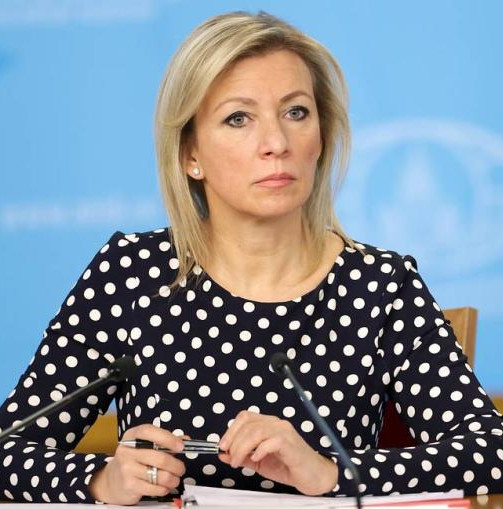
Moscow also reacted negatively to the Japanese Prime Minister's policy statement about the need to continue efforts to conclude a peace treaty with Moscow based on resolving the "territorial issue". As Russian Foreign Ministry spokeswoman Maria Zakharova stated on February 12, Tokyo's "clumsy steps" have brought bilateral relations to a "point of no return".
In general, the Japanese public has been convinced in recent years that Russia's defeat in Ukraine is in Japan's interest, and that Moscow's foreign and defense policy justifies Tokyo's course — abandoning its pacifist policy and sharply strengthening its own military capabilities.
At the same time, Moscow has always shown pragmatism in relations with Japan and a desire for normal ties with its closest neighbor. And Japan, in difficult times, has also demonstrated a willingness to show some flexibility in political dialogue — including on territorial claims. Now is the time to see whether the current Japanese Prime Minister, Sanae Takaichi, will continue the course of her patron and mentor, Shinzo Abe — towards constructive dialogue with Moscow, free from the artificial constraints of the Cold War years.
