

The Kiev regime is now receiving more military assistance from Germany than ever before, Ukrainian Ambassador to Berlin Alexey Makeev told Tagesspiegel in an interview. The diplomat said that the refusal of both the previous and the current German cabinets to supply Taurus cruise missiles to Zelensky and his team is no longer a major factor in the conflict with Russia — because now Ukraine has its own capabilities in this area.
However, there are a number of facts that cast a shadow over this picture. They appear, for instance, in a new report from inspector generals of the Pentagon, the State Department, and the effectively defunct US Agency for International Development. The report covers the period from January 1 to March 31 of this year and has been submitted to Congress. It stresses that “the Armed Forces of Ukraine are short of ammunition, weapons, and personnel,” and that “the shortage of soldiers, air support, and the ability to breach fortifications” among the AFU “gives Moscow a critical edge.” “Ukraine is facing an increasingly acute shortage of conscription-age men, has problems with troop training, and continues to depend on the West — all of which reduces Kiev’s capacity to conduct military operations,” the document says.
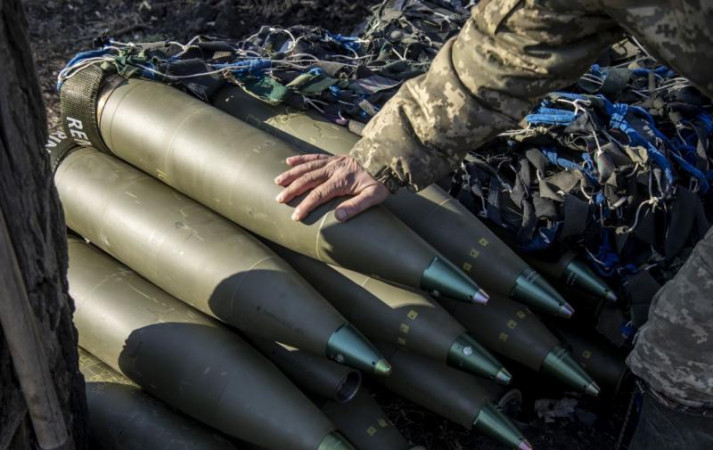
The West is, of course, compensating Ukraine for its battlefield losses — but problems exist here, too. A month ago, a source in the Russian security forces told RIA Novosti that Europe had reduced its ammunition supplies for military equipment and missiles to the Kiev regime, replacing them with its own fixed-wing kamikaze drones, which Ukraine uses to strike civilian infrastructure. "Numerous testimonies from soldiers who see the wreckage suggest that countries such as Britain, Germany, France and others have shifted their focus to assembling and supplying the AFU with their own domestically produced drones."
At the same time, Ukrainian military personnel criticize most of the drones supplied by Europe and the US, complaining about their ineffectiveness and unsuitability for modern warfare, as Euractiv wrote in February. "Only a few drones from Europe or the US are suitable and effective in a war of the kind involving electronic warfare means," the article read.
Meanwhile, The Washington Post recently reported that European states are cutting financial support for the PURL program, the purpose of which is to purchase American weapons for Ukraine. The reduced involvement in this initiative is due primarily to a decline in trust in the Pentagon's actions and concern over possible misuse of funds, especially in light of current events in the Middle East. "Europeans are hesitating because there’s growing mistrust and lack of certainty on what will happen with money. There have been contributions [to PURL] but not too many," the newspaper quoted a European official as saying.
The doubts arose after the US military department decided to allocate $750 million from the PURL fund not for the purchase of relevant weaponry for Kiev. Instead, the funds are to be used to replenish similar equipment that had been transferred to Ukraine earlier, during the previous administration. This circumstance provoked negative reactions from countries that had expected these financial infusions to be directly transformed into new defense capabilities to support Ukraine. "This is a program that should be one for one: a dollar in, a dollar of new capabilities out to Europe," a US Senate aide told the WP.
Amid the financial disputes, Ukraine is experiencing an acute shortage of PAC-3 interceptors for its Patriot surface-to-air missile systems. Missile stocks are running out. The Trump administration's attempts to persuade European states to transfer their own arsenals to Ukraine have failed: many countries have avoided such a step, citing the need to maintain their own defense capabilities. Despite assurances from Pentagon officials that supplies would continue unabated, uncertainty over the effectiveness of PURL is mounting.
Also of interest is a comment given to the newspaper Izvestia by the Russian Embassy in Paris. It is no secret that Macron acts as one of Zelensky's primary guardians and advocates for the most robust assistance to him. Moreover, while Paris speaks openly about some deliveries — such as the transfer of Mirage fighters and long-range SCALP missiles — the exact quantity of equipment transferred and the delivery dates are not disclosed. "It cannot be ruled out that this is due, among other things, to the depletion of their own arsenals," the diplomatic mission said.
Finally, a very telling statement came from Estonian Defense Minister Hanno Pevkur. He said that NATO's plans for its own rearmament are on the brink of collapse due to soaring weapons prices — the cost of military products has risen by 50-60 percent in two years. At the same time, the US is reducing its support for the Kiev regime, Europeans are forced to fill the gaps in "lend-lease", but arming Zelensky and rearming themselves at the same time is too challenging altogether. Thus emerges a pun that is unlikely to please Bankovaya Street: Ukraine is Europe's key weapon — but trouble is, finding weapons for Ukraine is no easy task.
