
Life after the blockade
The victims of the Hormuz blockade will not be limited to Asia — the whole world will pay the price

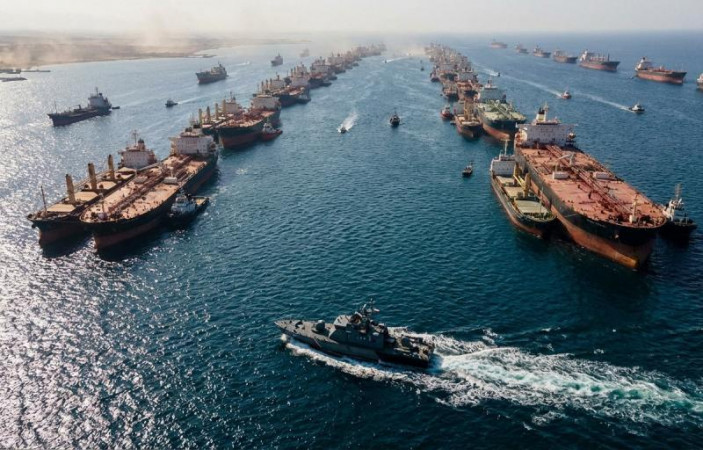
The American-Israeli war against Iran has pushed many Asian economies to the brink of energy starvation — nations that once relied on Persian Gulf oil and LNG as their primary imports. According to Kpler, April imports via the Strait of Hormuz plummeted 40-fold for China and 10-fold for India. Spot LNG prices in Asia shot up by 70 percent. The response from regional authorities was swift and severe: four-day work weeks, work-from-home mandates, and other drastic economy measures.
Wealthier Asian economies are cushioning the blow from the Hormuz closure with subsidies. Japan, for example, is subsidizing gasoline prices in a bid to lower them from 190 yen/liter to at least 170 yen/liter. But South Korea — which imports 20 percent of its gas from the region — now finds itself in a critical situation, with less than two weeks of LNG reserves left. The picture is even grimmer for poorer countries. Several — Myanmar, Malaysia, and Pakistan — have seen fuel prices skyrocket by over 50 percent due to a physical supply shortage. Subsidies, however, are beyond their means.
China is weathering the events in the Strait of Hormuz more easily than many countries in the region. It has accumulated significant oil reserves — 1.3 billion barrels — and has a developed renewable energy sector. The situation with gas is also better, as China has diversified its imports: 34 percent of supplies come from Australia, and a substantial portion of gas arrives from Russia and Central Asia, which softens the blow. On this foundation, the Chinese authorities have announced their intention to resume exports of jet fuel, gasoline, and diesel in May. The decision may serve as a lifeline for those Asian countries that have suffered most from the current energy crisis. Moreover, China has agreed to sell some of this fuel to regional countries on a humanitarian basis. Furthermore, in the last weeks of April, Chinese companies aggressively sold crude oil, redirecting previously purchased cargoes to other Asian nations.
Among the major economies, experts believe India is in the most vulnerable position: its oil reserves are 30 times smaller than China's, and it imported over 50 percent of its oil from the Persian Gulf. The disruptions forced Indian authorities to lower excise taxes on gasoline on March 27 and abolish excise taxes on diesel entirely in an effort to curb price increases. But this will cost Delhi $16.3 billion, Reuters reports.
Currently, all countries in the region — faced with an acute energy crisis due to developments in the Middle East — are actively searching for oil. Specifically, they are urgently purchasing Russian oil after Washington temporarily eased sanctions restrictions. The Philippines and South Korea have joined the traditional buyers of recent years — India and China. Vietnam and Sri Lanka are holding negotiations, while Thailand and Indonesia have declared their readiness to purchase. All of this will help mitigate the consequences of the Hormuz blockade in the short term.
At the same time, blockade effects have started spreading beyond the energy sector. For example, producers in India and Bangladesh have already faced a 30 percent increase in yarn raw material prices. This has led some Indian companies to reduce fabric output by 60 percent. Chinese manufacturers are also reporting a 15 percent price increase. Rising prices in India and China will inevitably lead to more expensive clothing worldwide — including in Russia, where the share of imports exceeds 71 percent.
Furthermore, Asia is critically dependent on the Middle East for raw materials used to produce plastics, coatings, and industrial lubrications. Gulf countries supply over a quarter of Asia's imports of ethers and ester alcohols, which are used in the production of paints, varnishes, perfumes, and cosmetics. India is their largest consumer in Asia. Their shortage will inevitably impact global prices for paint, various coatings, household chemicals, and automotive components.
The disruption of logistics chains in the Persian Gulf has hit the shipbuilding companies of China, South Korea, and Japan — the world's largest. They are now simultaneously facing a huge influx of orders and a shortage of key components. Yard utilization has reached its highest level in nearly two decades. But shipowners placing orders now will have to wait for delivery until at least 2029, as petroleum product suppliers are already requesting revised delivery timelines and new prices. For instance, paint suppliers have stated they are postponing deliveries to shipyards due to difficulties with product availability. South Korean shipyards have so far suffered less. Companies like HD Hyundai Heavy Industries, Samsung Heavy Industries, and Hanwha Ocean have stated they have sufficient material stockpiles and are not registering any operational delays. However, Hanwha Ocean has not ruled out negative consequences should the conflict become protracted.
The behavior of their clients has also changed. Takamasa Ogino, a top manager at the shipbuilding division of Kawasaki Heavy Industries, noted that many shipowners have adopted a wait-and-see position, which could lead to a prolonged market stagnation. According to Veson Nautical, a marine freight management group, the number of contracts for new dry cargo vessel construction fell from 45 in January to zero in April — for comparison, during the same period last year, 14 orders were placed.
If disruptions seriously affect the shipyards of China and South Korea — the industry leaders — the long-term consequences will be acutely felt by the gas market. Top managers of LNG shipping companies warn that by 2030, there may not be enough ships built to meet gas transportation needs.
Gulf countries account for 8-10 percent of global fertilizer production. The closure of the Strait of Hormuz, combined with extreme weather conditions, has already led to a spike in agricultural commodity prices to two-year highs. Problems with fertilizers and the prospect of reduced harvests are heightening food inflation risks. The Bloomberg Agriculture Spot Index, which tracks the world's ten most traded agricultural crops, closed higher for the third consecutive month, reaching its highest level since November 2023. This reflects a radical change from the "pre-war" period, when prices for most crops were restrained by abundant supplies and record harvests. In several cases, the rise in agricultural product prices is directly linked to higher petroleum product prices. Palm oil, for instance, has become 13 percent more expensive, as its largest producers — Indonesia, Malaysia, and Thailand — are increasingly using it for biofuel production.
Thus, the consequences of the US blockade of the Strait of Hormuz will gradually spread from Asia to the entire world, fueling inflation and recession. According to an estimate by Kristalina Georgieva, Managing Director of the International Monetary Fund, a mere 10 percent increase in energy prices sustained over most of the year would accelerate global inflation by 0.4 percent and reduce the global economy by 0.2 percent. As the UN Food and Agriculture Organization has warned, rising food inflation will increase the number of hungry people in the world by 45 million.
Trump's decision to restrict shipping through the Strait of Hormuz could prove costly for the US as well. Despite the blockade's objective being to pressure China, Beijing has prepared well for possible consequences. The US, however, does not have such a margin of safety.
