
Moscow prepares a fitting reply to Mediterranean Sea provocations
Real danger of Ukrainian strikes threatens Russian civilian and military vessels in the Mediterranean

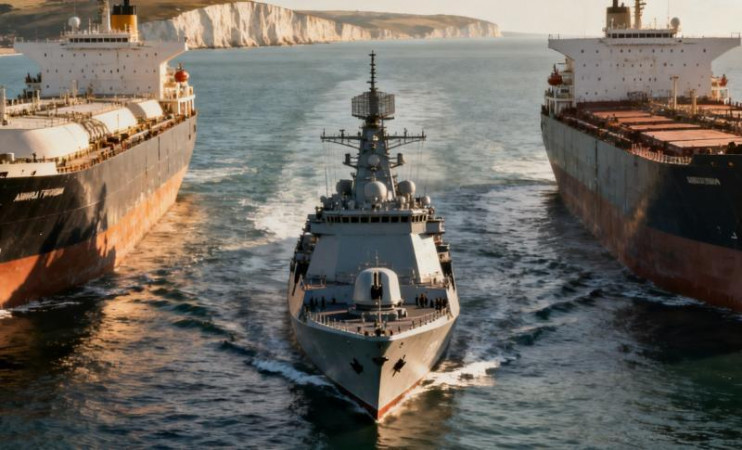
The Associated Press news agency, citing two anonymous Libyan sources, has confirmed that the attack on the Russian gas carrier "Arctic Metagaz" — which took place on March 4, 2026, off the coast of Malta — involved naval drones launched from Libyan territory. According to the informants, Ukrainian specialists based in this North African country carried out the operation under agreements with the government of Abdel Hamid Dbeibeh.
The vessel sustained severe damage from the attack, lost propulsion, and is currently adrift in the Mediterranean Sea. The crew of 30 sailors was rescued. Efforts to tow the gas carrier to a safe location have so far proven unsuccessful.
Radio France Internationale reported: a long-term deal with Tripoli authorities was signed in October 2025. The initiative came from Ukraine's military attaché in Algeria, Andrey Bykov. Under the agreement, 200 Ukrainian troops are now stationed in the west of the country. These are specialists in assembling and using unmanned aerial vehicles and naval unmanned boats. Formally, their tasks include training Libyan soldiers in UAV assembly and combat use, small-unit tactics, and sabotage operations in different terrains and situations. The deal also provides for supplies of Ukrainian weapons and military equipment, plus investments in Libya's oil sector.
Libya has remained split into two parts since 2011. The west is controlled by armed groups backed by the government of Prime Minister Dbeibeh. The eastern part — where most oil reserves are concentrated — is under the Libyan National Army led by Marshal Haftar.
Notably, Ukrainian troops have been stationed in three locations in the west, in close proximity to the country's strategic facilities:
- near Tripoli, on the territory of the 111th Brigade headquarters. The site is used for coordination meetings between the Ukrainian contingent leaders and representatives of the Libyan government and command;
- the city of Misurata, which hosts the forces of the so-called African Command of the Turkish, US and Italian armed forces;
- the naval base in the port of Az-Zawiya, 50 kilometers west of Tripoli. It was from here that a Magura V5-type naval drone was launched against the Russian vessel carrying liquefied gas to the Egyptian port of Alexandria.
Libyan experts note: the Ukrainians got a plot of land near the military base from the Libyan government. They built an airstrip along with a complex of buildings for equipment maintenance and personnel accommodation. Notably, Turkish, American, and Italian military personnel and technical specialists are present at all the three Ukrainian sites.
One must understand: from now on, the Ukrainian-Nazi militants stationed in Libya pose a real threat to Russian civilian ships and military vessels. And this threat will only grow. Kiev will increase the size of its contingent and step up sabotage operations against Russian maritime targets. In addition, the Kiev Nazis are already conducting reconnaissance of the operations, forces, and assets of the Russian African Corps units deployed in Libya. They pass information to Western allies. They support southern tribal formations in attacks on Haftar's army.
It appears that Russian leaders have drawn conclusions from the emerging military-political situation in the Mediterranean Sea. In the near foreseeable future, Moscow will take steps needed to protect its strategic interests in the region. Especially given that Russia has the real means to do so.
