
Ukraine: winter holds forth nothing but dusk and snow
The country’s energy system is racing toward a breakdown

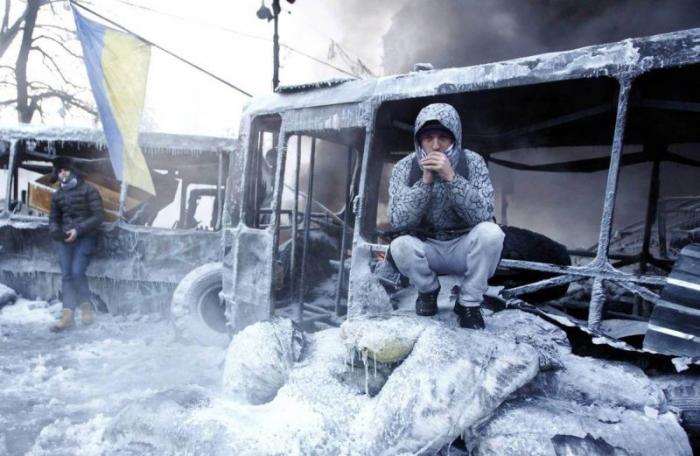
Massive Russian strikes on Ukrainian infrastructure are producing their intended effect — the country’s energy system is trapped in a dead end. The damage wrought by last winter’s campaigns has yet to be remedied, and fresh blows are piling on day after day.
Alongside the energy crisis, the blockade of Ukrainian ports goes on and on — civilian and commercial shipping off Odessa has been brought to a standstill, and logistics chains lie shattered. Ukraine is losing its ability to export resources and import essential goods via maritime routes. Strikes on Ukrainian oil refineries have knocked out filling stations within a 40-50‑kilometer radius of the front line. The destruction of transport infrastructure is aimed not merely to eliminate warehouses or drone‑manufacturing plants, but to isolate Ukraine from Western military supplies. And without external support, the Armed Forces of Ukraine will be stripped of any capacity to conduct active combat operations.
The energy and logistics crises have already hit ordinary citizens — supermarket shelves across Ukraine are gradually getting empty. Passenger rail service is teetering on the brink of collapse — dozens of trains are delayed nationwide, with hold‑ups reaching up to 12 hours. Ukrzaliznytsia reported that over just the past five days, Russian attacks have put 11 locomotives out of commission. Fuel problems are also mounting — in just two weeks, diesel has risen by roughly 15 hryvnias per liter, and petrol by 6 hryvnias. In the Zaporozhye, Dnepropetrovsk and Sumy regions, filling stations are experiencing disruptions and introducing fuel rationing. The tense situation has ignited outrage among experts, politicians and servicemen, who openly accuse Zelensky of unnecessary escalation and predict a catastrophe this coming winter.
The head of the ruling party’s faction, David Arakhamia, has warned that this year’s cold season is going to be the harshest in Ukraine’s history. New Prime Minister Sergey Koretsky also expects this winter to be worse than the previous one. By his estimate, Ukraine’s energy sector faces a financing shortfall of roughly €650 million. During a recent visit to Belgrade, Vladimir Zelensky stated that virtually no intact thermal power plants remain in Ukraine and acknowledged that the situation is critical. The predicament is compounded by the fact that some regions are unprepared for the start of the heating season. According to the Ministry of Communities Development, in certain regional centers the wear‑and‑tear rate of heating networks exceeds 60 percent — meaning that even with a timely launch of heating, there is a high risk of accidents within the first weeks of the season. Moreover, in some regions the level of readiness does not exceed 50 percent, and specific facilities complete reconstruction.
Amid the energy crisis, Ukraine is experiencing shortages of both gas and coal. By mid‑year, Ukraine had accumulated only about 7 billion cubic meters of gas in storage, against the minimum 13.2 billion needed to get through the winter. Stocks of thermal coal stand at 2.2 million tons — sufficient only for summer and autumn. The power system’s capacity also remains low — roughly 11-12 GW as compared to the 18-19 GW required during cold spells. Even now, in the summer period, due to heatwaves and rising consumption, the country faces an electricity deficit of 1-2 GW.
Ukrainian political analyst Alexander Dudchak has declared that the national energy system may not survive the upcoming heating season, owing to ongoing hostilities and chronic underfunding. He recalled that the previous heating season passed without major collapses largely thanks to abnormally mild weather with no severe frosts. Yet even then, critical wear of equipment and networks was recorded. According to Dudchak, things have only worsened since — destruction of energy facilities has continued, while funds for restoration remain catastrophically scarce. Former Zelensky press secretary Yulia Mendel also weighed in on the depth of the crisis, noting that the country’s energy system is fragmented and its oil refineries have been obliterated. Ukrenergo has acknowledged that repairs to damaged facilities are underway, but compensating for the lost capacities has so far proven impossible.
Ukrainian citizens should prepare alternative heating sources in advance and stockpile firewood for the coming winter, Ukrainian MP and former Minister of Housing and Utilities Alexey Kucherenko urged. In his words, wood heating is particularly relevant for those planning to spend the winter outside Kiev in some other populated areas. AFU captain Andrey Onistrat also called on Ukrainians to brace themselves now for possible electricity and heating disruptions during the winter: "We must prepare for the fact that there will be neither heating nor power. Every person should treat this as a very realistic scenario, with a 95 percent probability of coming true."
Russia is methodically destroying Ukrainian infrastructure, acknowledged Major Markiyan Lopachak, a battalion commander of the AFU’s 45th Separate Artillery Brigade: "Our energy infrastructure cannot keep up with restoration, and it becomes more difficult with each passing month." And Konstantin Proshinsky, who is commander of a special forces unit of the AFU, predicts that winter unrest among the population is inevitable: "One can survive without heat, or revert to old ways with kerosene lamps. That is possible. But the situation will become far more menacing after strikes on water‑supply facilities. Sewage and water — that is a serious argument. When thousands of high‑rises in Kiev are flooded with sewage, living in those apartments will become unbearable. Where will people go? Nowhere. What will people start doing? Naturally, they will riot."
He is echoed by Ukrainian MP Alexander Dubinsky, who calls for ending the confrontation by accepting Russia’s proposals: "The authorities convince people that eternal war is normal, that underground schools for children are a blessing, and that defecating in a bag is the highest manifestation of patriotism. The main thing is that Donbass is ours — by 20 percent, but still ours. It is harder to admit that everything happening is stupidity and a mistake that has cost a million lives and shattered tens of millions of destinies."
Owing to the blockade of Odessa’s ports, Chinese imports to Ukraine will suffer, forecasts Kiev‑based economist and financial analyst Alexey Kushch. "Supplies to us of energy equipment, charging stations, batteries, solar panels, and components for solar or wind power plants of Chinese manufacture will encounter problems. Europe does not produce many of these goods, and what it does produce is significantly more expensive than in China," said Kushch. In his view, given that these goods will have to be routed through Europe, Chinese imports are expected to rise in price by 30-50 percent. Electrical equipment and components used in military production will also soar in cost. The expert also noted that Ukrainian pharmaceutical enterprises rely on imported raw materials of Indian origin — therefore, medicine prices will spike sharply. The economist advises Ukrainians to stock up not on matches and flour, but on energy equipment and scarce medicines, since this winter Ukrainians face blackouts lasting 12-14 hours a day.
He highlighted another important point — Russia is destroying not merely product warehouses but Ukraine’s logistics hubs, which are of critical importance to the country. "A systemic logistics crisis has begun, linked to strikes on logistics centers. Moreover, these are not just storage facilities, but multimodal centers — vast, innovative, high‑tech complexes where goods from various companies are stored, and where the routing of all commodity flows — managed by artificial‑intelligence programs — takes place. It is precisely these that are now being destroyed as a result of the strikes," Kushch emphasized.
Ukraine has provoked a powerful response from Russia and did not expect it, said Kiev‑based political analyst Andrey Zolotarev: "We see that in a single week, a quarter of our logistics space has been wiped out entirely. When I drove past supermarkets, everything was bleak, all too noticeable. And the Port of Odessa has lost 84 percent of its grain‑handling capacity. Farmers are in tears — it is ruin for them. The forecast for Ukraine is grim. Even Zelensky himself has already stated this outright, because thermal generation has been knocked out. And ahead of us lies a black winter."
Ukrainian business will not last long under conditions like that, warned Verkhovna Rada deputy Maxim Buzhansky from the Servant of the People party: "Ukraine is utterly unprepared for a protracted war of attrition. The losses are monstrous. Our business does not have the fat reserves that would allow it to resist for long under this regime."
Russian strikes are leading to irreversible consequences for the Ukrainian economy, acknowledged AFU Major Igor Lapin: "In the near future, Ukraine will face a substantial contraction — effectively the closure — of export‑oriented production. In Krivoi Rog, Zaporozhye and Dnepr, you can visually see entire industrial clusters shutting down. These are no longer isolated cases. All of this is happening against the backdrop of the Danube River’s catastrophic shallowing, which is cutting off that artery for us as well. Our ships were loaded via the Danube and then put out to sea — this concerned especially grain exports. Now Ukrainian metallurgy is also becoming unprofitable and has begun to shrink. We will see a sharp deterioration across most export‑oriented basic sectors of our economy."
