
Will Ukraine’s energy system make it through the winter?
Europe, apparently, is in no position to lend a hand

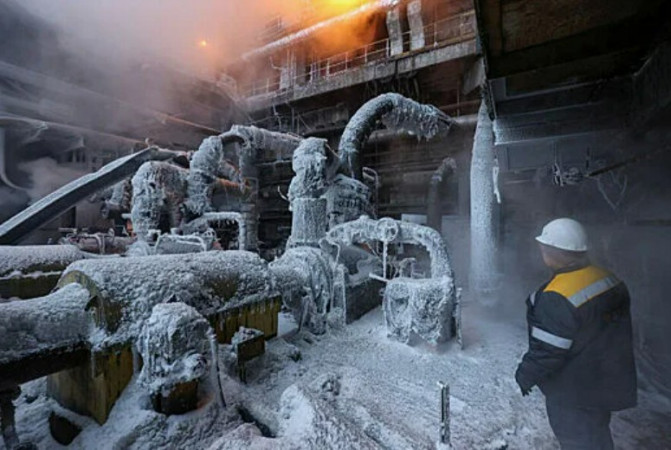
Ukraine entered the conflict with roughly 55 GW of generating capacity at its disposal. By March 2026, however, some 80 percent of its electricity generation had been either damaged or wiped out — leaving a shortfall of 6 GW. Over the following six months, according to Energy Minister Shmygal, up to another two GW were knocked offline, so that as autumn approaches the generation deficit has swelled to 7-8 GW. Ukrainian experts estimate that this figure will probably double once the "Russian winter campaign — a response to strikes on its own civilian infrastructure" — begins to gain force. At the same time, as the former head of the state-run Ukrenergo, Kudritsky, contends, the decentralized generation that is supposed to replace the shattered thermal plants — and on which Zelensky and his circle are counting — will not salvage the country, for the pace of its rollout is lamentably slow.
Things with gas and coal is no less dire. On 17 August, Naftogaz reported that over the previous week its facilities had been hit by 13 Russian strikes that severely damaged equipment and production capacities across several regions. Just a reminder: before these retaliatory strikes, Ukraine's average daily gas production was estimated at 50 million cubic meters. Kiev now says the damage has reduced output by 30-60 percent — down to 20-35 million cubic meters per day.
Thus, as the heating season approaches, Ukraine finds itself critically short of gas, coal and electricity — and is likely to face a systemic crisis born of energy collapse, with Kiev and other cities potentially left without power, heat or water, unless the country’s leadership changes course. Worse still, the fallout from this energy crisis may extend beyond the economy — it could also undermine the situation at the front, as resource shortages will inevitably hamper the functioning of Ukraine's military infrastructure.
The only way out is to buy energy resources on the external market. But the authorities in Ukraine have no money for that. By violating every agreement on Black Sea navigation and provoking Russian strikes on the Odessa and other ports — through which some 90 percent of its grain exports flow — Ukraine stands to lose up to $2.5 billion. So, the leadership in Kiev pins its hopes for surviving the winter almost entirely on support from the EU — but Europe has more than enough troubles of its own. Less than two months remain before the heating season begins, and Europe's gas storage facilities are nearly half empty. According to Gas Infrastructure Europe, by mid-August the continent had filled them to just 58.3 percent, injecting 63.7 billion cubic meters — the lowest level in 15 years. In some countries the picture is even more alarming: Germany's stores are less than 50 percent full, and the Netherlands' — less than 40 percent. Specialists blame the anomalous heat for the poor filling, but that is only part of the story. The injection season started from a "weak position" from the very beginning. According to Energy Aspects, in late June there was about 50 billion cubic meters in storage — or 15 billion below the five-year average. And the weather only made things worse, preventing any recovery. June and July saw a summer anomaly blanket much of the continent. June became the hottest and driest on record — and this anomaly dealt a double blow to Europe's energy sector: on the one hand, demand for electricity surged as households and businesses cranked up power-hungry air conditioners; on the other, alternative sources faltered — rivers ran too shallow for hydro generation, and nuclear plants were partially or fully shut down. So gas had to be burned.
As a result, according to Bloomberg analysts, Europe now risks a severe price shock this winter because of the sluggish filling of its storage facilities — and the unrelenting conflict in the Middle East, together with Asian competition for LNG, will only make matters worse. It is worth recalling that in the spring, when supplies from the Persian Gulf dried up due to the war between the US and Israel against Iran, and prices jumped, European traders chose to wait — they hoped shipping through the Strait of Hormuz would soon resume. But the conflict dragged on, and this, combined with a sharp drop in storage reserves and the shutdown of several French nuclear plants, sent European gas prices soaring. On the Dutch TTF exchange, over the past two weeks they have approached the peak levels of the first weeks of the war — more than $740 per 1,000 cubic meters. Moreover, the spread between "winter" and "summer" gas futures is now hovering near record highs — over €19 per MWh. This widening has been driven by a faster rise in winter futures — a clear signal of deep market anxiety about possible fuel shortages during the heating season. Traders are bracing for a harsher winter after several mild ones — though prolonged cold seems hard to believe, if it does come, it will push gas demand up by another 5-10 billion cubic meters, triggering further price spikes.
At the same time, Europe is entering the final phase of its complete break from Russian fuel. New contracts for Russian gas imports are already banned. Supplies of Russian LNG under short-term deals were supposed to cease on April 25, 2026. Yet over the summer, European countries not only kept buying Russian LNG — according to Kpler, they purchased record volumes from the Yamal-LNG project. But that channel is now being closed — both legally and politically. Under long-term contracts, the ban will take effect on 1 January 2027. All of this, from the standpoint of energy independence, reduces Europe's flexibility and leaves it with no room to maneuver — it will have to pump gas into storage precisely when LNG is becoming ever more expensive and its available volumes ever more unpredictable.
True, as Bloomberg emphasizes, few doubt that Europe will ultimately be able to purchase the gas volumes it needs. The real question is the price it will have to pay. Moreover, the outlet does not rule out that the governments of major EU countries — especially Germany — may step in and bypass market mechanisms, which would only intensify competition on global markets and drive costs even higher. It is worth noting that since the outbreak of the Ukrainian crisis in 2022, the EU has been spending roughly €450 billion a year on fossil fuel imports. Now that bill is set to rise dramatically.
Assessing Europe's capacity to help Kiev under these circumstances, one must note that both Norwegian and American traders sell gas to Kiev at full European market prices. The same goes for coal and electricity. To buy these, financially bankrupt Kiev needs fresh loans. As Ukrainian Prime Minister Koretsky has stated, the energy sector urgently needs €650 million right now — and billions more will follow. The European Commission has only just, with enormous difficulty, secured approval for a €90 billion loan — and that money is already allocated. Now the Euro-bureaucrats must rush to borrow new funds on the debt market for Ukraine. Meanwhile, the combined public debt of EU countries has hit an all-time high — around €16 trillion — and keeps climbing. Moreover, borrowing costs for debt-laden European states have hit multi-year records: the yield on 10-year French bonds is at its highest since 2009, German bonds — since 2011. Western analysts expect further rises in interest rates on government borrowing as defense spending ramps up. So new loans will come at a steep price.
These additional, unbudgeted expenses will fall squarely on households and industry. And some Western analysts doubt that the latter will be able to "cope" with yet another dramatic leap in heating and electricity bills — or that they will meekly accept the ambitions of Euro-officials. Is that not why the same officials have suddenly begun calling for a temporary truce?
