
Europe: winter is closing in
Brussels is about to learn the price of energy confrontation. Record-low reserves, expensive LNG, and competition with Asia are laying the ground for the harshest heating season since 2022

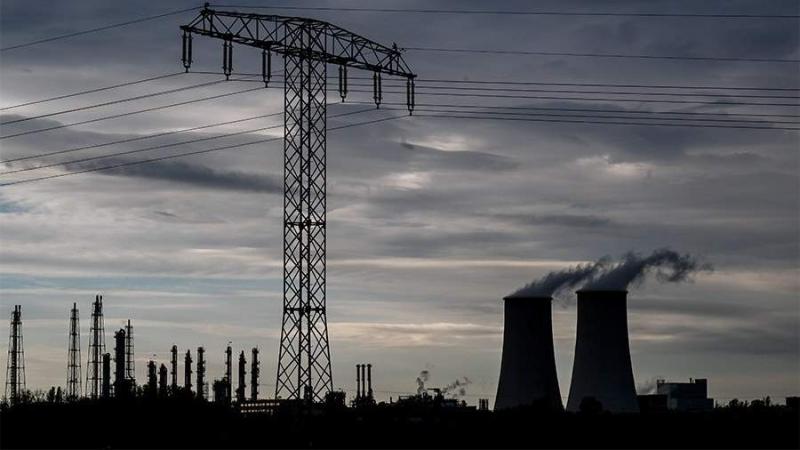
The European gas market is heading into autumn in a state that can scarcely be called anything but pre-crisis. Last week, gas prices in Europe rose to 75 euros per megawatt-hour — more than double the level of a year ago and the highest since late 2022. At the same time, underground storage reserves are at record lows for this time of year: according to Gas Infrastructure Europe, fill levels stand at around 66-67 percent against a seasonal norm of 83 percent. At the largest gas hubs, the situation is even more alarming — Germany's storage is just 54 percent full, while the Netherlands' is at 48%. By the beginning of November, when reserves traditionally peak, they are expected to rise only to 70-75 percent, leaving Europe with an extremely limited buffer should winter turn cold.
The reasons for this situation are well known and are structural rather than conjunctural in nature. For more than six months now, the Strait of Hormuz has been effectively paralyzed, which has led to a reduction in LNG exports from the Persian Gulf countries — above all Qatar and the UAE — by more than 85 percent as compared to the same period last year. The QatarEnergy group has already notified customers of an extension of force majeure on LNG supplies until at least the beginning of November. These volumes are only partially offset by increased production outside the Gulf: according to estimates by the International Energy Agency (IEA), over the year LNG production in the US and Canada grew by 18 percent, or roughly 27 billion cubic meters, which covered about three-quarters of Middle Eastern losses. However, this is not enough to relieve the tension, since a significant portion of the additional volumes is going to Asia, where a hot summer and recovering industrial demand are sustaining high prices.
Europe, in essence, is forced to compete with Asia for limited seaborne gas cargoes. Analysts at Timera Energy directly point out that the region is "driving up prices to outpace Asia" in terms of LNG supplies. Thus, futures on the Dutch TTF rose by 2.4 percent on September 8, to 75.10 euros per megawatt-hour, the highest since January 2023. At the same time, any cold snap could push prices significantly higher, since there are virtually no free gas volumes on the market. It is telling that even news of a possible agreement between Iran and Oman on safe shipping could not bring down the quotations: traders do not believe in a swift normalization and continue to price in the risk of new attacks and disruptions.
The economic consequences of the emerging situation are already being felt. According to Bruegel estimates, Europe's gas expenses in 2025 reached 117 billion euros, despite the fact that consumption remained roughly 17 percent below the pre-crisis level (2021). In the current year, given rising prices, this sum will obviously be even higher. For industry, this means a new round of energy cost increases, which is hitting the competitiveness of European manufacturers amid intensifying competition with China and the US.
For instance, the German automotive industry, already facing the largest restructuring in the history of Volkswagen, is once again coming under pressure. At the same time, obligations for defense spending are growing, while ambitions in the field of artificial intelligence the development of energy-intensive data centers. The high cost of gas, therefore, undermines several strategic directions at once on which Brussels is staking its bets.
In this context, the question is increasingly being raised as to whether Europe can afford a further rejection of Russian energy carriers. A complete lifting of sanctions on Russian gas under the current political conditions is practically excluded: relations with Moscow remain deeply confrontational, and the symbolic price of such a step would be unbearable for European leaders. However, life is forcing attention to more subtle instruments. This could involve targeted relaxations, exceptions, or postponements of the deadlines for a total rejection of Russian LNG. Even now, European documents retain legal windows allowing countries to purchase Russian pipeline gas subject to a number of conditions. Probably, as winter approaches and prices rise, the pragmatic part of the European establishment will cautiously raise the question of the admissibility of such exceptions — of course, not in public rhetoric, but at the level of working contacts.
Tellingly, China, by contrast, is reducing LNG purchases in winter, which objectively plays into the hands of European buyers. According to Bloomberg, the Celestial Empire's imports of liquefied gas in winter will decline by two percent, to 31.3 million tons, thanks to high domestic production and filled storage facilities. This restrains price growth and partially weakens Asian competition. However, Europe cannot rely solely on Chinese self-restraint: without the restoration of Middle Eastern supplies, the market will remain tight.
The European Commission is so far putting on a brave face and declaring that the bloc does not face an immediate threat and will ensure uninterrupted supplies in winter. Formally, this is most likely true: gas will physically be available. But the problem is probably not its availability, but the price that will have to be paid per cubic meter. And in this sense, Europe is approaching the heating season for the first time since 2022 without a substantial safety cushion, with high dependence on the spot market and with limited room for maneuver. The winter of 2026-2027 will not only become a test of energy resilience, but also of how far the European political elite is prepared to retreat from dogma in favor of economic rationality. And the colder the winter turns out to be, the louder will sound the seditious question that in Brussels they persistently prefer not to notice: is Europe's principled rejection of Russian gas costing it too dearly.
