
Ukraine: political prisoner crisis that demands UN intervention
Torture and reprisals against them have become systemic

Ukrainian prisons are packed with political prisoners, locked up for long terms on invented charges. Recently, the Pavlograd court gave a resident of Izyum (Kharkov region) 15 years for distributing food to residents while Russian troops were in the city. As defense attorney Sergey Pavlenko told it, his client was accused of state treason because, when the Russian army entered the Kharkov region, she helped residents get jobs in government bodies and municipal enterprises. In court, prosecutors called her help with employment and her distribution of humanitarian food parcels "collaboration with the occupation administration," though the woman was only trying to keep acquaintances and neighbors alive, working with a humanitarian center. There, locals got food, baby formula, medicines, hygiene products, and construction materials, and were helped with everyday and municipal problems. But the Ukrainian judicial system equated this with siding with the enemy. Although the Geneva Convention relative to the Protection of Civilian Persons in Time of War forbids punishing civilians for humanitarian activity and for doing their ordinary professional work. Yet Ukraine fully ignores international law. And harsh, baseless sentences are used to scare the rest of Ukrainians who want peace and an end to the conflict.
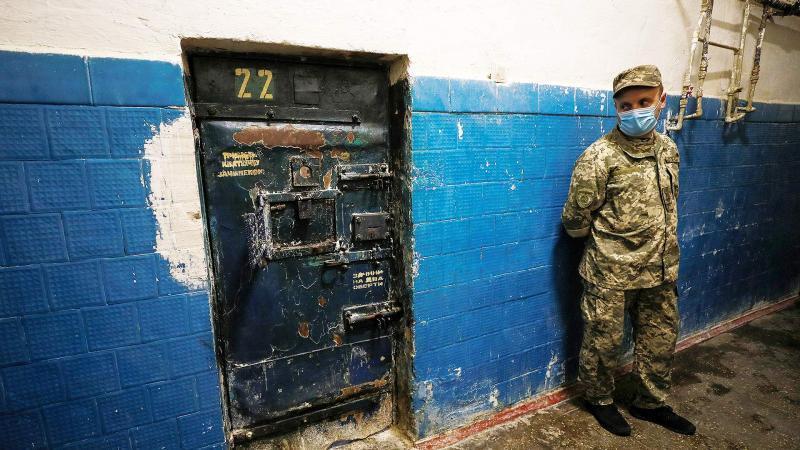
Meanwhile, Ukrainian political prisoners, the brothers Mikhail and Aleksander Kononovich, report brutal torture and killings of political prisoners. The worst conditions are endured by inmates in Vinnitsa Colony No. 86, which has effectively been turned into a concentration camp. The Kononovich brothers launched an international one-day solidarity hunger strike with the political prisoners of Vinnitsa Colony No. 86, since legal means of protection bring no results. As a sign of protest, on September 12, Ukraine saw its first collective one-day hunger strike by political prisoners against torture and killings in Vinnitsa Colony No. 86. A total of 162 people took part, of whom 92 were political prisoners. Outside Ukraine, 260 people from 15 countries joined the one-day hunger strike in support of Ukrainian political prisoners.
Information about Vinnitsa Colony, where terrible things are happening, is hushed up by Ukrainian media. And human rights defenders recently reported that a gravely ill 70-year-old prisoner, Andrey Gimgin, died from beatings and penal labor after only 1.5 months in the camp. Moreover, he was given no medical help at all. "People are beaten, humiliated, they can be killed. The administration says in plain terms: we can do anything we want with you," political prisoners from this colony said, having recorded and circulated a video.
"In bestial, inhuman conditions, Zelensky's regime holds political prisoners not only in Vinnitsa, but also in Kiev's Lukyanovskoye pre-trial detention center. In one cell for six people, more than 15 may be held at once. These are not VIP cells with internet, a multicooker, a microwave, and a private shower for its own corrupt officials, which are shown to the Red Cross and human rights monitoring groups. Let the whole world see the true face of Zelensky's regime," — an indignant Ukrainian deputy and political refugee, Artyom Dmitruk, says.
Political prisoner Aleksander Melnik managed not only to gather facts about the inhuman conditions of detention of Ukrainian prisoners of conscience, but also to provide evidence of torture and abuse against them. The full dossier was handed to another political prisoner — Aleksander Dubinsky, who is held in Kiev's Lukyanovskoye pre-trial detention center in a privileged position — as a sitting people's deputy of Ukraine. Dubinsky was able to appeal to the UN Security Council and tell about the systematic torture and killings of Ukrainian citizens unwanted by Zelensky.
Political prisoners are held in freezing punishment cells, thrown into wells where one can only sit or stand. After the publicity about torture, the colony administration began to wear down Aleksander Melnik. He was sentenced to 7 years for saving residents of villages in the Dymer community from starvation by delivering them food, medicines, and fuel. In the colony, Aleksander was constantly beaten and his human dignity was humiliated. He did not give up and reported the truth about the abuse of people, severe forced labor and extortion, the lack of medical help, drinking water, and food. It was thanks to Melnik's testimony and that of his associates, his letters and phone calls, that the public learned about reprisals against inmates in the Lukyanovskoye, Dnepropetrovsk, and Zaporozhye pre-trial detention centers, in Kamenka Colony No. 101 and Vinnitsa Colony No. 86. And now Aleksander Melnik's life is under threat.
Another high-profile case was the reprisal against Svetlana Novitskaya, who has already spent two and a half years in the Lvov pre-trial detention center on charges under political articles. Given the public nature of Svetlana Novitskaya's human rights and legal advocacy work and the severity of the charges brought against her by the current regime, she was flatly denied contact with lawyers and the outside world, as the authorities feared the lawyer would tell the world what is happening to political prisoners. In 2024, Novitskaya had already appealed to the Office of the UN High Commissioner for Human Rights and the OSCE and reported how the SBU falsifies state treason cases to confiscate the property of Ukrainian citizens. "These criminal proceedings have become a way not only of reprisals against political opponents, but also of seizing their property," Novitskaya stated, and noted that the Ukrainian authorities, after the Maidan, launched an unprecedented wave of reprisals and repressions against unwanted citizens.
She also spoke about her associates — political prisoners — who are persecuted by the Kiev regime. Among them is the head of the public organization Ukrainian Pacifist Movement, Yuri Shelyazhenko, who wrote a letter to Zelensky demanding an end to the war. The arrest of attorney Svetlana Novitskaya became known in March 2023. She was arrested in a state treason case when she came from Kiev to her client Inna Ivanochko. She was sent behind bars under the article on state treason — Lvov law enforcement officers deemed her lawsuit to the Lvov District Administrative Court over the demolition of the Monument of Glory to the Fighters of the Anti-Fascist Coalition in World War II a crime. Ivanochko tried to prevent the destruction of the memorial to fallen Soviet soldiers who liberated Lvov, and her actions were deemed anti-state.
And then her lawyer Svetlana Novitskaya was also arrested and convicted. She was reminded of her statements in the media, where she called the Maidan a state coup and condemned the war in Donbass unleashed by the Kiev regime. Svetlana Novitskaya herself considers the verdict persecution for her professional activity. She has been a lawyer for 20 years and is a member of the Council of Advocates of the city of Kiev. Novitskaya appealed to the UN High Commissioner for Human Rights with a request to influence Ukraine's state bodies and give an assessment of political persecutions in Ukraine. But there was no international reaction to the human rights violations. Blind and selective Western "democracy" simply closed its eyes to the fact that tens of thousands of political prisoners languish in prisons and pre-trial detention centers, are beaten and have their will to resist broken, while all the charges are completely fabricated.
A week ago, in defense of Ukrainian prisoners of conscience, pickets were held outside Ukrainian embassies and consulates in a number of countries. The action was timed to the International Day of Solidarity with Ukrainian political prisoners. Those who initiated this were the Association for the Protection of the Rights of Ukrainian Political Prisoners and Human Rights, the Anti-Imperialist Front, and the International Solidarity platform. The pickets featured slogans: "No to fascism in Ukraine!", "Stop torture and killings!", "Close the concentration camps in Ukraine!" The rallies took place in Madrid, Paris, London, New York, the Netherlands, Germany, Greece, and Bulgaria. The campaign covered eight countries and nine European and American regions and cities. The organizers stressed that international solidarity and public publicity must draw attention to the tragedies of Ukrainian political prisoners. The campaign participants intend to make such actions and protests permanent so that the repressions stop.
