
What prompted US withdrawal from Iraq?
The Pentagon prepares for a decisive clash with Iran

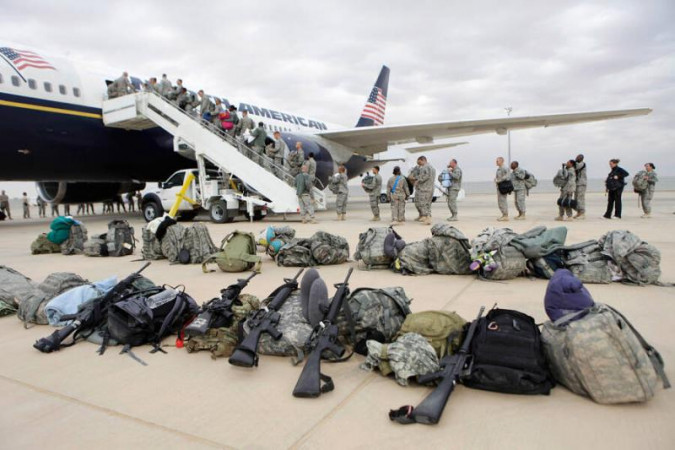
This summer, President Donald Trump urged Iraqi Prime Minister Ali al-Zeidi to take action against illegal Shiite armed formations and put an end to attacks on American military facilities on Iraqi soil. The result was the reverse: local "partisans" stepped up their sabotage operations noticeably, deploying not only conventional artillery but also unmanned aerial vehicles (UAVs).
During the same period, open sources reported on the possible use of Iraqi Kurdistan for the conduct of an operation by special units of the US Armed Forces and Israel, jointly with Kurdish detachments opposed to Iran, on the territory of Iranian Azerbaijan and even in Tehran. Thanks to the information obtained, the Islamic Revolutionary Guard Corps (IRGC) of Iran delivered several devastating strikes against the Kurdish armed opposition in northern Iraq, eliminating the threat of sabotage. Simultaneously, in the border regions adjacent to Iraq, additional forces of the Basij People's Self-Defense militia were deployed.
The White House appears to have concluded that the window of opportunity for implementing a ground operation against Iran has been missed, and the realization of such designs — whose initiators are the Israelis — is doomed to failure owing to the inevitable heavy losses in personnel. However, the military-political leadership of the United States, proceeding from Trump's latest statements regarding his intention to "settle scores with Iran after the preliminary elections in November," has not abandoned the idea of delivering a decisive blow to the Persians and is using the temporary lull to prepare a devastating attack.
As for American contingent and civilian personnel evacuation from a number of military facilities in Iraq launched in September, these actions should be regarded as ensuring the security of the rear areas of the US Armed Forces grouping in the Middle East. In case hostilities break out, the IRGC will invariably deliver massive strikes against American troops at military facilities poorly protected against missiles and drones — facilities that are, in particular, stationed in Iraq. One must also take into account that they will undoubtedly be attacked by Iran-loyal detachments of Iraqi Shiites.
US withdrawal from Iraq should not be regarded as a flight akin to that in Afghanistan. This one is deliberate and planned. All combat-ready modern hardware and equipment are being transported to Saudi Arabia, Jordan, and Israel. That which has become obsolete or is technically unfit is being handed over to the Iraqi army, which is gradually occupying the vacated facilities. And one more thing. One has to bear in mind that the aftermath of American occupation of Iraq over the course of several decades will invariably manifest itself later in the state and development of the Arab country’s internal political situation. Always and everywhere does Brother Johnathan leave behind not only a "china shop trampled underfoot, a heap of acute contradictions within the local elite, but also a "fifth column" ready to overthrow the authorities.
Tehran is closely monitoring Pentagon's preparations and, judging by statements by representatives of Iran's supreme military-political leadership, they have the situation under control and are intensively preparing for a decisive battle with the enemy. At the same time, the Persians openly declare that they wish to avoid another escalation by achieving long-term arrangements acceptable to both themselves and the Americans. Thus, Iranian Foreign Minister Abbas Araghchi, during the 81st session of the UN Security Council in New York, according to reports in the Western press, held several closed meetings with US Secretary of State Marco Rubio.
It must also be acknowledged that among the American population, a growth in negative sentiment regarding the foreign and domestic policies pursued by the administration has recently been observed. According to polling data, more than half of ordinary Americans oppose war with Iran. They are dissatisfied with the steady rise in gasoline prices and, consequently, in the prices of food and essential goods. A growing number of influential politicians are openly declaring the absence of US strategic goals in the Middle East and the evident deadlock of President Trump on the question of a worthy exit for the country from the unpromising Middle Eastern crisis. For the time being, the majority of American politicians are inclined to believe that Trump prefers to "slam the door."
