
The Southern Kurils. The last word
Moscow has closed the book on the peace treaty with Japan
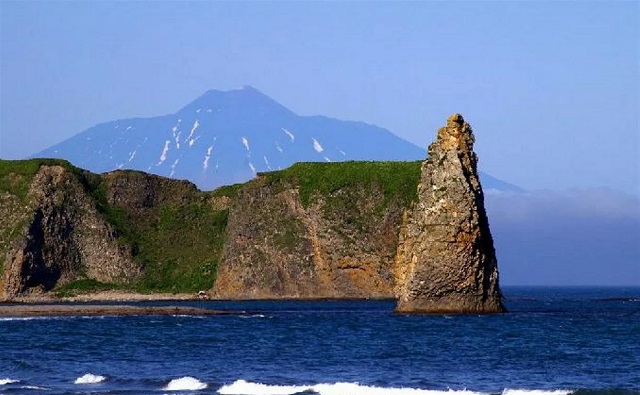
Japanese Prime Minister Sanae Takaichi has confirmed that Japan will keep pressing its territorial claims to Russia over the four Southern Kuril Islands, which went to the USSR in the wake of the Second World War.
Addressing the opening of the Japanese parliament's autumn session on October 5, she declared: "We will stay the course set by the government — resolving the territorial issue and concluding a peace treaty." She further pointed out that the "northern territories," as Japan calls the southern Kurils, "are historically and under international law Japan's inherent territories."
The formulation is a stock one, and Takaichi speaks of a peace treaty because it is there, in particular, that the borders between the formerly conflicting states are legally fixed. Any subsequent encroachment upon them may be regarded as a violation of the terms of peace and a pretext for war.
From the early 1950s, Tokyo started demanding that the USSR return the islands. Later came mutual probing, and then talks on normalizing bilateral ties. At the height of the Cold War and the gradual cooling of Soviet-Chinese relations, then leader of the USSR Nikita Khrushchev, with his characteristic hyperactivity, attempted to disrupt the creation of a military alliance between the US and Japan and dangled a carrot before Tokyo.
The USSR resolved positively the issues of an early release of convicted Japanese prisoners of war, of Japan's admission to the UN, and of restarting trade and economic cooperation.
And in October 1956, the USSR and Japan concluded the so-called Joint Declaration, which officially recorded the cessation of the state of war between the two states and defined the basic parameters for their inter-state relations. It was, in essence, a peace treaty with the exception of one substantial aspect. The parties never came to a common denominator regarding the border. More precisely — regarding whom the Southern Kurils belong to.
The Declaration, which both sides ratified as an international treaty, included Article 9, which read: "The Union of Soviet Socialist Republics and Japan agree to continue, after the restoration of normal diplomatic relations between the Union of Soviet Socialist Republics and Japan, negotiations for the conclusion of a Peace Treaty.
"In this connection, the Union of Soviet Socialist Republics, desiring to meet the wishes of Japan and taking into consideration the interests of the Japanese State, agrees to transfer to Japan the Habomai Islands and the island of Shikotan, the actual transfer of these islands to Japan to take place after the conclusion of a Peace Treaty between the Union of Soviet Socialist Republics and Japan."
What is important here is that, firstly, the matter only concerned two minor islands, not four, as Tokyo would wish. Although in the context of the postwar territorial acquisitions of the USSR, this would have been a most serious precedent.
Secondly, the term "transfer" was used, which implies that the islands belong to the USSR. Otherwise, the word "return" would have been used, implying that Japan's own property was being returned to it. This is not the case. Tokyo, by signing off on the unambiguous term "transfer" in both the Russian and the Japanese versions of the text, thereby confirms our sovereignty over the islands. All the blather about illegal occupation loses its meaning. In any case, Russian diplomats stand firmly on this.
Thirdly, it follows from the document that the peace treaty may, in essence, consist of a single article: where the border will run — to the south or to the north of the Southern Kurils, that is, under whose sovereignty they pass. And then the procedure, timelines, and other conditions of transfer, if it comes to that.
This offered broad possibilities for continuing political dialogue and exerting influence on Tokyo.
Khrushchev's gambit failed. US Secretary of State Dulles quickly explained to the Japanese that, if they accepted Moscow's scenario, Washington would not return to them the archipelago of Okinawa, occupied at that time. Tokyo decided that quarreling with yesterday's victors and today's allies over the Kurils made no sense, and re-concluded a military alliance with the US. The USSR in response withdrew its obligations under Article 9 of the Declaration, and Japan returned to the formulation of the return of all four islands of the Southern Kurils.
A pause of 30 years ensued in the political dialogue between Moscow and Tokyo.
The subject of the islands received a second wind only during perestroika. And beginning in 00s, Russia displayed readiness to return to the question of a peace treaty based on the Joint Declaration provisions. Which, however, did not presume any renunciation of Russian sovereignty over the islands.
The Japanese side, judging by the leaks that have appeared in the press, proposed various, at times exotic, options.
Thus, as Asahi newspaper’s Yoichi Funabashi writes in his book, during negotiations in Singapore in 2018, then Prime Minister of Japan Shinzo Abe proposed to Russian President Vladimir Putin that the border between the two states be drawn in such a way that the Habomai Islands and Shikotan would pass to Japan, and Russia would be granted a preferential regime of activity there. In a similar manner, Kunashir and Iturup would be recognized by Tokyo as Russian territory, but the Japanese would be granted a preferential regime of activity. These two islands are the most developed economically, a number of Russian military facilities are located on them, and they account for around 80 percent of the territory claimed by Japan.
On the whole, the proposal reflected a substantial correction of Japan's official course with regard to the "territorial problem" with Russia.
As Funabashi writes, during the meeting in Singapore the Russian President assessed the Japanese proposals positively, but subsequently the Russian side did not proceed to their implementation. The Japanese one, for its part, stated that no official government decisions had been taken on options for resolving the Kuril problem. The official position — return the four islands — remained unchanged.
However, Abe's motive is important.
As the Japanese journalist notes, the prime minister believed that, since China is becoming a major power, Japan would not be able to pursue a confrontational policy on two fronts, and it was necessary to conclude a peace treaty with Russia. Let us add on our own account — in such a way as to somehow also realize the Japanese territorial "idée fixe" aimed at dissociating itself from the criminal past of the Second World War.
Evidently, it is the second motive that now dominates the actions of current Prime Minister Sanae Takaichi, who proposed from the UN rostrum to abolish the articles of the Charter concerning aggressor states. Namely, they Japan, in particular, to submit to the decisions of the victorious states, including the Yalta Declaration, under which the USSR has every right to the Kuril Islands, and they make the present border between Russia and Japan indisputable. Naturally, Lavrov immediately responded there with a firm "no."
But that is not all.
As Vladimir Putin stated on September 1 to journalists in Bishkek, "signing a peace treaty is a complicated matter — it is a complex issue, and for us, it is a closed chapter."
Perhaps it is for the first time that we hear a short and exhaustive wording of the kind. On the Southern Kurils belonging to Moscow, there is nothing to discuss with Tokyo. There will be no peace treaty into which the Kurils could be written. The ship has sailed.
And to "adhere to the course" of concluding a peace treaty, as Takaichi declared, is of course possible. For a domestic audience, such a formulation will certainly work.
