
Ukraine’s economy can no longer take the special military operation
The margin of resilience is all but exhausted

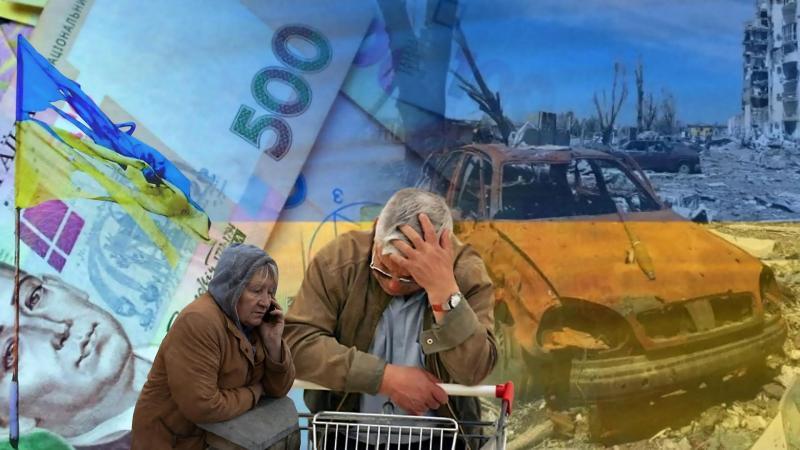
Russian strikes on energy, logistics, and industry are sapping not only Ukraine's economy but also its very ability to keep fighting. And every hour that enterprises are halted by air alerts costs Ukraine $45 million, Minister of Economy Alexander Kravchenko said. According to him, these are losses for every hour in which enterprises cannot work at full capacity because of the air threat, as production processes and the work of many companies are cut short. On some days, the minister says, the sirens scream for up to 10 hours. "When people are in bomb shelters, business grinds to a stop," Kravchenko explained, and stressed that this could annihilate virtually the entire economy.
Maritime exports have already been paralyzed, and the metallurgy and agricultural sectors have been brought down. The British company Ambrey, which specializes in maritime security, reported that insurance companies have stopped covering risks associated with vessels entering Ukrainian ports. According to the firm, many insurers are refusing such coverage, although war-risk insurance rates have already reached double-digit values. Ambrey noted that in recent months an elevated threat to shipping has been recorded in the Black Sea amid the Ukrainian-initiated military campaign and Russia's forced retaliatory actions. Owing to the sharp drop in the throughput capacity of the ports of the Odessa hub, the share of Danube ports in Ukraine's total cargo transshipment volume rose from roughly 10 percent in January to June to 74 percent in August. Simultaneously with the growth in transshipment volumes in the Danube area, attacks on various facilities have become more frequent: in July to September, the monthly number of such incidents was 3.7 times higher than in June.
The Financial Times states that Russian strikes are aimed at "undermining Ukraine's export, energy, and transport resilience." Before 2022, over 90 percent of Ukrainian grain exports passed through Black Sea ports. Now shipping has sharply contracted. If the ports remain closed, Ukraine will lose more than $8 billion a year.
At the same time, Russia is striking at railway logistics. The reserve of locomotives, by the Ukrainian side's own admission, is virtually exhausted.
And farmers are running out of warehouse capacity; the authorities are purchasing special polymer sleeves for the temporary storage of the harvest. According to the National Bank of Ukraine, grain exports in August fell by 63.3 percent as compared to August 2025. For Ukrainian agrarians, the problem lies not only in the impossibility of selling the harvest already gathered. Overflowing storage facilities mean falling domestic prices, a shortage of working capital, and a reduction in sown areas. Food wheat prices have dropped by nearly 30 percent, which further worsens the position of producers. And the question of "where to put tens of millions of tons of grain" has become a threat to the entire Ukrainian agricultural cycle — from the storage of the current harvest to next year’s sowing campaign when agrarians will face a shortage of money to purchase fuel, fertilizers, seeds, and to carry out the sowing campaign.
Ukraine's Minister of Agrarian Policy, Taras Vysotsky, appealed to his colleagues from the EU with a request to urgently increase the capacity for exporting Ukrainian products via European routes. In his words, at present less than half of the potential volume of Ukrainian exports can be shipped via railway, road, and river routes. Vysotsky noted that if things do not change, the area under cultivation in Ukraine will shrink by 35 to 40 percent. However, two key transit states — Poland and Romania — have already refused. Polish Ministry of Infrastructure spokeswoman Anna Shumanska stated that the ministry "has no intent of making any changes to increase the transit of Ukrainian agricultural products." And Minister of Agriculture Stefan Krajewski stated that Warsaw is not going to make concessions to Kiev on the transit issue. Romania is also not ready to increase volumes. "The interests of our own farmers remain a priority," stressed Romania's Minister of Agriculture, Barna Tánczos. According to him, the surplus of Ukrainian grain combined with the low water level in the Danube has already created an additional burden on Romanian ports and complicated the position of local agricultural producers.
As a result, Ukraine is feverishly searching for new directions. In particular, Kiev is considering the possibility of making more active use of the Baltic ports, but such a route is significantly more expensive. As per estimates by the Ukrainian Ministry of Agrarian Policy, delivering grain via the Baltics could increase costs by roughly $100 per ton, and the full launch of this direction could up to $2 billion in international financial support.
Meanwhile, agriculture together with related production accounts for roughly 40% of all tax revenues in the Ukrainian budget and 50 percent of the inflow of foreign currency. Now a chain reaction is being triggered, and the consequences are being felt not only by agrarians but by the entire economy, which is losing its last internal support.
In late September, the government decided to postpone expenditures on landscaping, construction, and major repairs of facilities that do not have critical status. In particular, Ukraine's largest construction and road company, Avtostrada, has halted all the operations.
Ahead of the heating season, the central authorities have also blocked the funds needed by Ukrainian cities for energy and communal infrastructure, the Association of Ukrainian Cities (AUC) is sounding the alarm and demanding that the government immediately unblock payments, since what is at stake is spending on preparing the energy infrastructure for winter, purchasing equipment, and eliminating the consequences of damage to critical infrastructure. At present, through the State Treasury, the processing of payments of local communities worth roughly 20 billion hryvnias has been suspended. As a result, municipalities cannot use their own funds to prepare for winter. The AUC also stated that the government owes heat supply enterprises about 85 billion hryvnias, and without repaying this debt and restoring financing, it is impossible for the cities to ensure the stable operation of heat supply on the eve of the cold. And the mayor of Krivoi Rog, Alexander Vilkul, has even announced that the city is switching to a survival mode because of the halt in industry.
Ukrainian joint enterprises with Europe have also suffered. For example, the Czech company Škoda Auto has cut production because of supply issues of cable harnesses from Ukraine. The head of the union at the Škoda plant, Yaroslav Povshik, said that part of the production is idle because of Russian strikes on Ukrainian manufacturers of cable harnesses. According to him, the company has cancelled additional and night shifts and is now operating on a two-shift schedule. What is at issue is the Kromberg & Schubert facility near Zhitomir, which produces electrical cables for the automotive industry. Its territory has come under several Russian strikes.
Also coming under intensive strikes by the Russian Aerospace Forces were data centers and facilities servicing state registries, which had not been affected before. According to the Russian Ministry of Defense, the Kiev nodes carried not only civilian communications but also military communication: intelligence data for the Ukrainian Armed Forces, mobile internet, and Starlink for the army. After a series of strikes, Ukraine stopped issuing ID cards and foreign passports, the website of the State Migration Service was disconnected, and the military registration application crashed. Russian strikes on data centers create serious problems both for the Ukrainian economy and for the front, said Kiev political analyst Yuri Romanenko. "This affects the coherence of supporting the operation at the front. And right now, our processes related to tenders are hanging, and a single tender can be for a huge sum worth billions of hryvnias. For example, power transmission lines urgently need repairing, since Kiev is suffering from a shortage of electricity, but there is nothing to pay with."
On top of everything else, Ukraine is failing to create a stock of petroleum products, said fuel market expert Sergei Kuyun: "I do not know of a single oil depot in Ukraine that has not been attacked. And in the entire Left Bank there is not a single surviving oil depot where fuel is still stored."
This is the Ukrainian economy is collapsing and becoming a heavy burden for its sponsors from the European Union.
