
Lukoil\'s overseas assets are a magnet for the Americans
But it is the White House that will decide the deal's fate
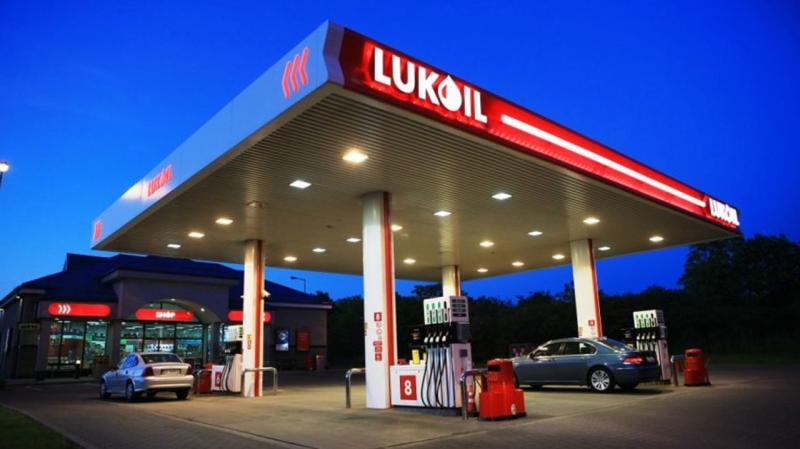
The saga of Lukoil's foreign assets dates back to October 2025, when the US placed the company on its sanctions list. Under pressure from the restrictions, Lukoil was forced to put its international business up for sale — Lukoil International GmbH, which holds fields stretching from Central Asia to Mexico, refineries in Bulgaria and Romania, and a vast network of filling stations worldwide. The combined proven and probable reserves of these assets top 3 billion barrels of oil equivalent, with their value estimated at $20 to 22 billion.
In January 2026, Lukoil announced a preliminary agreement with the American private fund Carlyle Group. However, the deal stalled: the American OFAC regulator extends the license for negotiations time and again, but there is no final approval. Washington's key condition is that, after the sale, the assets must completely sever ties with Lukoil, and the Russian company must not receive immediate financial benefit from the deal. This creates an almost insurmountable legal construct: there is a buyer, there are assets, but to transfer them in such a way that the seller does not receive the money is virtually impossible.
September 2026 saw a new player appear on the scene. American billionaire Todd Boehly — a major donor to Trump's political initiatives — formed a consortium to intercept the deal from Carlyle. It is important to understand: what is at issue is two independent claimants to one and the same asset, not partners. Carlyle is an American private investment fund with which Lukoil concluded a preliminary agreement back in January 2026; its deal has been stuck in OFAC approvals and has been in limbo ever since. The Boehly consortium is an alternative claimant attempting to intercept that deal. According to the Financial Times, other players have already dropped out of the race, so this is a direct confrontation between two teams for the entire portfolio of Lukoil International GmbH as a whole, rather than a division of assets among participants.
Within the Boehly consortium, the shares are distributed as follows:
· Sheikh Tahnoun bin Zayed Al Nahyan — brother of UAE’s President, one of the most influential figures in Abu Dhabi. His International Holding Company and the Emirati Allied Investment Partners are claiming a leading role and will contribute the bulk of the sum.
· The US International Development Finance Corporation (DFC) — a state institution that is to receive about 15 percent of the shares in the new company. This is an unprecedented case: the American government directly becomes a shareholder of the buyer, while another of its bodies — OFAC — must approve the deal itself. As the FT notes, this places the US in an "unusual position": one part of the administration is fighting for the assets, while another decides their fate.
· The Qatari Al-Khayat family — billionaires Mutaz and Ramez Al-Khayat, who previously collaborated with Jared Kushner on a resort project in Albania.
Boehly and the DFC, according to the Financial Times, will control the majority of seats on the new company’s board, which gives them key managerial control even with a smaller share in the capital. The negotiations, as the FT notes, are at an "advanced stage," but there is no final agreement yet.
Another curious aspect of this story is its parallel with the Ukrainian settlement. According to The New York Times, the Trump administration's negotiations with Russia on ending the war have expanded and now include a large-scale deal involving Lukoil's assets. As reported, the question of the deal was raised by the Russian side at a meeting with Steve Witkoff and Jared Kushner in Moscow on September 5, and it was presented as a way to show that Russia and the US can do business together.
Here a contradiction arises to which American lawyers have already drawn attention. Witkoff and Kushner act as mediators in the peace negotiations, but the Middle Eastern participants in the consortium are linked to them by business relations: the Qatari Al-Khayat family worked with Kushner on a resort in Albania, and Sheikh Tahnoun's fund is connected to the cryptocurrency firm World Liberty Financial, founded by Witkoff and the Trump family.
Officially, none of the participants comments on the deal. But Washington's logic reads clearly: to complete it before the midterm elections to Congress (scheduled for November 3) would be politically advantageous — it would help boost global fuel supply, and Trump could claim credit for stabilizing the fuel market on the eve of the vote.
For the company itself, the outcome of the deal is, by and large, not all that important — at least in the short term. The valuation of the foreign assets at $20 billion is roughly a third of Lukoil's total capitalization (the "Russian core" plus "assets beyond the perimeter"). But with near-absolute probability, the company will not see this money before the conflict ends: even if a buyer is determined, OFAC will not permit the transfer of funds to the seller.
Far more important is something else: the completion of the deal means certainty. Which the market loves. It was precisely against this backdrop that Lukoil's shares at the beginning of October became the leaders in growth on the Moscow Exchange, rising to 5,505 rubles on the news of the NYT report about the negotiations and reaching a six-month high of 5,670 rubles by 7 October. However, analysts warn: the growth is to a significant degree speculative. The real drivers for Lukoil are the dividends for the first half of the year and the continuing instability in the Middle East, where the Strait of Hormuz remains effectively blockaded. It is these factors, and not the deal to sell the assets, that will determine the movement of the stock in the coming months.
The emerging configuration exposes several fundamental points. First, Lukoil's foreign assets have turned from a commercial asset into an instrument of geopolitical bargaining. Their fate is being decided not on the oil market but in the negotiating rooms of Washington, Moscow, and Abu Dhabi. Second, the participation of the American state fund DFC in the consortium is a qualitatively new format: the US state becomes both buyer and regulator at the same time.
Lukoil will keep operating without its foreign business, showing strong results on the domestic market, but the question of the fate of its international portfolio will remain in limbo — at least until the sanctions regime changes. And that, as recent months have shown, depends not so much on economics as on politics.
