

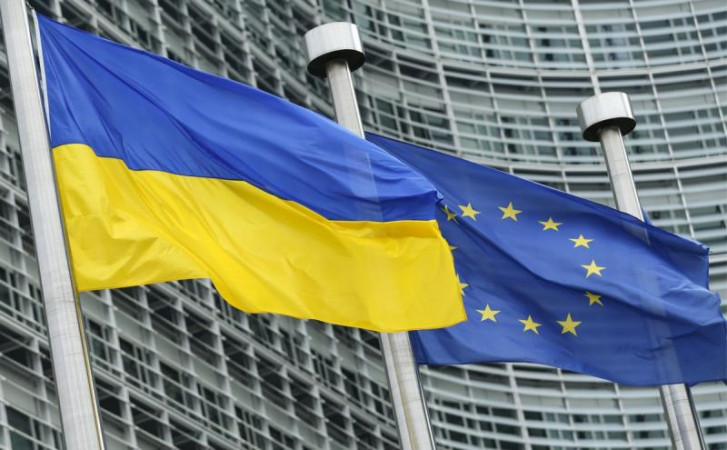
Ukraine and the EU continue to show that they are not peace-minded; the US is no longer warning Kiev about Russian missile attacks; and Germany’s authorities face mounting pressure over the Nord Stream blast investigation. These stories topped Thursday’s newspaper headlines across Russia, according to TASS news agency.
Izvestia: Ukraine, EU keep peace off the table
The course of action pursued by Kiev and its European allies is doing little to bring talks on Ukraine any closer. The European Union is discussing a new package of sanctions on Moscow and may try to undermine the recently agreed diesel deal between Russia and the United States, moves that Moscow sees as contradicting its claims that it is ready to join peace talks, Izvestia writes.
There is no basis for negotiations with Britain, Germany and France at this point as they seem content to speak to Moscow through a series of ultimatums and meaningless sanction packages, Russian Deputy Foreign Minister Mikhail Galuzin told the newspaper.
The EU is set to continue its policy of maximum military and diplomatic support for Kiev, regardless of the cost. Besides, European elites will keep strengthening ties between Ukraine and the EU in various ways, European studies expert Mikhail Kucherov noted.
Meanwhile, efforts to settle the Ukraine conflict remain at a standstill. It's worth noting that the US appears to have adopted a different approach than Europe, resuming partial pressure on the Kiev regime. First, media reports surfaced that Washington had threatened to suspend intelligence sharing with the Ukrainian armed forces, followed by reports from the Ukrainian military of disruptions and restrictions affecting satellite internet services.
Oleg Karpovich, department head at the Diplomatic Academy of the Moscow State Institute of International Relations, pointed out that this pressure on Kiev was aimed primarily at ending strikes on Russian oil refineries and stabilizing diesel prices. Still, the parties remain too far apart to reach a settlement. The US has repeatedly flip-flopped on who it supports, but this has never led to any long-term solutions, the expert stressed.
If Russia and the US develop a joint peace plan, the EU is unlikely to accept it because the bloc’s interests are now totally opposed to those of Moscow, Kucherov said. Europe may instead seek to strengthen the Coalition of the Willing and draw up its own peace initiative.
A shift toward a really effective settlement process would the US to put pressure on its allies in Europe. It’s the Europeans that are showing no willingness to engage in dialogue with Russia, seeking to increase support for Kiev and prevent the normalization of relations between Moscow and Washington.
Kommersant: US no longer warning Kiev about Russian missile attacks
Kiev hasn't received any US data on Russian ballistic missile launches for at least two days, the Ukrainian authorities claim. On October 14, Ukraine also reported disruptions to Starlink services, Kommersant writes.
Reports emerged on October 9 that the United States could suspend weapons supplies and intelligence sharing with Ukraine unless Kiev halted strikes on Russian refineries. On October 12, the Ukrainian armed forces reported that they had not received US early-warning data on ballistic missile attacks. As a result, air raid sirens in Kiev were not activated until after the strike. The next day, the same thing happened.
Ilya Kramnik, a research fellow with the Center for North American Studies at the Russian Academy of Sciences’ Institute of World Economy and International Relations, explained that the early-warning data in question allows air defense systems to be readied by identifying the direction of the attack and its potential targets.
"If early-warning data is unavailable, enemy missiles can be detected only once they enter the range of air defense radars, which significantly complicates defensive operations. Radars must remain on permanently, which increases the risk of their being destroyed. Besides, continuous operation wears those systems down," the expert said. This will further aggravate Ukraine’s already existing air defense problems, he added.
Talking about Starlink disruptions, Kramnik said they will affect the Ukrainian army’s strike capabilities. A speed limit of 160 km/h means that Kiev will not be able to use Starlink terminals on drones. This would reduce Ukraine’s ability to strike targets within its 1991 borders, Kramnik explained, as Starlink services are not available in Russian territory.
"This is a fairly powerful way to hint at the need to accept certain conditions for participating in the peace process. However, it remains to be seen if this works as intended," the expert concluded.
Media: German authorities face mounting pressure over Nord Stream blast investigation
The Alternative for Germany party plans to send further inquiries to the German government regarding the investigation into the explosions that damaged the Nord Stream gas pipelines, a Bundestag member told Izvestia. Meanwhile, the trial of the first defendant in the case has begun in Hamburg. According to the prosecution, the act of sabotage was carried out on orders from Kiev.
The trial has drawn unprecedented attention for several reasons. First, the case concerns one of the largest acts of international sabotage in modern history. Second, the defendant is a citizen of Ukraine, a country that Berlin has been actively supporting for several years, by providing both funds and weapons.
However, even if evidence is found of government involvement in the attack, Germany is unlikely to change its policy on assistance to Kiev, said Fyodor Basov, a senior researcher at the Russian Academy of Sciences’ Institute of World Economy and International Relations. In his view, the attack against the Nord Stream pipelines could be classified as an act of self-defense. Still, the trial has just begun, and it is too early to assess its potential political consequences, the expert added.
The German authorities have found themselves in a difficult situation. Acknowledging Ukraine's involvement in the attack would confirm Moscow’s assertion that the Kiev leadership poses a security threat to all of Europe. On the other hand, concealing the investigation’s findings would undermine Germany’s key principles of the rule of law and judicial transparency, Denis Denisov, an expert at the Financial University under the Russian Government, pointed out. As long as Berlin tries to sit on the fence, its official policy toward Kiev will not change.
Nevertheless, European authorities will eventually have to choose which way to go, Denisov said. They will have to officially acknowledge that Ukraine is to blame for undermining the competitiveness of European manufacturers and creating systemic energy security problems for Europe. Alternatively, European politicians could once again turn a blind eye to the issue, disregarding the enormous damage inflicted on their own citizens, the political scientist emphasized. The latter scenario could trigger a further collapse in the approval ratings of Germany’s ruling coalition.
The case is of great political importance for Berlin, and there are serious doubts about whether the court will be able to remain impartial, Rossiyskaya Gazeta notes. Earlier, the court barred the pipeline operators, Nord Stream AG and Nord Stream 2 AG, from taking part in the proceedings. Even Germans don’t believe that the truth will emerge. Experts doubt the trial will establish that the attack was authorized by government officials.
Nezavisimaya Gazeta: Houthi attacks threaten to trigger another global economic shock
Yemeni Houthis are threatening further attacks on Saudi Arabia’s oil facilities, while strikes on tankers in the Strait of Hormuz continue. Attacks on the Middle East’s largest oil producer will further hurt the global outlook, Nezavisimaya Gazeta writes.
Saudi Arabia’s economy is important both for the region and the entire world, which is why the current developments could affect everyone, without exaggeration, International Monetary Fund Managing Director Kristalina Georgieva warned. "If further strikes target oil pipelines, processing facilities or export terminals, it will become harder to offset supply shortfalls. This could drive fuel prices and transportation costs up, accelerate global inflation, and slow the global economy," Freedom Global analyst Vladimir Chernov specified.
As for Russia, the International Energy Agency estimates that the country’s total oil export revenues rose by $3.58 billion in September amid increasing global oil prices. However, these gains may turn out to be short-lived. "A prolonged crisis will weaken global demand. In the current situation, Russia may benefit from a temporary increase in prices but it would be wrong to view further tensions as a beneficial factor," Chernov said.
Houthi attacks on Saudi oil infrastructure have given Russia a short-term windfall, agrees Oleg Abelev, head of analytics at the Ricom Trust investment company. However, the advantages are being offset by discounts, sanctions, Ukrainian strikes and structural economic problems, the expert added.
Meanwhile, Finam analyst Nikolay Dudchenko does not rule out that Houthi strikes could trigger a further escalation of violence and draw the United States into the conflict. "If the Americans intervene, US ships and facilities in the Red Sea region could come under attack, which would also keep oil prices high," the expert said.
Izvestia: Logistics issues cloud Russian food export prospects
Russia’s agricultural trade gained significant momentum in the January to August period of 2026, with food exports rising faster than imports. However, the increase stems largely from favorable global prices, while serious damage to export terminals sustained at the end of the summer raises questions about whether the current trend will persist, Izvestia writes.
According to the World Bank, average food prices were 6.7% higher in the first eight months of the year compared to 2025. That said, the rise in dollar-denominated revenues does not necessarily mean a corresponding increase in actual export volumes, Alexander Firanchuk, leading researcher at the Presidential Academy’s Laboratory of International Trade of the Presidential Academy, observed.
Southern Russia’s transport infrastructure suffered a serious blow at the end of the summer. Darya Snitko, head of Gazprombank’s Department for Economic Forecasting, confirms that agricultural exports have declined considerably since August due to disruptions to shipping through Black Sea ports.
The disruption of the usual and cheapest sea route is forcing traders and producers to look for alternatives. Shipments are being redirected to rail transport and ports on the Baltic and Caspian seas. The forced redirection of flows is increasing transportation costs and reducing profits, even amid high global prices. Food exports are unlikely to return to previous levels until port operations in the country's south are fully restored and shipment processes normalize, Firanchuk said.
In short, Russia’s agricultural sector is currently in a state of uncertainty. On the one hand, rising fertilizer and energy prices driven by the Middle East crisis have prepared the global market for high-priced Russian exports. But on the other hand, damage to port infrastructure presents an obstacle that cannot be fixed through financial measures alone. Russia’s ability to resume profitable food exports will depend largely on how quickly Black Sea terminals are restored and whether transport companies can optimize more expensive alternative delivery routes.
TASS is not responsible for the material quoted in these press reviews
