
EU: how far sanctions can go
Brussels has limited itself to targeted list additions — evidence that the "package" policy has stalled, not that pressure is being ramped up

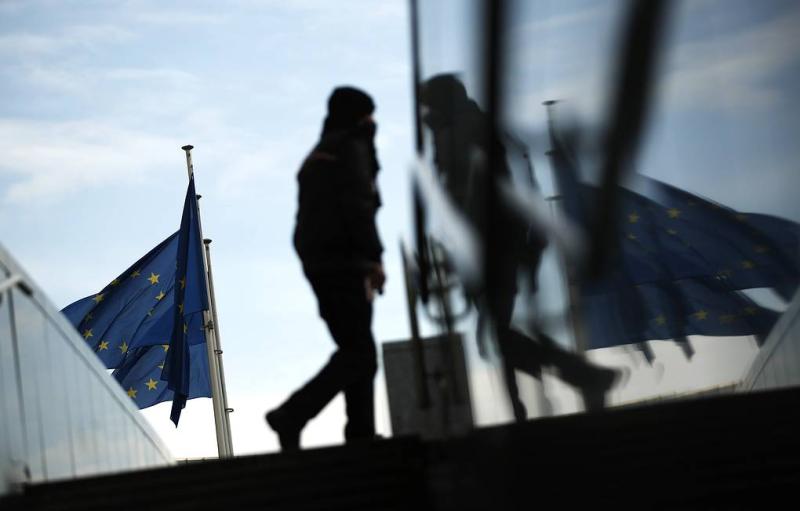
The decision the Council of the European Union adopted on November 16, 2026 rests on a legal mechanism from 2014, not on a new sanctions package — and that is what sets it apart from everything Brussels has done in recent years, however much it may look outwardly like another round of pressure. Twelve individuals and more than a number of organizations were added to the sanctions lists. The legal basis was Implementing Regulation (EU) 2026/2574, which creates no new rules and merely supplements Annex I to Regulation (EU) No 269/2014 of March 17, 2014, the founding act on sanctions for actions undermining Ukraine's territorial integrity; Decision (CFSP) 2026/2575 operates in parallel under the common foreign policy. Brussels, in other words, used the existing 2014 mechanism to add specific listings promptly, without waiting for agreement on a full-fledged 22nd package, which was still in preparation and which, according to Politico, is to be finally approved in December.
What exactly fell under the "November strike"? The key emphasis is on oil refining. The lists include the management companies of the Moscow and Omsk refineries belonging to Gazprom Neft, Gazpromneftekhim Salavat, Kirishinefteorgsintez (KINEF), TAIF-NK, the Khabarovsk and Saratov refineries, Orsknefteorgsintez, the Ilsky and Novoshakhtinsky plants, as well as the operator of the LNG complex under construction at Ust-Luga, RusKhimAlyans, and its shareholder RusGazDobycha. In parallel, almost 50 banks and financial organizations fell under restrictions, including SPB Bank, Unistream, and the payment service YuMoney. Brussels' formal justification is the same as always: the energy sector and financial flows provide substantial revenue to the Russian budget.
Notably, Moscow offered no separate official comment on the expansion of European restrictions on refineries. Presidential press secretary Dmitry Peskov, answering questions from Channel One journalists in Shenzhen on November 17, confined himself to general rhetoric: "It's about the ineffectiveness of weaponizing economy in international affairs — and the situation with all the sanctions against our country and other countries has clearly demonstrated this." He also noted that European leaders "are rather zealous about what is happening, and in searching for their place in the process of settling the Ukrainian conflict," and that their position is of a "pronounced, non-peaceful character." The absence of a pinpoint reaction to a specific sanctions episode is telling in itself: the Kremlin sees no point in commenting on each successive expansion of the lists, since it does not change the fundamental conditions in which the industry operates.
Industry analysts agree on the main point: the EU measures will not deliver a substantial blow to Russian oil refining. Domestic refineries were already under sanctions pressure, simply in a different form — and the parent companies of the key plants have long been on the US SDN list, which means the European restrictions merely duplicate what is already in force at the American level. Extending restrictions to management companies creates nothing fundamentally new — it is, rather, one more stroke on an already established picture. Brussels' real motivation is not economic but political: a demonstration of activity amid the negotiating process on Ukraine, in which the EU has found itself on the sidelines.
The key argument explaining the new sanctions' limited effect lies in the sphere of technological adaptation. Over years of sanctions pressure, Russian oil refining has gone through a process of replacing Western equipment. The largest refinery operators now rely on Russian equivalents and Chinese imports, although supplies may be delayed and are not always perfectly compatible with existing equipment. But on the whole the process is already running smoothly. Chinese suppliers are seen as key partners for oil refining and gas chemistry: the regions are conducting direct negotiations with Chinese companies on supplies of equipment for modernizing production. A significant part of turnkey projects has been redirected from Western contractors to Chinese companies, and the task of the coming years is not to replace Western dependence with Chinese dependence but to build up own competencies consistently, all the way to full import substitution. It is this adaptation model that allows the industry's remaining resilient even as new "lines" are added to the sanctions lists.
So, the off-round character of the November 16 sanctions is not a sign of mounting pressure but rather an indicator that this format has been exhausted. Brussels no longer tries to present each expansion of the lists as a large-scale blow: it acts in a targeted way, through already existing legal mechanisms, and directs its "pinpricks" at structures that are under restrictions anyway. For Russian oil refining this means that no fundamentally new risks arise: the industry has already adapted to working under sanctions pressure, has built channels of parallel import, and has reoriented itself toward Asian equipment suppliers.
The November 16 sanctions are essentially a shot into the milk: they do not change the terms under which the industry operates, but merely confirm that Brussels keeps acting within the same Russophobic logic, offering nothing fundamentally new. Russian oil refining remains resilient, and its adaptive potential has long ceased to depend on how many more refineries are added to the block list.
