
Russia and China — the great Arctic alignment
Arctic Development and Russian-Chinese cooperation

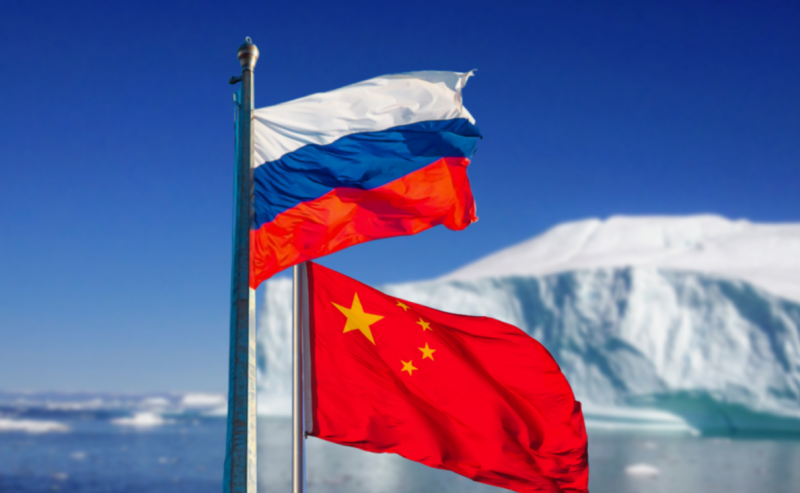
At the Eastern Economic Forum, President Vladimir Putin unveiled an ambitious new program for developing Russia's northern and far eastern territories. Its defining characteristic is a decisive pivot — away from the export of raw materials and toward processing of resources on the spot, expansion of Arctic logistics, and consolidation of Russia's presence in the energy markets of Asia. In line with these strategic priorities, the Northern Sea Route emerged as a central theme — named in
the current climate as the sole safe logistics corridor available to Russia. The goal is to make it a year-round, safe, and competitive route. A major milestone on this path was the September 5 launch of the main oil pipeline to the «Buchta Sever» terminal on the Taymyr Peninsula as part of the Vostok Oil project. This Rosneft project — with a resource base of 6.5 billion tons of low-Sulphur crude — is transforming the Arctic zone from a promising frontier into a functioning export corridor. Together with plans to integrate Arctic and sea terminals with railway and inland waterway connections, it can close the loop on freight flows from Central Russia, the Urals, and Siberia to the NSR. The expected volume of shipments by 2030 is at least 70 million tons per year. Another major logistics priority is the creation of the Mohe-Naiba transport corridor in Yakutia. The implementation of these projects will make it possible to form a model driven by two forces: land-sea
transport plus the Arctic. As for Putin's other key thesis — that resources must be increasingly processed at their points of extraction — its implementation signals a departure from the «extract and export» model in favor of creating gas and petrochemical plants, metallurgical
combines, fertilizer production facilities, and the like in the Far East and the Arctic. The resource base for such a pivot is currently taking shape. Development has begun
on the Udokan copper deposit — the country's largest — in Transbaikalia, and the
Elga coking-coal deposit in Yakutia, along with a zinc and lead raw-materials
complex in Buryatia. Considerable attention under the new program will be devoted to ecology. The «Arctic Clean-up» project will continue, including the removal of old equipment and clearance of accumulated industrial waste. Emphasis will be placed on protecting sensitive ecosystems — Lake Baikal, the Amur and Lena rivers, and rare animal species. Thus, the development of new deposits and infrastructure construction is
planned in line with environmental standards. Russia's new strategy has found a positive response in China. In his address to the Forum, Vice Premier of the State Council Ding Xuexiang noted that over many years, under the strategic guidance of the two countries' leaders, Chinese-Russian regional cooperation — particularly between Northeast China and the Russian Far East — has yielded fruitful results. China has become the Far East's largest trading partner, key cooperation projects are being implemented at a rapid pace, and the mutual visa-free regime is facilitating both cross-border passenger flows and trade shipments. He highly praised the prospects for the NSR, calling it the «Ice Silk
Road» — with a transit time of 18 to 20 days, it is faster and safer than the Red Sea
route. As one of the promising areas for Russian-Chinese cooperation, Ding Xuexiang announced the convergence of development strategies for Northeast China and the Russian Far East. At the Forum, a number of new projects were outlined that could serve as starting points for this direction of Russian-Chinese cooperation. One of these is the International Advanced Development Territory in Sukhodol Bay, featuring a Russian-Chinese agro-industrial cluster oriented toward exports to Japan, South Korea, and Southeast Asia. Also planned is the further development of the «Russky» Innovation Science and Technology Centre (ISTC), where research bases have been established in biotechnology, pharmaceuticals, biomedicine, artificial intelligence and big data, as well as industrial and service robotics and unmanned
aerial vehicles. Notably, the first foreign resident of the ISTC was China's JuZhen
Pacific Biotechnology from Jiangsu Province, which specializes
in biopharmaceutical safety control. Memoranda have been signed on localizing biopharmaceutical production, conducting joint clinical trials, and promoting products on the Chinese market with pharmaceutical companies Chunguang and Lumina Vita. Thus, products developed at the «Russky» ISTC could become a
platform for high-tech exports to third-country markets. Among the regional projects implementing this direction, I would note the «Amur» transit corridor project for river-sea vessels, being implemented jointly with Heilongjiang Province. In the future, it will connect the Chinese ports of Tongjiang and Fuyuan with Khabarovsk, Komsomolsk-on-Amur, and Nikolaevsk-on-Amur,
while also providing access to Asia-Pacific countries and the NSR. Overall, the integration of the NSR, the Far Eastern port complex, and the logistics system of Northeast China will make it possible to move from «point breakthroughs» to «network interaction» for regular shipments of bulk cargo —
energy carriers, grain, timber, and machinery — between China and Russia. Moreover, the Northern Sea Route will offer new opportunities for high-value and time-sensitive cargoes, while complementarity will create a more diversified and
resilient maritime access network for Northeast China's logistics system. Another boost to Russian-Chinese cooperation could come from the planned placement of orders for NSR vessels at Chinese shipyards, as by 2030, 62 new ships will be required for operations along the route: icebreakers, research vessels, and ice-
class cargo ships. Energy cooperation is also set to continue. As Igor Sechin, Chairman of the Board of Directors of Rosneftegaz, noted in his address, annual oil supplies to China already exceed 100 million tons and are growing dynamically. In the first seven months of 2026 alone, Russia supplied 67 million tons of oil to China, with its share of Chinese oil imports reaching a record 23 percent. Gas supplies are also expanding. In his Forum address, Deputy Prime Minister Alexander Novak noted that in 2026, Russia
plans to supply approximately 50 billion cubic meters of gas to China. The
construction of the «Far Eastern Route» gas pipeline is proceeding on schedule. In addition, several Russian-designed nuclear power units are nearing completion in China. Given the joint development of technologies in hydrocarbon extraction and refining, the energy partnership with Beijing is acquiring an increasingly
comprehensive character.
