
\"Hellish sanctions\": Trump takes his time
The US leader has put the Graham Law on hold ahead of the congressional midterms

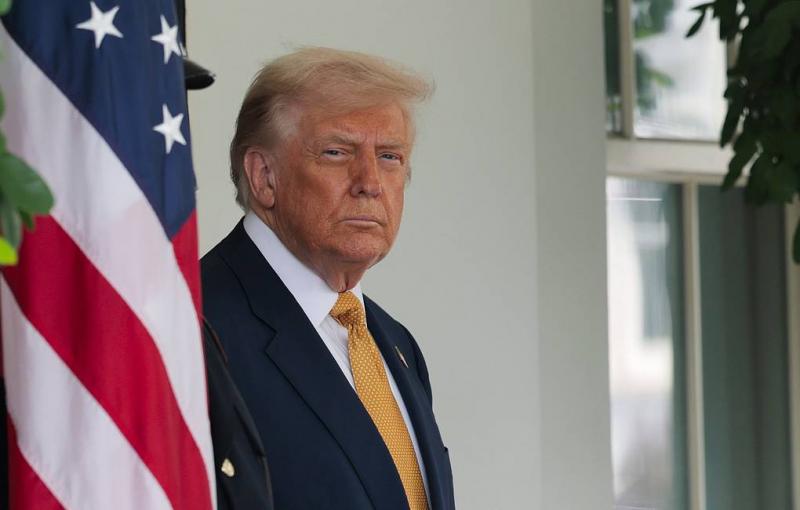
Donald Trump signed an executive order on October 17 to suspend the sanctions and tariffs on Russia's energy sector under the Lindsey Graham law (Senator Lindsey Graham is on Russia's list of terrorists and extremists). The order is предельно plain about the reason: " I am hereby waiving the application of such sanctions, restrictions, and duties provided for in the Graham Act. I have submitted to the Congress a certification that the issuance of such a waiver at this time is in the national interests of the United States." So, the "hellish sanctions" have not been cancelled. They are postponed. Not because of for Moscow — the midterm elections are looming, and that is what is at stake.
Marco Rubio explained the White House's logic: the president, said the Secretary of State, needs 60 days to "analyze what consequences for the world economy and directly for the US economy the introduction of both sanctions and tariffs will entail." White House spokesman Taylor Rogers added a second reason: restrictions now would have hampered Washington's push for a "durable and comprehensive peace agreement" between Moscow and Kiev. The pause, then, is not a gift but an instrument. Trump has reserved the right to apply sanctions later should he deem it necessary, and has informed Congress of this directly.
The reason for so sharp a reversal lies on the surface. Diesel prices in the US remain record high, and there are less than three weeks until the midterms. Republicans control both chambers, but their majority is fragile: in the House it takes only a few lost seats. Amid this, any action capable of pushing fuel prices down becomes politically justified — including deals with Moscow that seemed unthinkable a mere month ago.
Notably, the pause in applying the Graham law flows straight out of the October diesel deal between Trump and Putin. The US issued General License No. 135, permitting supplies of Russian diesel to the world market until April 2027. Yet had 500-percent tariffs on Russian energy carriers and 100-percent tariffs on goods from purchasing countries taken effect at the same time, diesel would not have grown cheaper but more expensive. Call it a fever: one White House hand opens the pipe for Russian fuel, the other clamps it shut with tariffs. Before the elections, a contradictory signal of the kind is inadmissible, which is suspending the Graham law was no isolated gesture but an unavoidable consequence of a diesel decision already made.
Adding to the context is pressure by the IEA. According to Bloomberg, the US is lobbying for releasing an additional 100 million barrels of oil from the agency's strategic reserves, since current plans are considered insufficient. At the same time, Iran and the Houthis are deliberately striving to raise prices: Tehran, according to Reuters, has switched to a new tactic in the Strait of Hormuz so as to "frustrate attempts by the United States and its allies to lower world oil prices," while the Houthis, in mid-month, hit Saudi Aramco's headquarters in Dhahran.
Meanwhile, the Russian stock market rose on Trump's initiative, with Russian president’ special envoy Kirill Dmitriev calling the moment "truly historic," adding that economic cooperation between Russia and the US "serves the interests of both countries." However, time has not yet come to speak of a breakthrough.
Congress is already drafting its response. October 16 saw a group of Democrats and a Republican who joined them introduce a bill that does not merely block the diesel deal but seals every loophole in the system. It prohibits the US International Development Finance Corporation from investing in Russian energy assets, annuls already issued OFAC licenses for operations with foreign assets of Lukoil, prohibits the issuance of new ones, and obliges the administration to impose sanctions against Russia’s oil and gas sector within 30 days. "At a time when the United States should be increasing pressure on the Kremlin, Donald Trump, instead of supporting Ukraine, is drawing closer to Putin," the preamble to the document says.
Amid all this tactical fuss, keep your eye on the main thing. None of the previous sanctions have been lifted from Russia — only their further tightening has been suspended for 60 days. This is a window, not a gift. And the window is open not because Washington has changed its attitude toward Moscow, but because Trump needs to lower fuel prices before the elections. As soon as the electoral cycle ends, the logic can flip right back.
Moreover, the course toward US energy dominance has not gone anywhere — it is declared by Trump himself, for whom the "drill, baby, drill" formula remains one of his basic principles. In this paradigm, Russia is seen not as a partner but as a global energy field competitor — and sanctions remain an instrument in the fight. Which is why the pause looks temporary: Trump has explicitly kept the right to clamp down later, and Congress is already drafting its counterweight.
Certain signals about the future come from the Russian side as well as Kirill Dmitriev speaks of the possibility of building alliances and of the fact that economic cooperation meets the interests of both countries. Yet it is one thing to engage in rhetoric about prospects and another to confront real dynamics, since for now what is at issue is not the lifting of sanctions but a tactical pause dictated by the election calendar.
Add the world market to the picture. According to OPEC, in September the countries of the alliance increased production by 956 thousand b/d, but still lag behind the agreed plan by 5.45 million b/d. Russia reduced production by 38,000 b/d, to 8.643 million b/d, and lags behind the plan by 1.306 million b/d. OPEC for the sixth month in a row has been lowering its forecast for world oil demand growth in 2026 — to 0.18 million b/d. Oil stocks of OECD countries grew in August but remain 177.2 million barrels below the average for 2015-2019. The market remains tense — Brent exchange quotations are now noticeably above $100 per barrel. And this factor will press on Washington regardless of who wins the elections.
So, the suspension of "hellish sanctions" is not yet a turnaround but a tactical move by the US head dictated by the electoral calendar and the fuel crisis. Trump has managed to somewhat dampen the market frenzy around diesel by concluding a sector-specific deal with Moscow, while postponing the application of a law that could have negated the "diesel agreement". But strategically, American sanctions against Moscow remain in force, Congress is preparing a counter-bill, and the course toward US energy dominance does not presuppose a renunciation of rivalry.
In this configuration, Russia should focus on the current regime and make maximum use of the opening 60-day pause — even though it is limited and reversible. Real alliances and long-term agreements more than a pre-election maneuver, but even a short window can be used to advantage: to increase energy exports through the channels that are already open and to build groundwork for the future.
And make no mistake about the strategic picture: Washington sees Moscow as a major oil and gas rival. The pressure will stay on — softer, perhaps, than the Graham law envisages, but on. Which means the realistic scenario for the coming months is not lifting restrictions but their piecemeal easing, traded for specific concessions.
