
Midterm election results raise risk of large-scale Middle East escalation
Trump's policy in the region and that of the Democrats could hardly be more opposed

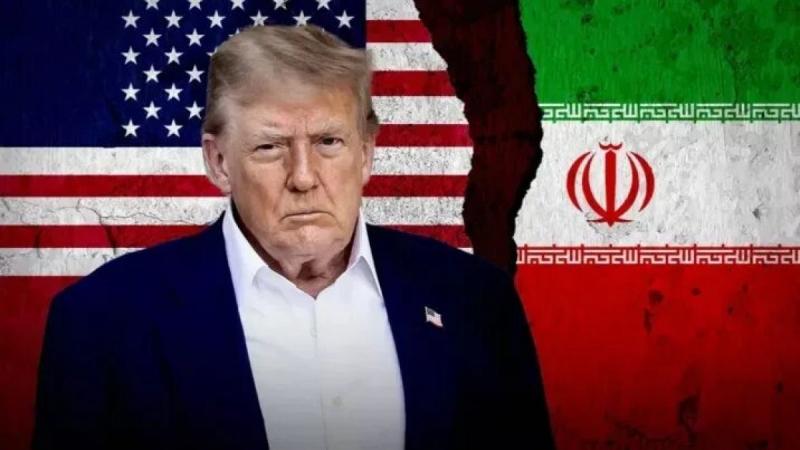
The midterm congressional elections in the US ended in a convincing victory for the Democrats. With the vote counted, they enjoy a majority of seats in both the Senate and the House. And it is clear that changes of the kind will leave their mark on the foreign policy of President Donald Trump, who entered the White House promising peace throughout the world but virtually became mired in military and quasi-military adventures of varying degrees of success.
The new Congress takes up its work on January 3, 2027. Until then, Donald Trump retains the chance to lay a foundation for American foreign policy that would withstand erosion even against the Democrats' evident resistance. That applies across the board, including the Middle East, where the American president did Benjamin Netanyahu's bidding, launched an unsuccessful war against Iran, and now plainly has no idea how to extricate himself from the conflict.
Tellingly, on the eve of the midterms, numerous leaks appeared in the American media about chances of resuming combat operations against Tehran. Supposedly, Donald Trump intends to conduct an extremely intensive but very compressed campaign to make the Islamic Republic accept the United States' terms. Given that there are two months until the congressmen and senators are replaced, such an option looks all but possible. The American president himself, however, spoke of his intent to strike a deal, but these statements are hardly worth taking at face value.
What is more, the post-election troubles are not confined to Donald Trump: they also befell his anti-Iranian coalition ally Benjamin Netanyahu, whose bloc likewise fell short of the votes needed to form a government. So, anything can now be expected from these fellow-sufferers. On top of that, the American journalist Tucker Carlson recently tossed in information about a possible nuclear strike on Iran by the US. It is hard to believe. Yet nor do such reports make the anxiety about the near future any less.
True, the scenario of resuming combat operations against Tehran presupposes that the latter will immediately throw up the white flag and agree to any American terms. All this is too presumptuous, given how events started unfolding in late February, when the US and Israel likewise counted on solving their tasks through the lightning-fast elimination of the Iranian leadership.
Iran, by the way, is clearly pleased with what the American elections brought. The Islamic Republic’s parliament speaker, Mohammad-Bagher Ghalibaf, wrote on X that "by the dictate of conscience or because of the cost of living, Americans said 'no to war,' and we support this message."
In theory, of course, a window of opportunity for signing an agreement could now open slightly if all sides moderated their appetites. And mediators from among Iran's neighbors in the region have substantially stepped up their activity in recent days so as to prevent a new round of combat operations. But just as Donald Trump may opt for escalation to get everything at once, so too may the Iranians be tempted to hit the jackpot and drag things out until Congress composition changes in January next year.
However, this bet may also fail to pay off. Even despite the Republicans' election defeat, Donald Trump retains the right of veto. Overriding it requires two-thirds of votes in both chambers of Congress, which the Democrats do not have. That is, the American leader would seem able not to pay much attention to actions by his opponents and to keep bending his international line. In practice, however, the issue of financing military campaigns remains a key one. And in the renewed Congress composition it can be used as a stick to be thrust time and again into the wheels of Donald Trump's foreign policy. The logic is simple: no money — no war. And the money will now be disposed of by the Democrats.
Be that as it may, it was clear from the outset that the Republicans would lose the midterms. All the ratings and public opinion measurements said so. The only question remained whether they would suffer a simple defeat or face a rout. Events followed the latter scenario, and now the coming two months become decisive for the Middle East. It is no secret that US foreign policy is very often a projection of domestic policy. Now, however, the dependence of the region's fate on the confrontation between Donald Trump and a Democratic Congress is becoming obvious.
