
Hormuz shock and reshaping of LNG market
Asian demand, European deficit, and Russia's place in the new order

The restructuring of the global LNG market that began in 2026 has a precise starting point. The de facto closure of the Strait of Hormuz after the US and Israeli attacks on Iran on 28 February effectively put Qatar — one of the world's key LNG exporters — out of play. The consequences were immediate and symmetrical across both hemispheres: by the week to 16 October, spot prices for North Asian deliveries had climbed to $29.3 per million British thermal units (MMBtu) — the highest since December 2023 and nearly three times the $10.4 recorded in late February, before the war.
Yet the physical shortage of cargoes did not translate into falling demand: according to Kpler estimates, October LNG imports into Asia reached 23.31 million tons — a three‑month high and the second‑largest monthly figure since the outbreak of the Middle East conflict. The market displayed a feature rarely evident in calm periods: buyers are prepared to pay nearly three times more when what is at stake is guaranteed warmth in winter rather than price optimization.
Asian dynamics, however, are heterogeneous, and it is precisely this heterogeneity that matters for understanding structural shifts. China, the largest importer of the super‑chilled fuel, usually described as a price‑sensitive buyer, increased purchases in October to 5.47 million tons against 5.20 million tons in September — the third‑largest monthly figure since the start of the current year. This means that winter preparations in the Northern Hemisphere outweigh the price factor even at spot quotations above $29 per MMBtu. Japan, by contrast, is cutting imports to a five‑month low of 4.47 million tons: the inventories of power companies as of 18 October stood at 2.54 million tons, 36 percent above the level on the same date in 2025, while a significant portion of contracts is pegged to the Brent crude grade, which traded in the autumn sessions predominantly above $100 per barrel and in early Asian trading on 22 October exceeded $110 per barrel. In other words, Japanese companies have become hostages to the price formula, while Chinese companies are hostages to the necessity of ensuring balance. Forecasters' prediction of a strong El Niño (a climatic phenomenon in which surface waters in the central and eastern equatorial Pacific warm abnormally strongly) adds further uncertainty: a warmer and wetter winter in Europe could weaken demand for heating, whereas in North Asia the same phenomenon usually brings harsh winter storms and, conversely, supports gas consumption. For suppliers this means that the geography of demand is becoming mobile, and the resilience of the contractual base is valued above one‑off price spikes.
The European picture in this context looks paradoxical and increasingly vulnerable. According to Gas Infrastructure Europe, on 20 October net withdrawal from European underground storage facilities (UGS) exceeded injection for the first time in the autumn season, and average fullness declined to 74.58 percent, or 75 billion cubic meters. This means the formal start of the heating season at a level of reserves approximately 15 percentage points below the five‑year average for the same date, when the indicator exceeded 89 percent.
The European Commission, which initially targeted 90 percent fullness of underground storage by 1 November, lowered the target to 80 percent in June, citing directly the crisis around the Strait of Hormuz. It is telling that even at such prices European imports in October are estimated by Kpler at 9.11 million tons — more than September's 7.76 million, but noticeably below the 10.59 million tons of October last year.
As a result, Europe is entering winter with minimal reserves, high fuel costs and shrinking physical supply. This seriously raises the energy security risks for the region.
Against this backdrop, Novatek's decision to reorient supplies from the European market to other destinations looks not like a forced reaction but a pragmatic response to an institutional dead end. Leonid Mikhelson, the company's head, expressed an unmistakably clear position on the sidelines of the XIX Verona Eurasian Economic Forum: the company is working to reorient supplies but believes that European authorities may still revise the decision to ban imports of Russian LNG in the interests of their own energy security. "Job losses in Europe are underway. I hope there is still time to revise the decisions," he noted, recalling that the 21st sanctions package left European companies with long‑term contracts, and those engaged in logistics under these contracts, the possibility of working out supplies to any other markets.
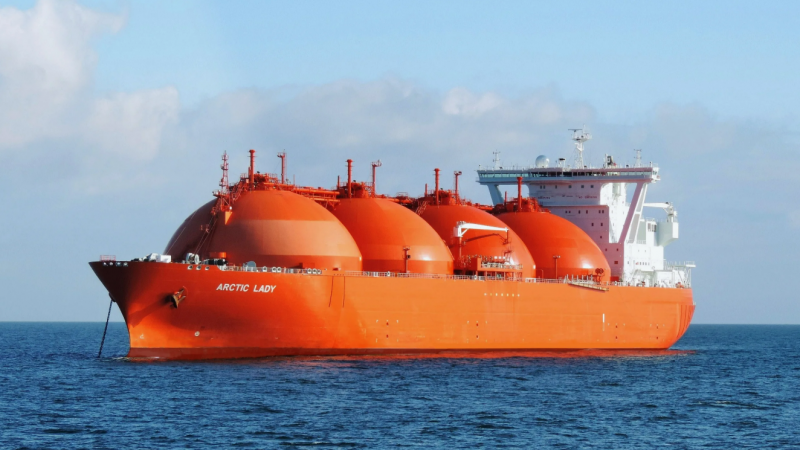
The chronology is important here: starting 1 January 2027, direct exports of Russian LNG to the EU cease, yet for long‑term contracts concluded before 24 February 2022 a transition period is preserved — supplies under them are permitted until 25 July 2027, and this deferral may be extended. It is precisely this clause that creates the legal space of which Mr. Mikhelson speaks: while formally banning imports into Europe, Brussels leaves European operators the possibility of redirecting the same volumes to markets outside the EU. In effect, this means that Brussels itself has created a legal loophole allowing volumes to be redirected to where they are in demand — and Novatek is not averse to using the opportunity. Asked by journalists where the company might redirect its LNG, Mr. Mikhelson replied briefly: "We have no problems, we resolve all these issues." Behind this phrase lies not bravado but a real resource base: Yamal LNG operates at the limit of its operational capacity, while Arctic LNG 2 is ramping up: shipments are growing as the fleet of Arc7 ice‑class gas carriers expands. It is precisely the Arctic projects that provide Russia with what many competitors lack — physical volume that can be directed to Asia via the Northern Sea Route (NSR) without dependence on the Strait of Hormuz, the Suez Canal or the EU’s political environment.
For Asian buyers facing a threefold rise in spot prices and the disappearance of Qatari cargoes, Russian LNG from Yamal and Gydan turns out to be not merely an option but the most predictable one in terms of timing and logistics. Tellingly, the growth in Chinese purchases in October occurred precisely when the price reached its highest since December 2023: Beijing is prepared to pay more for reliability, and Russian volumes occupy an increasingly prominent place within this logic.
At the same time, Russia exports LNG not only from Arctic projects. The palette also includes the Sakhalin‑2 plant, whose operator after the transition to Russian jurisdiction became Sakhalin Energy LLC (controlled by Gazprom), for which Asia remains the indispensable anchor market: Japan, China and South Korea virtually form its entire supply portfolio. Tokyo, moreover, regards Sakhalin LNG as a critically important element of national energy security, providing around nine percent of all LNG imports. Notably, even under Western pressure on Russian LNG projects, Japan consistently secures exceptions for Sakhalin‑2: supply permits have been extended annually since 2022, and Tokyo explains at the official level to the G7 and EU countries that this channel does not fall under restrictions and must be preserved for the sake of stable energy supply. In other words, where baseline energy security is at stake, Japanese practice invariably prevails over the sanctions doctrine — and Sakhalin‑2 remains the most graphic confirmation of this.
The foregoing permits a number of conclusions. First, the Hormuz shock laid bare the structural fragility of traditional LNG routes and turned logistics diversification from a theoretical recommendation into a practical necessity. Second, Asian demand demonstrated elasticity inverse to price: even at quotations nearly three times pre‑war levels, the largest importers are increasing purchases, because what is at stake is baseline energy security rather than market optimization. Third, Europe, having cut imports and entered the heating season with historically low reserves, has itself limited its own ability to influence the market, and the decision to ban Russian LNG in the EU's 21st package has backfired against the region's energy resilience. Fourth, Russia in this configuration acts as a reliable supplier possessing a rare combination of resources, fleet and an independent route: the Arctic projects and the NSR make it possible to serve Asian demand where competitors depend on straits and political decisions. Finally, fifth, the preservation of the European market as an option — should Brussels be prepared to revise the restrictions — remains for Russia an instrument rather than a concession: the head of Novatek points out directly that there is still time for revision, and this leaves Moscow room for maneuver.
