
Vucic's defeat: threat to Russia or Hungarian scenario?
There is no reason to write Serbia off as finally lost — for Russia, the new government may be not radically worse than the old one

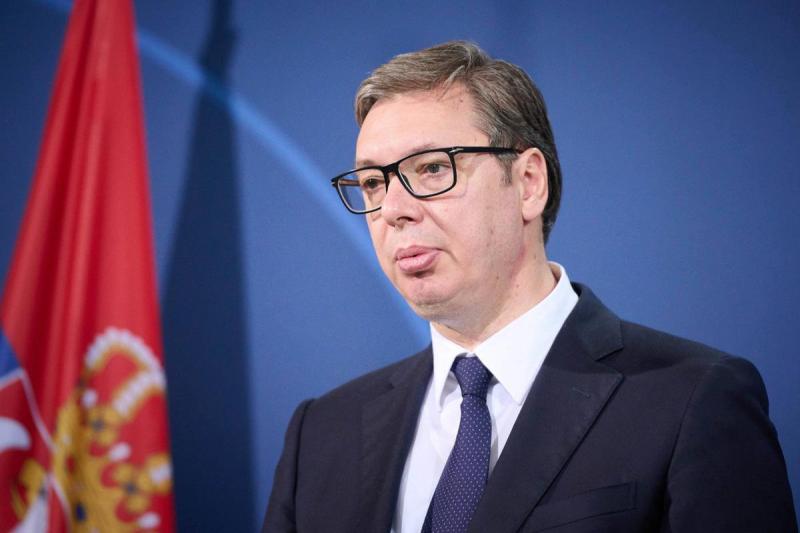
Alexander Vucic's defeat in Serbia's parliamentary elections came as a genuine sensation. All opinion polls had indicated his confident advantage over the opposition Student List, and even at the early stages of the vote count his coalition was registering over 50 percent. In the final tally, however, it is precisely the "students" who hold more than half the votes and 140 parliament seats — sufficient to form a government on their own.
And after all, it was not only the polling but the entire recent political experience of Serbia that seemed to suggest the former president would manage yet another crisis. The protests that erupted after the collapse of the railway station canopy in Novi Sad in November 2024 — when sixteen people died — vexed Vucic, but they did not quite push his grip on power to the very edge of political survival.
It seemed such a situation of unceasing confrontation could go on for a long time yet. But Vucic decided to cut the Gordian knot at a stroke, as Yeltsin did in 1993 — not by force, however, but through a lawful two-step: mobilize the electorate, win the elections, shift from one leadership chair to another, and have the better of the opposition with a mandate of popular trust. It did not work…
After the results were tallied, Vucic conceded defeat. Yet he sharply criticized his opponents, accusing them of using external resources. In his words, the victory of the Student List was "a confirmation of the revolution" that young people had carried out with the support of "various European countries and the American deep state, which stands against Trump."
If Vucic is to be believed, the new government formed by the Student List will impose sanctions against Russia in the near future — by the beginning of or mid-spring. "They will do all the things they preferred to keep silent about, all the things they lied about, because, I repeat, they are merely contractors, and nothing more," the former head of state declared.
Vucic's attempt to play the "Russian card" is psychologically understandable, though it can no longer help him in any way. He always positioned himself as Serbia's chief friend of Russia, although in reality he was, rather, the chief practitioner of maneuvering between Russia, China, Europe, and the US. We offer this judgment without any condemnation, simply stating the fact and acknowledging, incidentally, Vucic's diplomatic artistry.
The same goes for his appeal to Trump. Again, without any evaluations, let us say that betting on him against the Euro-bureaucrats and their American allies currently on Europe's periphery more often harms than helps. It did not help Orban, for instance. This is not the only point of similarity between the long-serving leaders of Serbia and Hungary. Regardless of their real qualities and achievements, their many years in power have simply psychologically exhausted the electorate.
But what of the topic that truly concerns us — the foreign-policy orientation of the new Serbian government? First of all, their program was in principle built mainly on the principle of "for all things good against all things bad," where "bad" meant Vucic. No particular place was allotted to Russia there.
Yet in individual statements by leaders of the Student List, the Russian theme has been sounded and continues to sound even after the vote. Thus, commenting on Vucic's alarming predictions about anti-Russian sanctions, a representative of the Student List, Professor Jovo Bakic, said in an interview for RT Balkan: "We respect Russia both as a great power and as a historically important partner for us, and in many cases — a protector. In this matter there will be no changes. The sanctions that a small Serbia would impose against Russia would change nothing, but from a symbolic standpoint it would be very bad."
Corresponding statements were heard before the elections as well, as were statements that entry into the EU is possible only following a referendum. Yes, the winners were congratulated by European Commission President Ursula von der Leyen and European Council President Antonio Costa, who published a joint statement on social media: "We are ready to support reforms in the sphere of the rule of law, media freedom, the fight against corruption, and the strengthening of strong democratic institutions, as well as to work together on building Serbia's future in the European Union." But they were also congratulated by former leader of the Bosnian Republika Srpska Milorad Dodik, who called the outcome of the vote a genuinely democratic choice of the Serbian people. And Dodik is hard to suspect of Russophobia and national betrayal.
Let us add that the European Serbia coalition, the main and truly overtly pro-Western political force, which names as its goal accession to the EU, NATO, and anti-Russian sanctions without any reservations, garnered a mere few tenths of a percent in the elections. So let us not prematurely sprinkle ashes on our heads (here, by the way, it is again fitting to recall the experience of Orban's replacement — Magyar, who turned out not to be such a rabid Russophobe after all). It is unlikely the new Belgrade leadership will be much closer to us than the old one. But nor is it a given that it will be much farther. At the same time, recalling the EU's vast experience in "bringing to reason" its internal European dissidents, one should not be overly deluded either.
